








If you're here, you've probably Googled "Grasshopper competitors" or "Grasshopper alternatives." Fair enough.
Grasshopper has been around since 2003, it was one of the early names in virtual phone systems for small businesses, and it does one thing very well: a shared business number with extensions, on any device. The question is whether that is still the shape of the problem you have.
A lot of small businesses now want the calls to do work after they end: a written summary, the CRM updated, the follow-up drafted, the after-hours calls answered. So we went hands-on with the main Grasshopper alternatives and tested them the way a business owner would, with a tight budget, no IT team and no time to waste.
Here is what we found, with prices checked in September 2026.
What Grasshopper does well, and where it stops
Let's be straight about the good part first, because it is a reason businesses have used it.
Unlimited users on a shared number is genuinely rare. On Grasshopper's SoloPlus plan, $25/month billed annually ($32 month-to-month) covers one business number, three extensions and as many teammates as you like. Almost every other system on this list. If you are five people sharing one line, that is hard to beat.
Where it stops is the part that matters if you want more than a line:
- The entry plan is thinner than it looks. On Grasshopper's own plan comparison, True Solo ($14/month annually, $18 month-to-month) does not include call recording, IVR, simultaneous call handling, call summaries or AI call sentiment. Those start on Solo Plus. (grasshopper.com/pricing, September 2026)
%2009.29.32.png)
- Texting is billed separately. Business texting requires registration:$19.50 one-time, plus a $1.50/month messaging fee, on every plan.
- Several capabilities are add-ons, not plan features. Grasshopper's ownfeatures page lists Virtual Receptionist, Call Blasting, International Calling, Voice Studio and extra numbers/extensions under "add-ons."(grasshopper.com/features)
- The virtual receptionist is a third-party add-on. Grasshopper partners withSmith.ai for it, and the page lists it as starting at $95/month on top of your plan.(grasshopper.com/features/virtual-receptionist)
- No CRM sync or API on the plan comparison. Grasshopper's plan table has no row for CRM integrations, no row for an API and no row for AI agents. If you want calls to land in HubSpot or Salesforce automatically, that is not what this product is for.
- On ratings: Grasshopper scores 3.9 out of 5 on G2 from 162 reviews.
%2009.31.58.png)
%2009.36.53.png)
- Cancelling is a nightmare. Many users report auto-renewals and hidden hurdles when trying to end a subscription.
%2009.34.52.png)
In short: Grasshopper is a good shared business line at a fair price, and itis the cheapest way on this list to put a whole team on one number. It is not a system that works your calls for you, and the pieces that come closest are sold separately.
Our Selection Methodology
We've tested over 20 VoIP and business phone apps that position themselves asGrasshopper competitors. From that, we kept the ones that outperformed Grasshopper in at least three of the following categories:
- Pricing and Plans: What do you pay, on which billing cycle, and what is a plan feature versus an add-on? We compare annual to annual and monthly to monthly.
- Ease of Use: Could we set up a business line in under 10 minutes, without IT support?
- Mobile Experience: Most small business owners work on the go, so it is important to be mobile-friendly.
- AI & Productivity Features: Transcripts, summaries, follow-ups, and whether the AI works on outbound calls or only inbound.
- Integrations: Does it connect to a CRM, and is there an API?
- Call Quality & Reliability: No one wants to sound glitchy. We looked for crystal-clear calls with no VoIP hiccups.
- Customer Support: Fast, human, and easy to reach. Not buried behind endless forms or talking with a bot.
Every tool we kept scored well across these categories. If a provider was cheap but support was terrible, we cut it. If the features were strong but setup was painful, we cut it.
The result? A short list of Grasshopper alternatives that are actually worth your time (& money) in 2026.
Allo vs. Grasshopper
Why is Allo a good Grasshopper alternative?
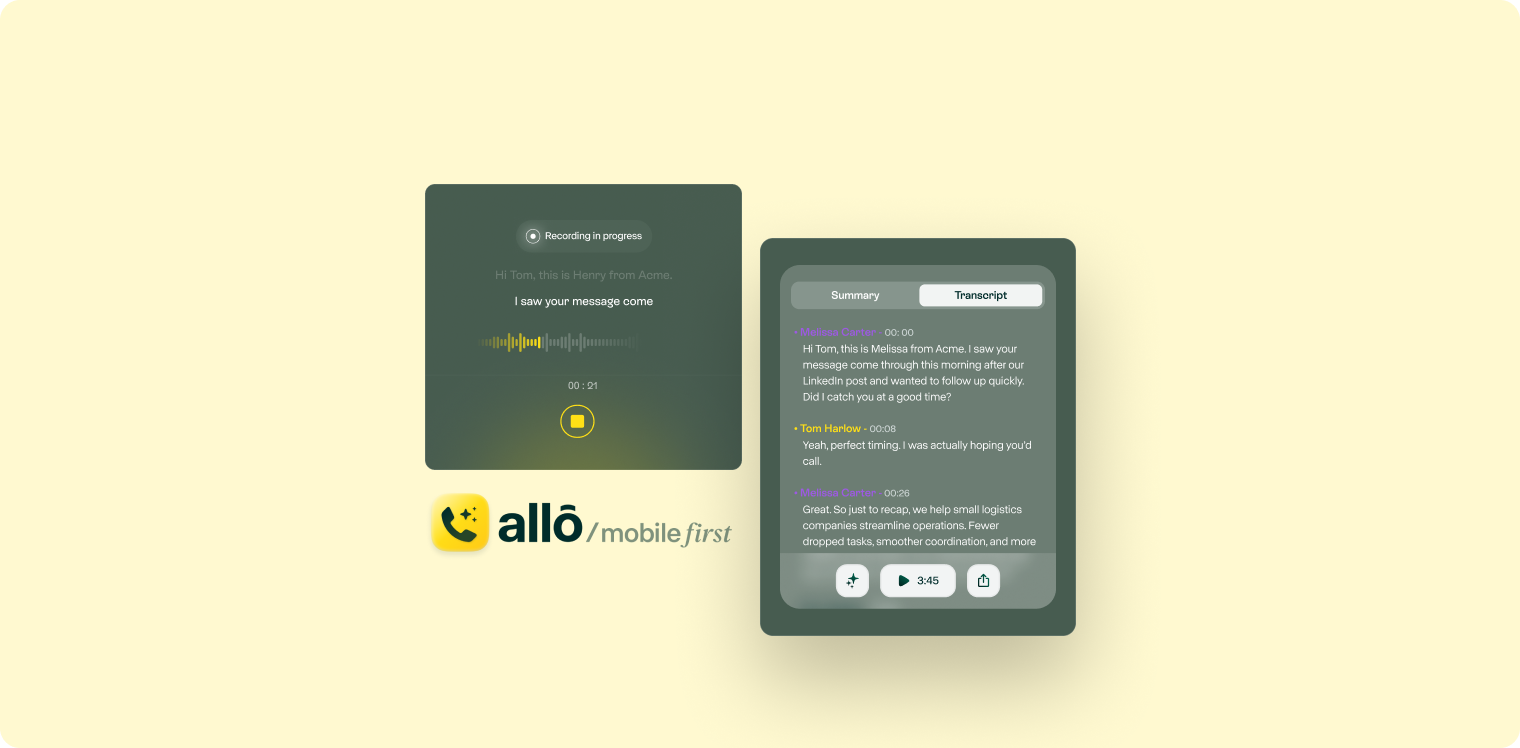
Allo is a business phone system built around what happens before, during and after the call.
You download the app, pick a business number, and you are live in minutes. Then every call is recorded, transcribed and summarised, the CRM record is updated, and the follow-up is drafted for you to review and send.
Grasshopper gives your business a professional line. Allo gives it a line plus the admin work that comes with the line. Which one you want depends on whether the phone is where your customers reach you, or where your revenue is actually worked.
Key Features: where Allo pulls ahead
- AI summaries and transcripts on every paid plan, on every call: Inbound and outbound, not just voicemail. On Grasshopper, voicemail transcription and AI voicemail sentiment are on every plan, but call summaries and AI call sentiment start on Solo Plus and above.
- Native CRM sync, an open API and an MCP connector: Allo Business syncs calls, summaries and tags to HubSpot, Salesforce, Pipedrive and Attio, and connects to Claude and ChatGPT through the Allo MCP server. Grasshopper's plan comparison lists no CRM integrations and no API.
- An AI receptionist priced as one more seat: Allo's AI Receptionist is an add-on billed as one extra Business seat, so $32/month on annual billing. It answers day and night, takes several calls at once, books appointments, sends the SMS follow-up and updates the CRM. Grasshopper's Virtual Receptionist is a Smith.ai add-on listed from $95/month.
- Tools for outbound, not just inbound: Power dialer, AI call tags synced to the CRM, custom summary templates, post-call actions, team analytics and leaderboards. Grasshopper's reporting is call logs.
Where Grasshopper still wins: unlimited users on one number for a flat price,a lower entry price, and virtual fax. If you area five-person team who needs one shared line and nothing else, Grasshopper SoloPlus at $25/month is cheaper than five Allo seats.
Reviews: what other users think
Allo on G2 has an excellent score of 4.7 out of 5, and it’s praised for ease of use, call quality, and AI features.
G2, accessed September 9, 2026.
Allo reviewers most often mention setup speed, call quality and the time saved on call notes. Grasshopper reviewers most often mention that the product is simple and reliable, with criticism concentrated on billing, cancelation, and on how thin the entry plan is.
Pricing
Grasshopper pricing:
- True Solo: $18/month or $14/mo (billed yearly) for 1 user, 1 number, 1 extension.
- Solo Plus: $32/month or $25/mo (billed yearly) for unlimited users, 1 number, 3 extensions.
- Small Business: $70/month or $55/mo (billed yearly) for unlimited users, 4 numbers, unlimited extensions.
Billed on top: extra numbers $10/month each monthly ($9 annually), extra extensions $5/month each ($3 annually), texting registration $19.50 one-time plus $1.50/month,Virtual Receptionist from $95/month, plus International Calling, Call Blasting andVoice Studio as add-ons.
%2017.09.17.png)
Allo pricing:
- Business: $45/month/per user, or $32/month/user (billed yearly) for a number per user, unlimited national calls, call recording, AI summaries and transcripts, AI call tags, post-call actions, CRM sync, Allo MCP, call analytics.
- Ultra: $120/month/user or $100/month/user (billed yearly) for everything in Business plus AI agents (SDR, support, lead qualifier, CRM manager, sales coach, data analyst) and custom dashboards.
Billed on top: AI Receptionist as one extra Business seat, Power Dialer $50/month per team, extra numbers $5/month, A2P 10DLC registration $24 one-time. No setup
fees, no contracts, 7-day free trial.
%2010.20.18.png)
How to read that honestly: Compared like for like, Grasshopper is the cheaper product at the entry level, and it is the cheaper product for a team that shares one number. Allo costs more per seat, and what the extra buys is the work the calls create: the transcript, the summary, the CRM update, the drafted follow-up, and an AI receptionist for the price of a seat rather than $95 a month.
If you want a professional line, Grasshopper is a reasonable buy. If you want the line to do the paperwork, that is what you are paying Allo for.
In conclusion, Allo is not just cheaper, it actually delivers more for less.
Demo
[[first-button]]
RingCentral vs. Grasshopper
Why is RingCentral a good Grasshopper alternative?
Grasshopper is a virtual phone system. RingCentral RingEX is a full unified communications platform: calls, video meetings, team chat and analytics in one place. If you want more than calling, it is the more complete product.
The trade-off is that RingCentral is built for larger teams with a bigger budget and an admin to configure it.
Key Features: where RingCentral pulls ahead
- Video Meetings & Team Messaging: HD meetings for up to 300 participants, team chat and file sharing, in the same app as the phone.
- Reporting and analytics: Core reporting from the Advanced plan, historical and real-time insights on Ultra. Grasshopper's plan comparison lists "Reporting" with no tiering.
- CRM & Business Integrations: RingCentral integrates with Salesforce, HubSpot, Microsoft 365, and more. Included from the Advanced plan.
Reviews: what other users think
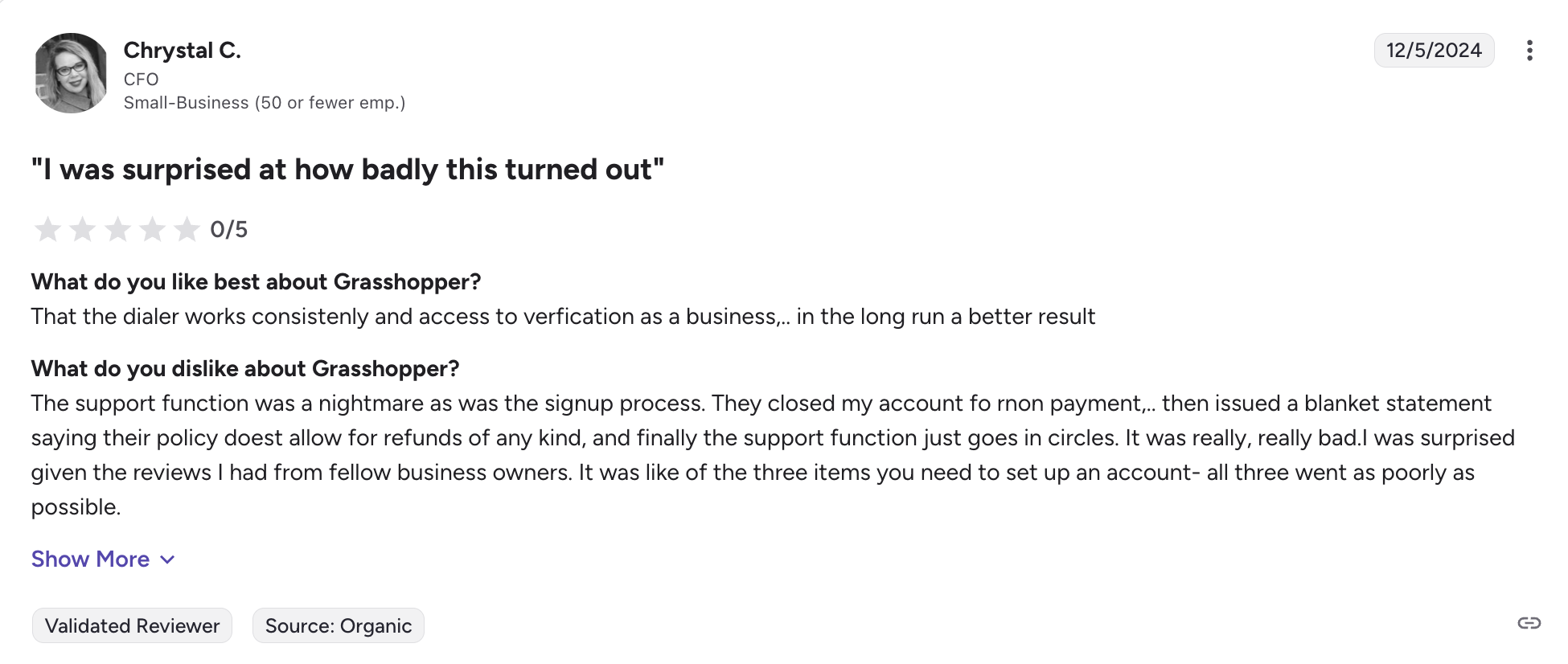
RingEX scores 4.2 out of 5 on G2 from roughly 1,370 reviews, with praise for feature depth and criticism aimed at complexity and at billing. Grasshopper scores 3.9 out of 5 from 162 reviews. (G2, September 2026.)
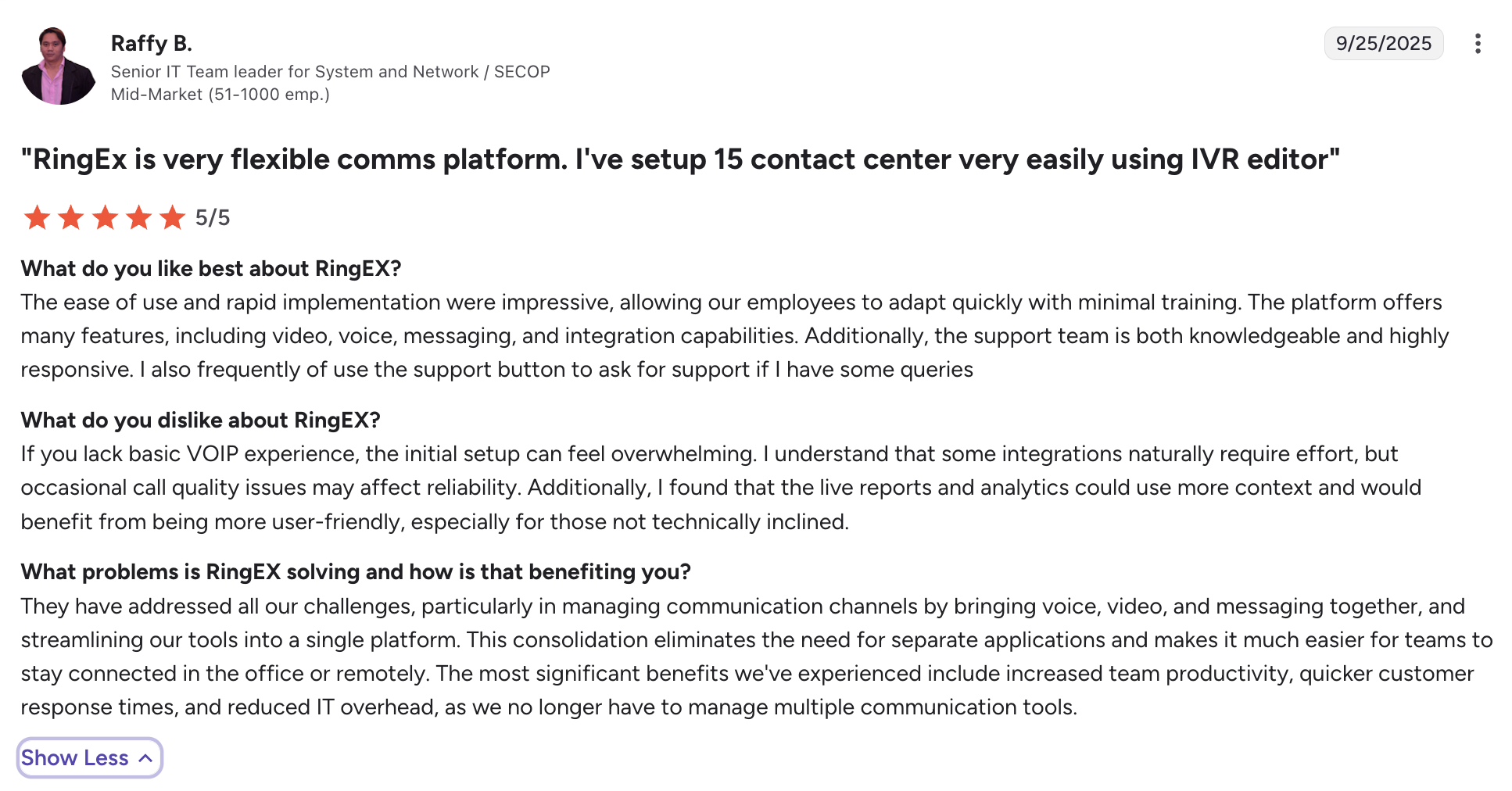
- Grasshopper on G2 has a score of 3.9 out of 5 on G2 with customers complaining about nightmare support, confusing signup, and aggressive billing practices.
Pricing
RingCentral RingEX, 1 to 5 users:
- Core: $20/user or $30/user (billed yearly) for phone, SMS, team messaging, video, basic analytics.
- Advanced: $25/user or $35/user (billed yearly) and it adds CRM integrations, advanced reporting, multi-site. support
- Ultra: $35/user or $45/user (billed yearly) with full UCaaS suite, unlimited AI meetings, device analytics, APIs.
The AI Receptionist is an add-on starting at $39, and Conversational Intelligence starts at $60.
Takeaway:
- Grasshopper is cheaper and simpler.
- RingCentral gives you voice, video, chat and integrations in one platform for more money per seat.
- Allo Business at $32/user annually sits between them on price, with the AI work included in the seat rather than sold as a $39 or $60 module.
Demo
Quo vs. Grasshopper
Why is Quo a good Grasshopper alternative?
Quo is built for teams that live in Slack, HubSpot and Google Workspace. Shared inboxes, a clean mobile app, and a phone number a whole team can work out of together.
Grasshopper also shares one number across a team, through extensions and a shared inbox. The difference is what sits around the number: Quo has CRM integrations, an API, and an AI agent.
Key Features: where Quo pulls ahead
- Shared Inboxes with per-user numbers: Every teammate gets their own number and the team works threads together.
- CRM & Workflow Integrations: HubSpot and Salesforce from the Business plan, plus Slack and Zapier, an open API and an MCP connector on every plan.
- AI Call Summaries & Transcriptions: From the Business plan ($23/user annually).
Reviews: what other users think
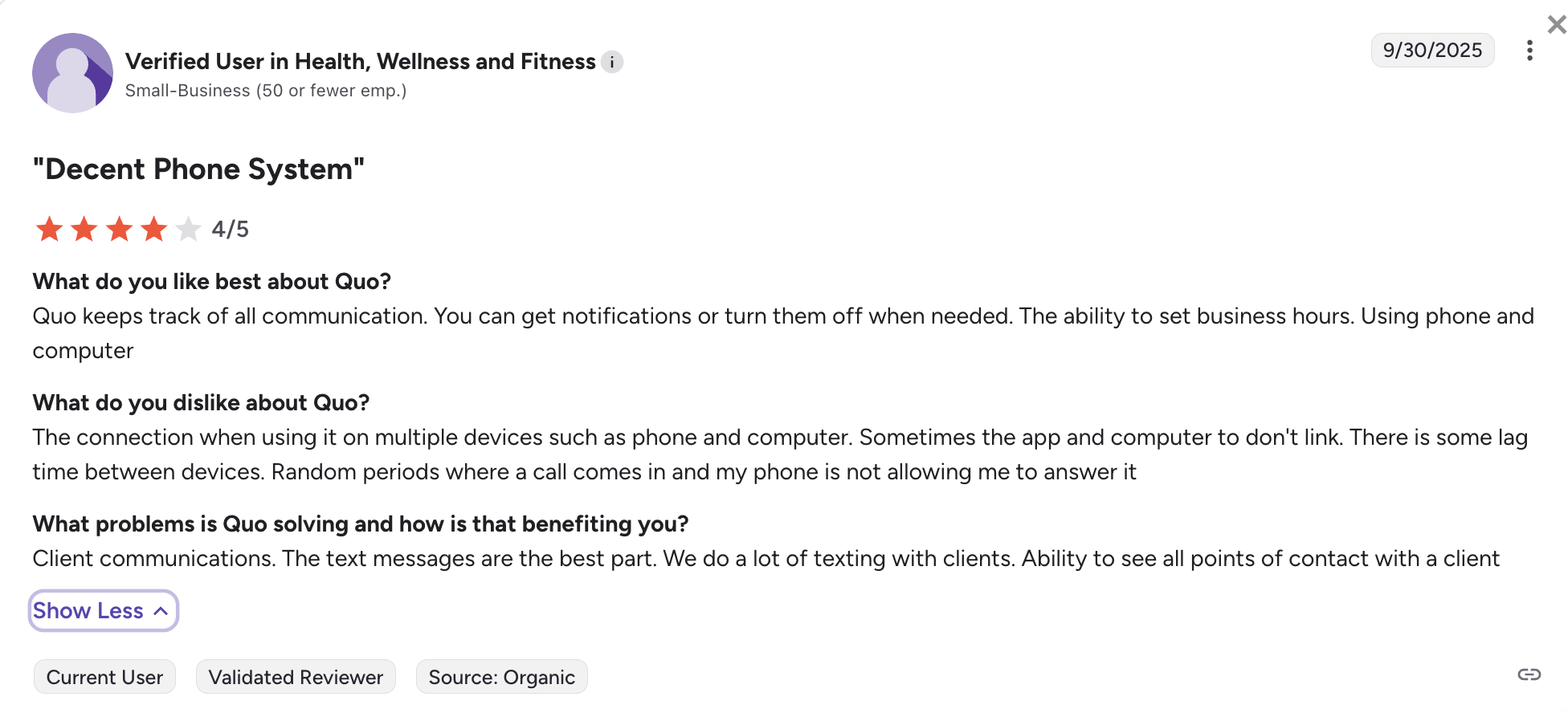
Quo on G2 has a score of 4.7 out of 5, it’s praised for its ease of setup, clean mobile app, and team collaboration features. Users highlight shared inboxes and integrations as game-changers for small sales teams.
Pricing
Quo Plans:
- Starter: $15/user/month or $19/user/month (billed yearly) for 1 local or toll-free number, unlimited calling/texting (US & Canada), voicemail transcripts, Slack & Zapier integrations.
- Business: $23/user/month or $33/user/month (billed yearly)plus AI call summaries, advanced integrations (HubSpot, Salesforce), group calling, analytics, and auto call recording.
- Scale: $35/user/month or $47/user/month (billed yearly).
Sona, Quo's AI agent, includes 1,000 automation credits (about 10 calls) a month one very plan, then $25 to $199/month for more.
Side by side:
- Grasshopper Solo Plus is $25/month annually for one number,three extensions and unlimited users, and it includes call summaries and AIsentiment.
- Quo Business is $23 per user per month annually and adds CRM sync and anAPI.
- Allo Business is $32 per user per month annually, and unlike Sona, Allo's AI runs on outbound calls too, on a flat seat rather than per-call credits.
Demo
Google Voice vs. Grasshopper
Why is Google Voice a good Grasshopper alternative?
Google Voice is the budget-friendly option for anyone already using Google Workspace.
If your team is on Gmail, Google Calendar, and Google Drive all day, Google Voice is the easiest way to add a business number without paying Grasshopper’s prices.
Compared to Google Voice, Grasshopper seems overpriced, especially when you realize that Google integrates Voice into its broader Workspace ecosystem.
Key Features: where Google Voice pulls ahead
- Google Workspace Integration: calls, voicemails, and texts sync directly with Gmail and Google Calendar. Grasshopper has no native integrations.
- Searchable Voicemail Transcripts: tied to your Google account, easy to search and archive.
- Gemini call notes: from the Standard plan, and automatic call recording and transcription on Premier.
Reviews: what other users think
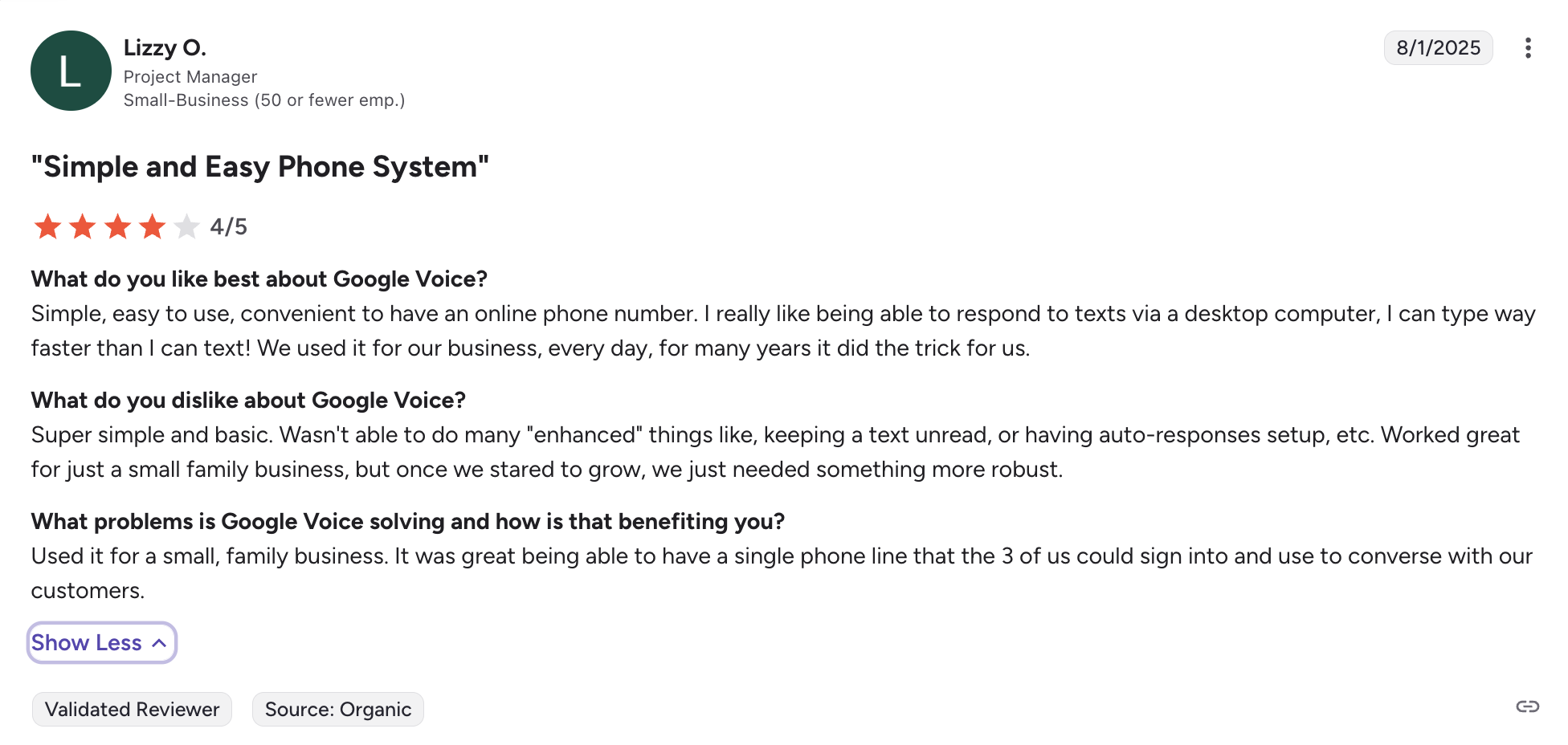
Google Voice on G2 has a score of 4.1 out of 5, and a lot of users comment about its low cost, simplicity, and seamless integration with Google apps. Criticism mostly revolves around limited business features and weaker support.
Pricing
Grasshopper charges $18 for a single number with no integrations, while Google Voice gives you Workspace integration, voicemail transcription, and auto attendants starting at just $10 per user. For Google Workspace users, switching is almost a no-brainer.
Google Voice Monthly Plans:
- Starter: $10/user and you’ll have 10 users max, US calling, voicemail transcription, Google Workspace integration
- Standard: $20/user and you’ll have unlimited users, auto attendants, ring groups, Gemini call notes
- Premier: $30/user, and it adds international locations, automatic recording and transcription, advanced reporting
However, if you’re not already using Google Workspace, keep in mind that Google Voice requires a Google Workspace subscription in addition to your Google Voice plan to work.
Side by side:
- At $10 per user, Google Voice Starter undercuts Grasshopper's $14 entry plan, but only if you are already paying for Workspace, and it caps at 10 users.
- Grasshopper's flat unlimited-user pricing is better value for a bigger team on one number.
- Allo is the more expensive of the three and the only one that summarises, tags and files every call into a CRM without you asking.
Demo
Nextiva vs. Grasshopper
Why is Nextiva a good Grasshopper alternative?
Nextiva is a customer experience platform with a phone system inside it: voice,SMS, video, live chat, social channels and a contact centre. It is the option for asmall team that wants to run like a much bigger one.
Key Features: where Nextiva pulls ahead
- Multi-channel, not just voice: Email, live chat, WhatsApp, social and reviews alongside calls.
- Advanced routing and a built-in call centre: on the higher plans.
- AI transcription and summaries: on the Scale plan.
Reviews: what other users think
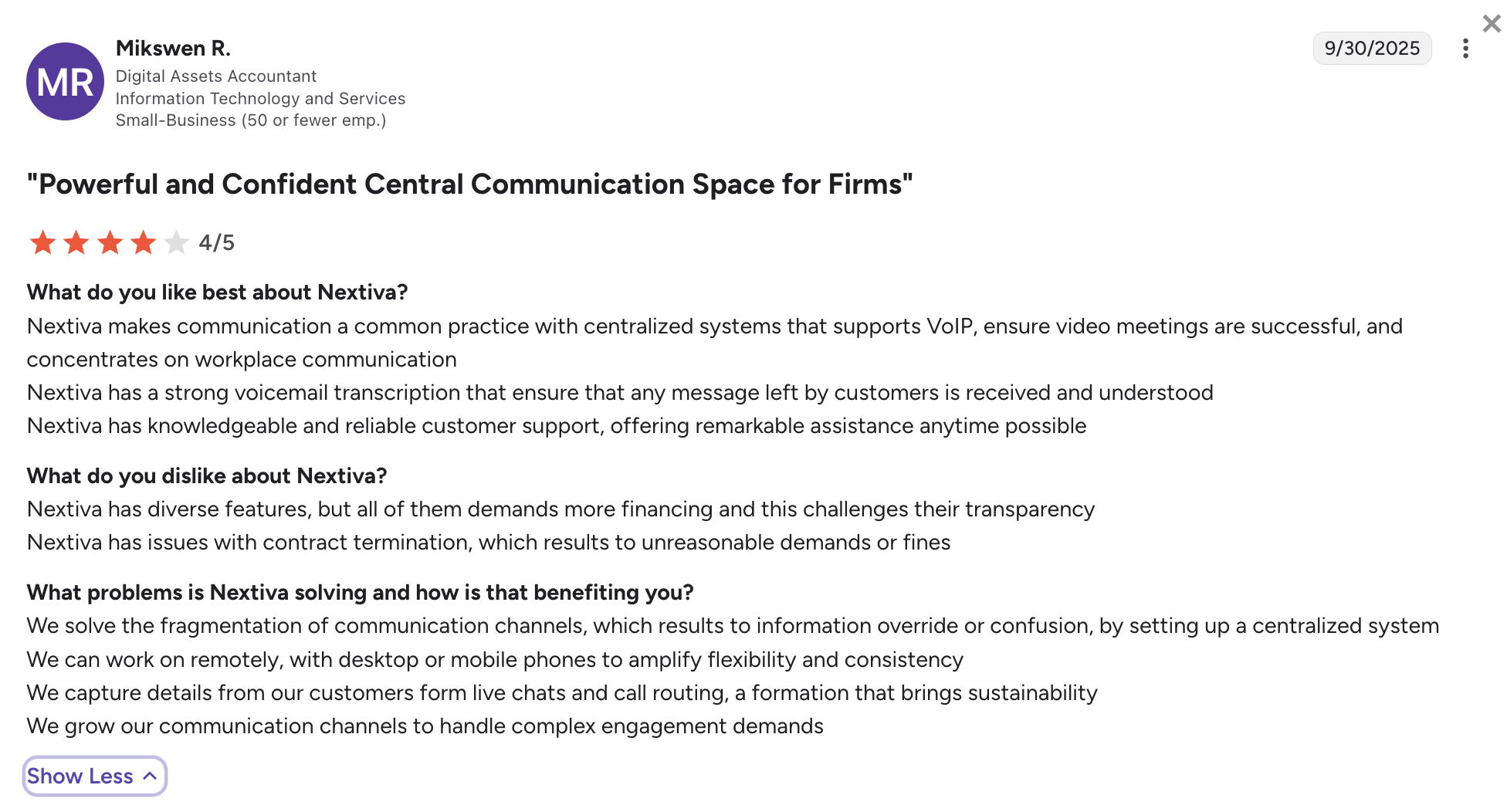
Nextiva on G2 has a score of 4.5 out of 5. It is praised for its call quality, reliability, and strong support. Customers especially value its advanced call center features and integrations. Some note that the UI feels dated compared to lighter apps like OpenPhone or Allo, and cancelling the service can be complicated and time-consuming.
Pricing
Side by side:
- Core at $15/user/mo or $23/user/mo (billed yearly)
- Engage at $25/user/mo or $50/user/mo (billed yearly)
- Scale at $75/user/mo
The XBert AI Receptionist is an add-on on every plan.
Side by side:
- Nextiva Core at $15 per user annually is close to Grasshopper's $14, but Grasshopper's price covers unlimited users on one number where Nextiva's is per seat.
- Nextiva's AI summaries only arrive on the $75 Scale plan.
- Allo includes them at $32.
Demo
Zoom Phone vs. Grasshopper
Why is Zoom Phone a Good Grasshopper alternative?
Zoom Phone is built on the same platform you already use for video meetings.
If your team uses Zoom video, adding Zoom Phone is seamless. It gives you a cloud-based business line with modern features, tied directly into your Zoom’s ecosystem.
Grasshopper, on the other hand, gives you a business number and extensions, but not much else. Compared to Zoom Phone, it feels disconnected and limited.
Key Features: where Zoom Phone pulls ahead
- Native Zoom Integration: calls, video, and meetings under one app. Grasshopper is phone-only.
- Global Coverage: Zoom Phone offers local numbers in 40+ countries. Grasshopper is US-only.
- Advanced Call Management: auto attendants, call queues, and monitoring are standard. Grasshopper only offers basic extensions and call forwarding.
Reviews: what other users think
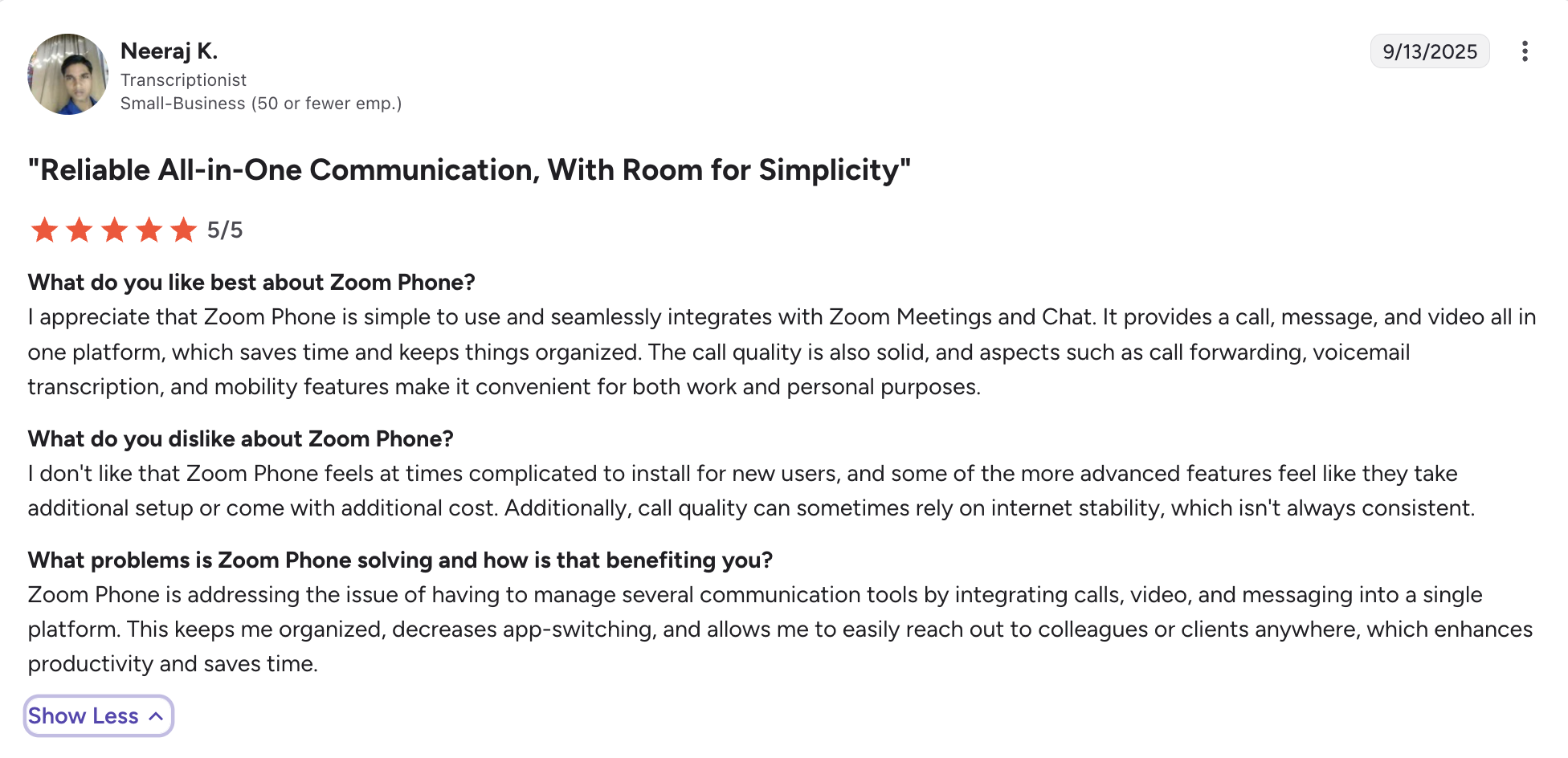
Zoom Phone on G2 has a score of 4.6 out of 5. Users comment about call quality, reliability, and smooth integration with Zoom Meetings. Some others note that setup can get tricky for larger teams, but overall reviews are positive.
Pricing
- US & Canada Calling: $16/user (or $10.50 metered) and you get SMS & MMS domestic, online fax, and call summaries.
- Pro Plus: (Phone + Workplace Pro) $20.50/user for unlimited domestic calling, and Zoom Workplace.
- Business Plus: $24.50 per user, with unlimited domestic calling, metered international calling, and integrations with Slack and Salesforce.
The Virtual Agent Receptionist comes with a 100-minute free trial on Phone plans, then is billed on top.
Side by side:
- Grasshopper's $14 annual entry plan is cheaper than Zoom Phone's $16, and covers unlimited users on one number.
- Zoom Phone buys you global calling plans, video and post-call AI summaries in the same app.
- Allo Business is the priciest of the three per seat and the only one where the AI files the call into your CRM and drafts the follow-up.
Demo
Frequently Asked Questions about Grasshopper alternatives
[[faq-blog]]