Main takeaways
- Reluctance usually comes from bad preparation, not bad attitude. When reps have clean data, the right tools, and a clear sales book, the fear of picking up the phone drops significantly.
- Bad sessions are normal. What matters is how you respond. Analyze the parameters (targeting, hook, timing), adjust, and move on. Don’t let one rough morning define the week.
- Treat cold calling like a sport. Schedule it, protect the time, build a routine. Motivation isn’t something you wait for. It’s something you create through structure and small wins.
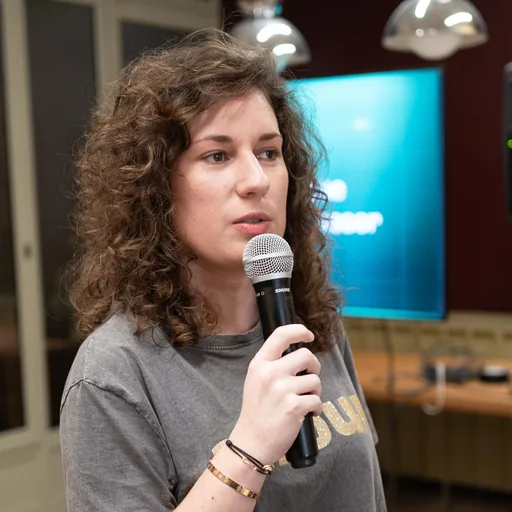
Pauline Perez trains sales teams for a living.
She’s been cold calling for 12 years.
And she’ll be the first to tell you: some days, it sucks.
She says.
“Like going to the gym. I schedule my workout sessions in advance. Once they’re booked and I’ve reserved them, I can’t cancel.”
That comparison isn’t an accident. Cold calling is a discipline. Not a talent. Not a personality trait. A discipline.
The reps who stay motivated aren’t the ones who love every call. They’re the ones who’ve built systems that carry them through the calls they don’t love.
This article breaks down how to do exactly that, based on Pauline’s experience training dozens of teams across industries.
How to overcome cold call reluctance in your team
Most managers assume reluctance is a mindset problem. Pauline disagrees. She traces it back to two concrete causes.
“The salespeople who don’t like prospecting, it’s either because they don’t know how to do it correctly, or because they don’t have the right tools or preparation.”
Fix the tools first
Pauline has seen entire teams stop prospecting because the basics weren’t in place.
“I have a company last year who calls me. The guy tells me, my salespeople don’t prospect. And when they tell me that, I always try to understand why. And basically, it’s always the same thing. They don’t have a CRM, they don’t have a database.”
If your reps are working from Excel files, searching for numbers manually, and copy-pasting call notes into a CRM by hand, don’t be surprised when they avoid the phone. The friction is the problem, not the person.
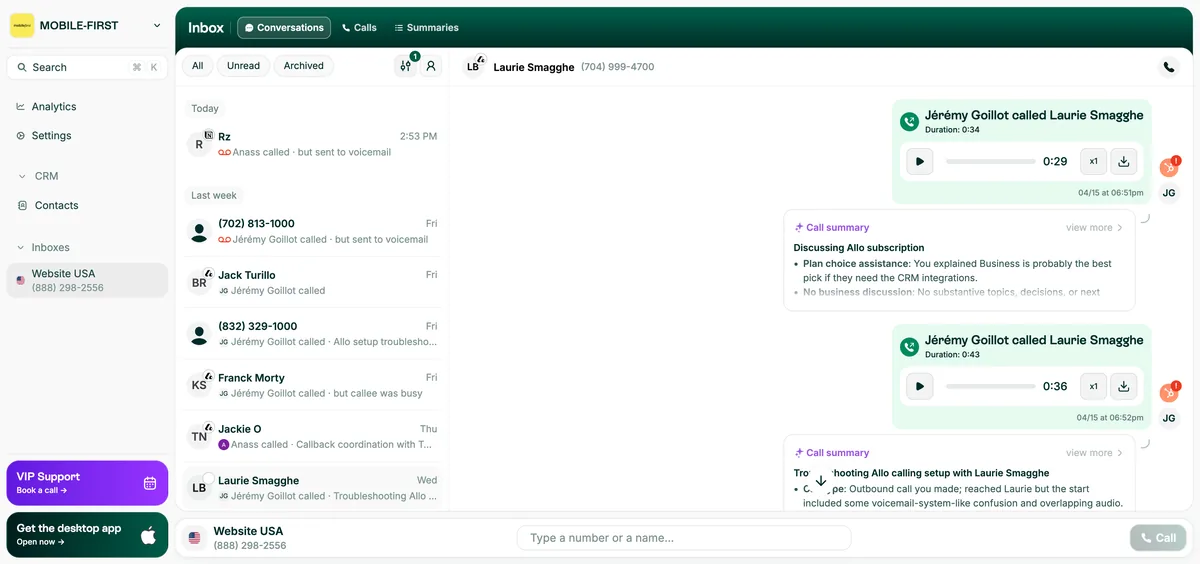
A proper cold calling stack doesn’t need to be expensive. Pauline’s recommendation for a small team: a research tool for database creation (like Apollo or Sales Navigator), a CRM (like HubSpot), and a telephony tool that integrates with it.
Train before you coach
Here’s a pattern Pauline sees constantly: managers hire reps, hand them a phone, and expect results.
“The average salesman has never been trained on the phone. So when he had tools that allowed him to do automated prospecting, he thought it was great. I automate something, messages go out, and I don’t have to do anything and I wait.”
Training isn’t optional. Pauline always starts with theory before live calls, even for experienced reps.
“I came to coach and did prospecting sessions without doing the theory before. And in fact, people think they know, but they don’t know how to do it.”
The theory covers database creation, CRM processes, the sales book, and objection management. It can be done in three hours if needed. But skipping it creates reps who are guessing instead of executing.
Reluctance isn’t permanent. It’s a symptom. Treat the cause.
How to deal with difficult sessions
Some days, every call goes to voicemail. Some days, every prospect is in a meeting. Some days, you get five “not interested” in a row.
Pauline doesn’t sugarcoat it.
“When it comes, well, that makes no one happy. But it’s part of the game. And well, it’ll be better tomorrow.”
Acceptance is the first step. But it’s not the last one.
Analyze before you spiral
After a bad session, the temptation is to blame yourself or blame the prospects. Pauline does neither. She looks at the variables.
“You try to understand why. Is it maybe that the target isn’t necessarily the right one? Maybe the targeting isn’t the right one? Is it the hook that isn’t good? There could be lots of reasons.”
A bad session could mean your database has gone stale. It could mean you’re calling a persona at the wrong time of week. It could mean your opening line doesn’t land with this specific segment.
The point: don’t treat a rough morning as evidence that cold calling doesn’t work. Treat it as data.
Protect your energy
Pauline has a practical take on mental state. If you’re not in the right headspace, and you have the flexibility, delay your session.
“There are days where you don’t feel like it. If you have the possibility to delay your sessions, be in a better mood. Otherwise, put on some music that’s going to make you want to go.”
She also swears by standing while calling. Not because it’s a rule, but because it keeps her in motion.
“I talk a lot on the phone while standing. I have trouble sitting still for too long. And that way, I’m in a dynamic. I walk, I talk with the guys.”
That said, she’s not dogmatic about posture. She’s seen callers succeed lying down.
“I’ve seen cold callers lying down. It works very well. There’s no good or bad way to do it. You have to do it the way you want.”
The takeaway: find what puts you in the right state. Music, movement, a specific spot in the office. Whatever makes the first dial easier.
Don’t fake it, believe it
One thing Pauline won’t compromise on: believing in what you sell.
“I only take clients where I believe in their solutions. When I see salespeople who don’t believe in their products, I think that already has a big impact.”
If your reps don’t understand why the product matters, no amount of motivational speeches will fix their energy on the phone. Product conviction comes before call confidence.
How to build positive habits that help
Motivation fades. Habits don’t. Here’s how Pauline structures prospecting so it doesn’t rely on willpower.
Schedule it like a meeting
The best cold callers don’t “find time” for prospecting. They block it.
“The excellent cold caller will establish a routine of regular times, do prospecting, and above all, never deviate from it.”
Pauline is strict about this with her students.
“When you’re in prospecting time, when you’ve scheduled prospecting in your calendar, you’re prospecting. So whatever happens next, we forget about it.”
No emails. No Slack. No “quick” CRM updates. When it’s calling time, you call.
Stay focused during sessions
A common pattern Pauline observes: reps who do one call, get up for a coffee, come back, do another call, go chat with a colleague.
“You can be someone who does an hour and a half to just do that. I make calls, I make calls. Rather than the salesman who does one call, goes to smoke a cigarette, does another call, goes to have a cup, comes back, goes to pee, comes back, goes to talk to his colleague. They need to stay focused.”
Sustained focus beats sporadic effort. An hour and a half of uninterrupted calling will produce more results than four hours of scattered dials.
Gamify the work
For managers, Pauline recommends turning prospecting into a game.
“Whoever takes the most meetings this week wins a movie ticket.”
She structures it at multiple levels: individual objectives, team objectives, weekly challenges. The prizes don’t need to be big. The competition does the work.
“You have four salespeople? Do a week with an overall objective. If you manage to do that, it motivates the whole team.”
Rotate your days
Most salespeople call on Tuesday and Thursday mornings. Pauline thinks that’s a mistake.
Her approach: rotate the prospecting days each month.
“This month we do Monday, Tuesday, Thursday. The next month we do Wednesday, Thursday, Friday. So we’re always rotating.”
This keeps your team from hitting the same prospects at the same saturated time slots as every other sales team in the country.
Track your numbers
Motivation gets easier when you can see progress. When reps know their personal ratios, cold calling stops feeling like a black box.
Every dial moves the needle. Every picked-up call is a step toward a number they can see.
Listen to your own calls
This is one of Pauline’s non-negotiables. After calling prospects, go back and listen.
“When they send me call audios, I know right away the optimization points. If the opening isn’t good, the pitch isn’t good. So it lets you optimize.”
Call recordings aren’t just a management tool. They’re a self-coaching tool. Most reps have no idea how they actually sound until they hear it back.