Main takeaways
- Cold calling isn't dead ; it's evolving. With a 2.7% industry success rate in 2026 (up from 2.3% in 2025), sales teams that combine preparation, the right tools, and a human-first approach are seeing real results.
- The phone gives you something no other channel can: instant feedback. Unlike emails that disappear into the void, a cold call gets you a yes, a no, or a conversation, in real time.
- Salespeople hate cold calling mostly because they're not set up to succeed. Poor databases, no training, and missing tools are the real culprits. Fix the setup, and cold calling becomes a competitive advantage.
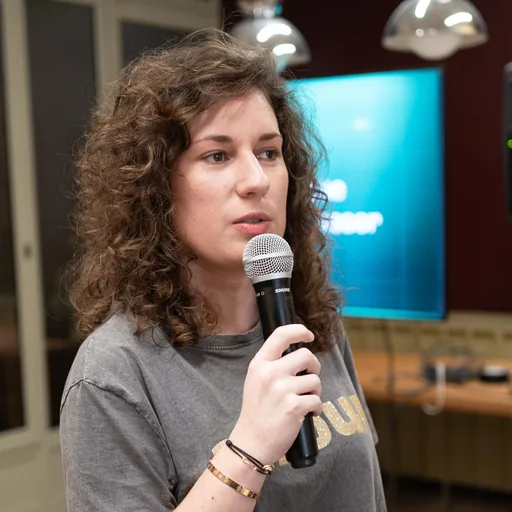
Pauline Perez spent 12 years picking up the phone and calling strangers.
Today, she runs Boucan Factory, a B2B prospecting agency and training organization for salespeople. She's trained dozens of teams across industries. She's made thousands of cold calls.
And she'll tell you something most LinkedIn posts won't.
Cold calling still works.
But only if you understand why it works — and what makes it different from every other channel in your sales stack.
In this guide, we'll break down the real benefits of cold calling, backed by Pauline's experience in the trenches. Whether you're a sales manager building a playbook or a rep wondering if the phone is worth your time, this is for you.
What is cold calling?
If you’re here, you probably already know what cold calling is.
But a quick reminder never hurts.
Cold calling is reaching out by phone to a prospect who hasn't asked you to call.
No prior relationship. No warm intro. No inbound lead form filled out. You're picking up the phone, dialing a number, and starting a conversation from scratch.
That's what makes it "cold."
But here's the nuance most people miss: a cold call doesn't have to feel cold. When you've done your research the call itself can feel surprisingly relevant.
Pauline puts it simply:
"You know how you're called, you know who you're calling. You know what value you can bring to this person. Well, that's what you need to put forward."
The goal isn't to sell on the spot. It's to generate interest and book a meeting. Pauline is explicit about this:
“Cold calling sits in the broader category of outbound prospecting. It lives alongside email sequences, LinkedIn outreach, and social selling. But it plays a role none of those channels can replicate.”
What is the difference between a hot call and a cold call?
The distinction is simple: context and expectation.
- A cold call is an unsolicited outreach. The prospect doesn't know you. They didn't request a conversation. You're interrupting their day and you've got roughly 10 seconds to earn the next 60.
- A hot call (or warm call) is different. The prospect has already shown interest. Maybe they downloaded a whitepaper, replied to an email, or were referred by a mutual contact. There's existing context. The conversation starts from a place of recognition.
Here's a quick comparison:
Cold Call vs Hot Call Comparison
| Attribute | Cold Call | Hot Call |
|---|---|---|
| Prior Contact | None | Yes (inbound lead, referral, prior interaction) |
| Prospect Expectation | None, you're interrupting | Some, they expect or welcome a follow-up |
| Goal | Generate interest, qualify, book a meeting | Advance an existing conversation, close |
| Difficulty | Higher, you must earn attention instantly | Lower, trust is partially built |
| Volume Needed | Higher | Lower |
What makes cold calls irreplaceable?
Let's get into the real benefits. Why does cold calling still matter when we have email automation, LinkedIn, AI agents, and every other tool under the sun?
1. Instant feedback
This is the number one advantage of the phone and the reason Pauline built her career on it.
"Cold calling is the most effective way for me to contact a prospect because the moment the person picks up, it's yes or it's no, but in any case, I don't wait for an email response indefinitely."
With email, you're guessing. Did they open it? Did it land in spam? Are they "thinking about it" or did they delete it without reading? With a call, you get a real-time answer. That answer might be "not now", but at least you know where you stand.
2. Strong results
Here's the paradox of modern sales: the more we automate, the more people crave real interaction.
Pauline nails this insight:
"The more we digitize, the more these people need human contact. And the phone, if it's done well [...] it's really very impactful."
According to Cognism's 2026 Cold Calling Report, the average cold call now lasts 82 seconds. That's a short window, but engaged prospects stay on the line longer.
When prospects pick up, they're willing to talk. The channel isn't broken. The approach sometimes is.
3. You control the pipeline
Cold calling is one of the few purely proactive sales activities. You're not waiting for marketing to generate leads. You're not hoping someone clicks on your ad. You're choosing who to call, when to call them, and what to say.
For small sales teams especially, this matters. You can't always afford to wait for inbound. The phone puts you in the driver's seat.
4. It validates your target fast
Before investing weeks in an email sequence, a single call can tell you whether you've got the right person, the right company, and the right timing.
Pauline uses the phone as a testing tool:
I like to start with the phone. Because that's what's going to bring results the quickest and that's what's also going to let us know if we have the right target.
If your ICP is wrong, you'll know within a day of calling. That kind of speed is hard to get from any other channel.
5. Decision-makers actually prefer it
This might surprise you. According to RAIN Group research, 57% of C-level and VP buyers say they'd rather hear from sales reps via the phone than any other channel. Directors (51%) and managers (47%) aren't far behind.
6. It feeds the rest of your outreach
A cold call doesn't exist in isolation. It makes every other channel more effective.
Pauline explains her multichannel philosophy:
"The more you multiply your channels, the more you'll have a chance to reach people. Why? Because some will never pick up the phone. Some will never respond to a LinkedIn message and some will never respond by email."
The call gives you information that email never could. You learn the prospect's tone, their priorities, whether they're open or closed. That context sharpens your follow-up emails, your LinkedIn messages, and your next call.
7. Callbacks compound over time
Here's a benefit most teams overlook: the people who said "no" today might say "yes" tomorrow. Pauline has a powerful example:
"So what we do now is for our clients we've been working with for a while, we always do callbacks of people who weren't interested the year before."
The result? In November, Pauline called all the CFOs who had previously declined. She generated three extra meetings from that single callback round. Cold calling creates a compounding asset if you track your interactions properly.
Why salespeople think cold calls suck
Let's be honest. Most salespeople don't wake up excited to cold call.
According to LinkedIn data, 63% of sellers say cold calling is the worst part of their job.
But Pauline's take is refreshingly blunt. The problem isn't the phone. It's everything around it.
They're not properly trained
"The average salesman has never been trained on the phone. So when he had tools that allowed him to do automated prospecting, he thought it was great — I automate something, x messages go out, and I don't have to do anything and I wait."
Sales teams invest in CRM licenses, email tools, and LinkedIn subscriptions. But they rarely invest in teaching reps how to actually talk to people on the phone. No opener. No framework for handling objections. No structure for the conversation. Just "here's a list, go call."
They don't have the right tools
Pauline sees this pattern constantly:
"The salespeople who don't like prospecting, it's either because they don't know how to do it correctly, or because they don't have the right tools."
No professional phone number. No CRM. No enriched database. Some reps are still using personal phones and Excel spreadsheets. Without proper infrastructure, cold calling is miserable.
Having a proper phone system matters. Pauline speaks from personal experience:
"Honestly, adopting an AI phone system changed my daily life. I no longer need to be in front of my computer taking notes. Since Allo does it all by itself. And so in fact, I'm really a hundred and fifty percent with the prospect."
They don't have good data
Calling without a clean, enriched database is like shooting in the dark. Pauline explains:
"So they spent ten minutes looking for information. They couldn't get through. And anyway, they go spend another ten minutes looking for someone else."
That's not cold calling being ineffective. That's bad preparation destroying productivity. When your database is solid (right numbers, right contacts, right personas) the phone becomes a precision tool, not a shotgun.
They take rejection personally
Rejection is part of the game. Pauline doesn't sugarcoat it:
"If you can't accept rejection, you shouldn't be in sales."
But she also reframes it: most of the time, you're not being rejected personally. The prospect doesn't know you. They're busy, distracted, or genuinely not in need of your solution right now. That's information, not an insult.
And here's a fact that should change your perspective. Pauline regularly asks managers in her training sessions how many times they've been cold-called in the last quarter:
"I always ask the question in training: in the last quarter, how many times have you been prospected in the context of your professional activity? And in fact, the guys tell you, actually, I haven't been prospected."
The competition is lower than you think. If you show up on the phone with a relevant message, you're already standing out.
What's the success rate to expect with cold calls?
Let's talk numbers. Because "cold calling works" means nothing without data.
The industry average
According to Cognism's 2026 Cold Calling Report, the industry average cold calling success rate is 2.7%. That's up from 2.3% in 2025 — a sign that the channel is recovering after a rough patch.
At first glance, 2.7% sounds low. But context matters.
What "success rate" actually means
A 2.7% success rate means roughly 3 meetings booked per 100 conversations. Not per 100 dials — per 100 actual conversations.
And here's where it gets interesting: the connection rate matters as much as the conversion rate. Cognism's data shows it now takes an average of just 1.55 call attempts to reach a prospect.
Top performers crush the average
Cognism's own SDR team hit an 11.3% success rate in 2026 (more than four times the industry average). What's their secret? Better targeting, quality data, and a focus on relevant conversations over raw volume.
This isn't about dialing more. It's about dialing smarter.
The math for your team
Here's a practical framework Pauline uses with her clients:
"If you know that out of a hundred calls, you have thirty picked up, and you generate three meetings, you know that if you want six meetings, you need to make two hundred calls. If you know that out of these three meetings you take one, you know that if you want five new clients, you have to make five hundred calls."
That's the power of tracking your metrics. Once you know your conversion rates at each stage, you can reverse-engineer exactly how many calls you need to hit your targets.
What affects your success rate?
Several factors move the needle:
Timing. Cognism's data identifies 10-11 AM as the peak window for successful calls, with 2-3 PM as a secondary sweet spot. But Pauline warns against being too rigid about it:
"If you limit yourself to only two cold cold calling slots a day for prospecting, that's a shame. And all salespeople call at the same time. Indeed, by the end of the day, people are a bit fed up."
Her approach? Rotate your calling days monthly.
Preparation. Pauline stresses that your Sales Book (your hooks, questions, and persona-specific approaches) must be ready before you pick up the phone.
"Since I've prepared my Sales Book well, I know what my solution does. I know who it's for. I know how my solution will respond to my prospects' problems."
Active listening. You've got one mouth and two ears. Use them proportionally:
"On the phone, a salesman has one mouth and two ears. So that's to listen twice as much."
Your tools. A phone system integrated with your CRM, automatic call summaries, and a proper database aren't luxuries. They're the baseline.
"Is it necessary to be integrated into the CRM? Mandatory. Otherwise it makes no sense. The goal today is that everything you do, you do it only once."