
Main takeaways
- Right tools prevent burnout: Salespeople struggle with cold calling not because they’re bad at it, but because they lack proper tools and training. Having the right setup transforms prospecting from painful to efficient.
- Four essential tool categories: You need a CRM, phone system, enrichment tool, and multi-channel engagement platform. Everything else is nice-to-have.
- Integration beats features: A basic tool that connects seamlessly with your CRM is more valuable than a fancy tool that doesn’t. One-click workflows beat manual data entry every time.
Introduction
Most salespeople don’t like cold calling.
And who can blame them?
On average, only 3 calls out of 100 will convert.
The answer to this isn’t motivational speeches or better scripts. It’s tools.
The difference between a cold caller who burns out in six months and one who builds a sustainable practice? Often it’s just what’s sitting in their tech stack.
You don’t need an expensive enterprise setup. You need the right combination of tools that work together. We’ll break down what Pauline actually uses, what she recommends, and how much it costs to get started.
Why your cold calling setup is important
Most sales leaders approach this backwards.
They hire salespeople, give them a phone, and expect results. Then they’re shocked when those salespeople are miserable.
The real problem: prospecting without proper tools is exhausting. You’re manually searching for prospects, copying their information into a spreadsheet, dialing one number, taking notes by hand, and then manually entering those notes into your CRM. By the time you’ve done that, an hour has passed and you’ve made three calls.
Compare that to what happens with the right setup:
- With the right lead prospecting tool, you find ready-to-contact leads that match your ICP.
- Your professional phone system records and transcribes your calls automatically. The summary goes into your CRM. You never leave the conversation to take notes.
- Your CRM helps you keep track of what’s happening across channels.
“Since I have an AI phone system, I’m less busy than before. I’m less underwater. I no longer need to be in front of my computer taking notes. I’m really a hundred and fifty percent with the prospect.”
This isn’t about being lazy. It’s about focus. When you’re typing notes during a call, you’re not listening. When you’re deciding which spreadsheet cell to update, you’re not thinking about the next question to ask.
The right tools give you back your attention. And attention is what separates good cold callers from excellent ones.
The 4 types of tools you need
Pauline’s recommended stack is straightforward:
- research tools
- CRM
- phone system
- and multi-channel engagement
Here’s what each layer does.
Layer 1: Research & enrichment tools (database creation)
Before your reps pick up the phone, you need a list. A real list, not “every startup in California.”
A research tool needs to do three things:
- Find prospects
- Verify their contact info
- Enrich their records with details.
Enrichment tools evaluation questions
Here’s what you need to ask to choose the right enrichment software:
- What percentage of records is actually complete? (Enrichment rate)
- Does it provide mobile numbers?
- Does it include intent signals? (For example, does it show who’s recently changed roles or jobs?)
Recommended enrichment tool
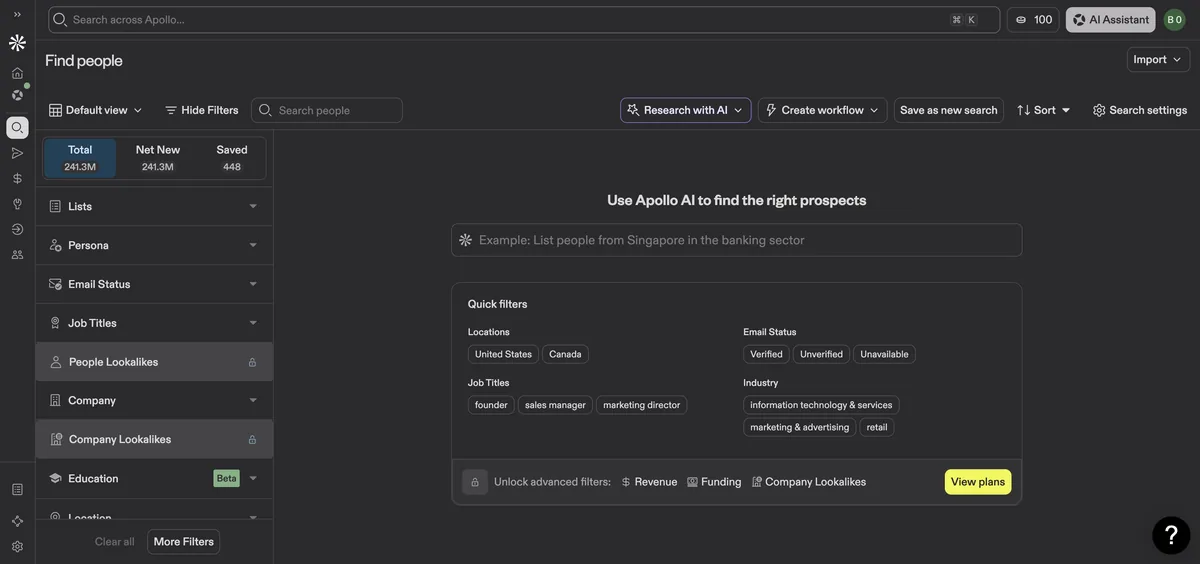
Pauline recommends starting with Apollo.io. It’s affordable, covers most markets, and integrates with most CRMs.
But test the enrichment rates for your specific market. They’re only useful if the enrichment rate is high enough that you’re not wasting time on bad data.
One more thing: don’t expect a salesperson to become a database expert. This is a profession. If you want accuracy, hire a data analyst or marketing person to build the database. At minimum, have one person dedicated to database maintenance.
Layer 2: CRM (your single source of truth)
A CRM is where everything lives.
Every call, every follow-up, every meeting.
Without it, you’ll lose track of prospects and repeat information.
“Excel files are not dynamic. At some point, you’re not going to see the details.”
A CRM keeps everything organized, trackable, and searchable.
CRM evaluation questions
Here are the questions to ask to find the right fit:
- Does the CRM integrate with my phone system? (Non-negotiable.)
- Can I set up automated tasks and follow-ups?
- Does it show me the metrics I actually care about? (Call volume, meetings booked, conversion rates.)
- Is it designed for sales, or is it a generic tool?
Recommended CRM for cold calling
HubSpot is Pauline’s pick for small teams. It costs between €15-€25 per user per month, which is affordable. But the bigger point is that it connects everything.
“When I set up an integration, as soon as I’m in a call, my summary goes directly into the CRM. I don’t have to copy and paste it by hand.”
If you try to run a cold calling operation without this integration, you’ll fail. People will swear they called (even when they didn’t). Tasks will fall through the cracks. You’ll duplicate calls to the same person. It spirals.
Layer 3: Phone system (your calling tool)
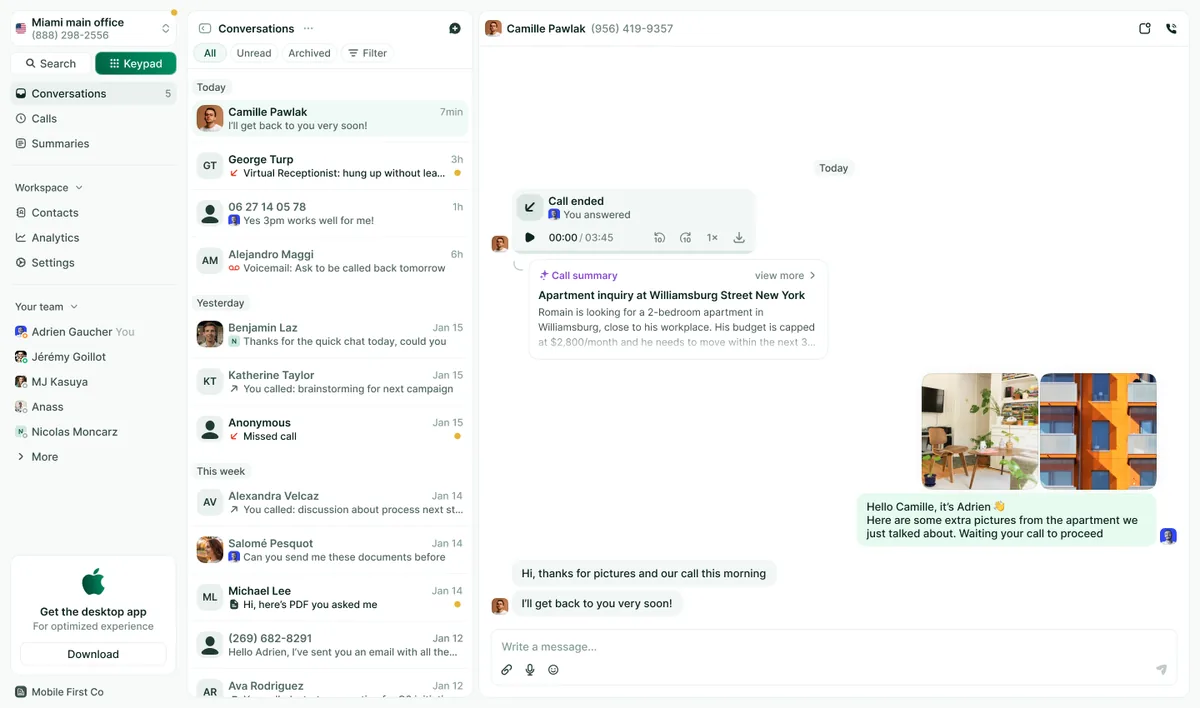
This is where cold calling actually happens. Your phone system should record calls, transcribe them, and sync everything to your CRM automatically.
“It’s essential, and moreover today, everything works in an integrated way. If I have a telephony solution and it’s not interfaced with my CRM, I don’t see the interest.”
Phone system evaluation questions
Here are the questions to use to find the best phone system for your sales team:
- Does it record and transcribe calls automatically?
- Does it integrate with my CRM?
- Does it offer a power dialer or click-to-dial?
- Can I track how my team is doing?
Recommended phone systems for cold calling
We are probably biased, but we’re confident that Allo checks all these boxes. We wanted to create the best phone system for the AI era.
Layer 4: Multi-channel engagement (email + LinkedIn)
Cold calling works best when it’s part of a sequence. Pauline usually starts with the phone because it’s fastest. But if you’re sure of yourself and your targeting is solid, you can start with a LinkedIn message and email, then call after a few touchpoints.
“The more you multiply your channels, the more you’ll have a chance to reach people.”
This doesn’t replace calling. It supports it.
Engagement tools evaluation questions
Here’s how to evaluate your engagement tool:
- Does it integrate with your CRM?
- Does it support native LinkedIn messages (not only the official InMails)?
- Does it offer a workflow builder with conditions (if no email reply after 3 days, send this LinkedIn message)?
- Does it let you track open rates and engagement?
Recommended engagement tools
Lemlist is usually a robust starting point. It integrates with HubSpot and supports native LinkedIn messages.
The full tech stack: a complete setup for small teams
If you’re building a cold calling operation from scratch, here’s what Pauline recommends for a team of 3-5 callers:
- Research tool (Apollo or similar): €10-€50/month
- CRM (HubSpot): €15-€25/user/month
- Phone system (Allo): €15-€25/user/month
- Multi-channel tool (Lemlist or similar): depends on platform
Total monthly cost: Around €100-€200 for a 3-person team. Less than €50 per person per month.
That’s less than what most companies spend on coffee.
Can you start small? What’s the absolute minimum?
Yes. You don’t need the full stack to start.
You need:
- A phone (sounds obvious, but use a professional phone, not your personal one)
- A CRM (even a free plan like HubSpot’s basic tier)
- A way to find prospects (LinkedIn Sales Navigator or Apollo)
“The fact of not having the right stack won’t stop you from being good on the spot. It’s going to stop you from being at maximum over time."