Main takeaways
- Your ICP is the foundation of everything. If your target is “all startups in Florida,” you’re already off track. Define your ideal customer profile by persona, and tailor your approach to each one.
- Stop giving salespeople tools without training. Database creation is a skill. Invest in a dedicated person or proper onboarding before handing over Sales Navigator and Apollo.
- Tuesday and Thursday mornings are a myth. Rotate your calling days based on your target’s schedule. If every salesperson calls on the same days, your prospects are burnt out by noon.
So they spent ten minutes looking for a prospect’s information. They called. No answer.
Then they spent another ten minutes looking for someone else.
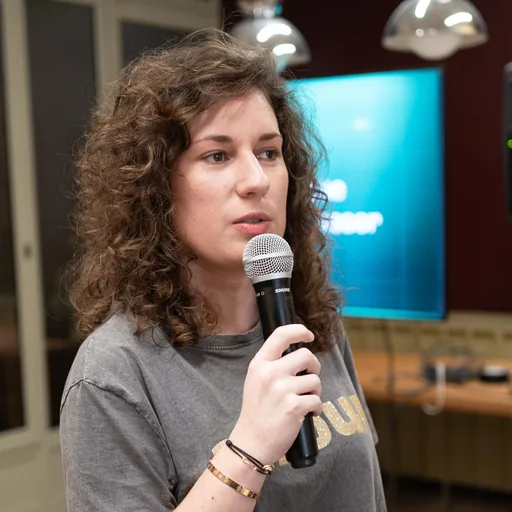
That’s the cycle Pauline Perez, founder of Boucan Factory and cold calling trainer with 12 years of experience, sees in nearly every sales team she audits.
The problem isn’t the phone. It’s what happens before anyone picks it up.
Preparation is the most overlooked part of cold calling. And it’s the part that separates teams that book meetings from teams that burn through lead lists with nothing to show for it.
In this guide, we break down Pauline’s full preparation framework: from defining your ICP to building your database, choosing the right calling windows, and getting mentally ready before you dial.
How to find your ICP
Your Ideal Customer Profile is the starting point of every cold calling session. Skip this step, and everything downstream falls apart: your hooks miss, your questions don’t land, and your conversion rates tank.
Pauline is blunt about this.
“When I hear ‘my target is all startups in Florida,’ I know that’s starting very, very badly.”
Why “everyone” is not a target
Even when you sell one product, the value it brings changes depending on who you’re talking to. A CEO cares about numbers and ROI. An HR director cares about recruiting efficiency and internal processes.
Same solution. Completely different conversations.
“The CEO who is interested in numbers, and HR who is interested in recruiting. Yet you have a solution that is the same that you’re going to propose to both. It’s just that you’re going to arrive with different speeches, different approaches.”
If your reps are using the same pitch for every persona, they’re wasting calls.
Whose job is it to define the ICP?
Not the salesperson’s. Pauline is adamant: defining the ICP is the leader’s responsibility.
“Today, I see salespeople who are suffering. They’re recruited, they have their tools, and they’re told, ‘Here, you’re going to be selling this product.’ That’s it.”
Too many companies hand over a product and a phone and expect results. That’s a recipe for burnout, not bookings.
How to build your ICP from scratch
Pauline recommends two paths depending on your situation:
- If you’re starting from zero, go back to basics. Ask yourself why this solution exists. What problem does it solve? For whom?
- If you already have customers, use the 80/20 rule. Look at your best clients. What do they have in common? Industry, company size, role of the buyer, pain points. That’s your ICP.
Once you have it, build out your personas with their specific constraints, goals, and objections. This directly feeds your Sales Book, your hooks, and your qualification questions.
How to find your leads
Once you know who you’re targeting, you need to find them. This is where most teams lose hours every week without realizing it.
Database creation is a profession
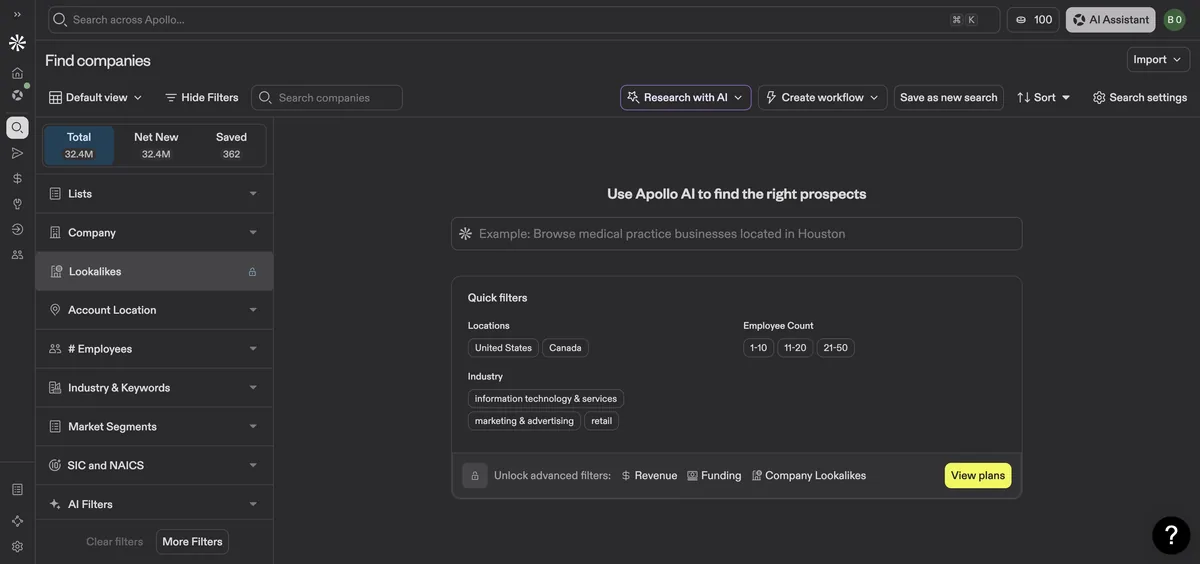
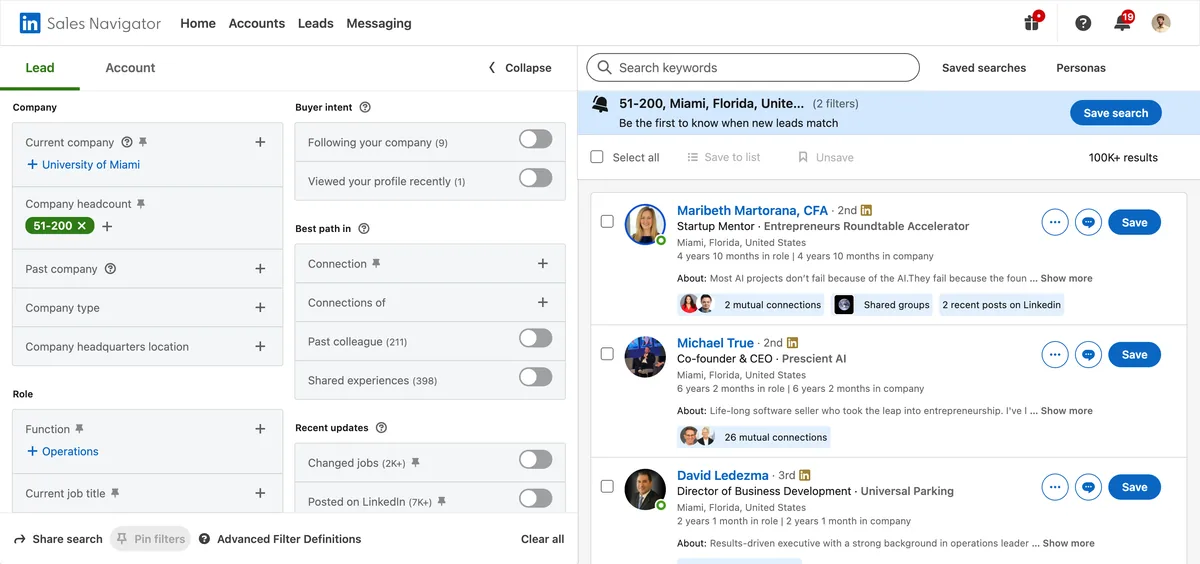
Pauline doesn’t sugarcoat this. Giving Sales Navigator and Apollo to a salesperson without training is setting them up to fail.
“Making databases is a profession. Giving these tools to salespeople to create databases... Personally, I hate creating databases. A data analyst should do that.”
She’s seen both extremes. Companies that provide no tools at all, where the rep is stuck manually searching LinkedIn. And companies that throw tools at the team without explaining how to use them.
Neither works.
What actually works
Pauline recommends one of three setups:
- A dedicated data analyst who builds and enriches the lists
- A marketing or growth person who supports sales with qualified data
- A dedicated person within the sales team who handles database creation
The key principle: separate the research from the calling. Your best callers should be calling, not spending half their day building spreadsheets.
Verify, enrich, then call
Pauline’s pre-call checklist has three steps:
- Verify that the database is qualified and enriched (correct names, titles, phone numbers)
- Check CRM presence to avoid calling someone your team already contacted
- Prepare the Sales Book with hooks, approach, and pitch tailored to each persona
“The right way is to say, okay, I’m going to take time to prepare. You have to create a good database.”
If your reps are looking up each prospect one by one between calls, they’re doing it wrong. Batch the research. Then batch the calls.
Tools for lead research
Pauline uses research tools like LinkedIn Sales Navigator and Apollo for enrichment. But she’s clear: the tools don’t matter if no one knows how to use them.
For targets that aren’t on LinkedIn (opticians, hair salons, schools), she calls the business directly on their landline. For targets on LinkedIn, enrichment with mobile numbers is essential.
“The moment the target is on LinkedIn, you also need to enrich. Because otherwise, nothing’s ever going to happen.”
The best times to cold call
“Tuesday and Thursday mornings.”
You’ve heard it. Every sales blog says it. Pauline says it’s nonsense.
“If you limit yourself to only two days a week for prospecting, that’s a shame. All French salespeople call on Tuesday and Thursday. By the end of the day, prospects are a bit fed up.”
When every sales team follows the same advice, it stops being an advantage. It becomes noise.
Adapt your schedule to your target
The best time to call depends entirely on who you’re calling. Pauline adapts her schedule based on the persona’s habits:
| Target | When to avoid | Why |
|---|---|---|
| Schools | Wednesday afternoon | Closed in France |
| HR directors (often women) | Wednesday | Afternoon off is common |
| Hair salons | Monday | Typically closed |
| Supermarket managers | — | Saturday morning works well (they work Saturdays) |
Rotate your calling days
Instead of sticking to the same two days, Pauline rotates her schedule month by month. One month it’s Monday, Tuesday, Thursday. The next it’s Wednesday, Thursday, Friday.
“We’re always rotating.”
This approach maximizes the chance of catching people at different times and avoids the pile-up effect of every salesperson calling on the same day.
Don’t be afraid to call outside standard hours
If you’re trying to bypass a gatekeeper, Pauline suggests calling after 5 PM. The secretary has usually left by then, and you’re more likely to reach the decision-maker directly.
How to get ready for the calls
You’ve got your ICP. Your database is clean. Your calendar is blocked for prospecting.
Now it’s about getting your head in the right place.
Believe in what you sell
This one sounds obvious. It’s not. Pauline only takes clients whose solutions she believes in. And she sees the impact when salespeople don’t have that conviction.
“When I see salespeople who don’t believe in their products, I think that already has a big impact.”
If you don’t believe your product solves a real problem, it’ll show in your voice. Your prospect will feel it.
Prepare your Sales Book, not a script
Pauline hates the word “script.” It reminds her of rigid B2C call center scenarios. Instead, she builds what she calls a Sales Book.
A Sales Book includes:
- Your personas and their specific constraints and goals
- Hooks tailored by persona, highlighting pain points you solve
- Open-ended questions to guide the conversation
- Common and industry-specific objections with response frameworks
“You know who you’re calling. You know what value you can bring to this person. Well, that’s what you need to put forward.”
The difference between a script and a Sales Book? Flexibility. A Sales Book gives you all the information you need, but lets you adapt in real time based on how the prospect reacts.
“The person picks up and I hear the metro behind, I’m going to rebound differently.”
Get in a good mood
Cold calling is a performance. If you’re not mentally ready, it shows.
Pauline’s advice is practical. If you’re having a rough day and can delay your session, do it. If you can’t, find something that shifts your energy. Put on music. Move around.
“Put on some music that’s going to make you want to do it. Do something that’s going to make you want to do it.”
She also swears by standing up while calling. It keeps her in a dynamic state and helps her project energy.
“I talk a lot on the phone while standing. That way, I’m in a dynamic. I walk, I talk with the guys.”
Smile. Seriously.
It sounds like generic advice. Pauline agrees it’s common, but insists it works.
“If you do prospecting while looking angry, you attract what you give off.”
Your mood transmits through the phone. A prospect can tell if you’re engaged or going through the motions. Smiling changes your tone, your rhythm, and your energy.
Think of it as going to the gym
Nobody loves the effort. Everybody loves the results.
“It always sucks, but when you see the results at the end, you’re happy. Like going to the gym.”
Pauline schedules her prospecting sessions the way she schedules workouts. Once they’re booked, they’re non-negotiable. That discipline is what separates consistent performers from occasional callers.
Use the right tools to stay focused
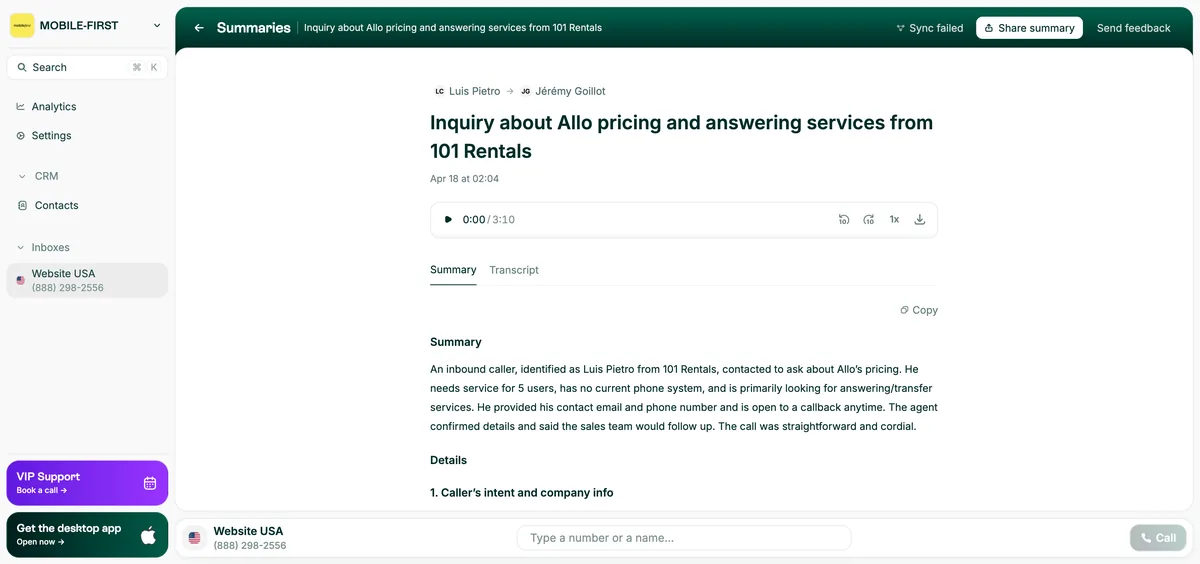
When your tools handle the admin, you can focus 100% on the conversation. That’s why Pauline switched to Allo in September 2024. She no longer takes manual notes during calls because the system records, transcribes, and syncs everything to her CRM automatically.
“I no longer need to be in front of my computer taking notes. Since Allo does it all by itself. I’m really a hundred and fifty percent with the prospect.”
Less admin means more focus. More focus means better conversations. Better conversations mean more meetings booked.