.svg)











.avif)


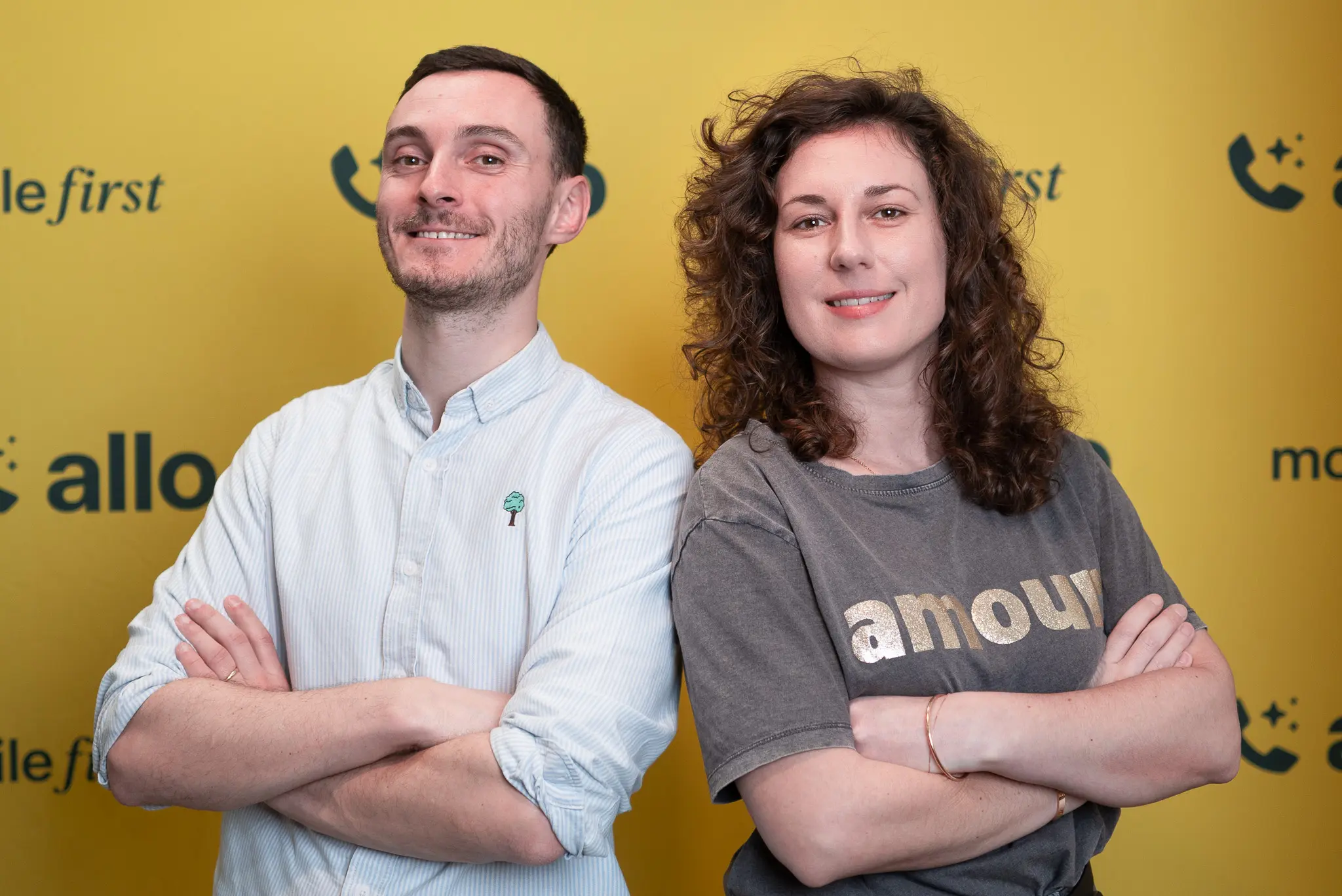

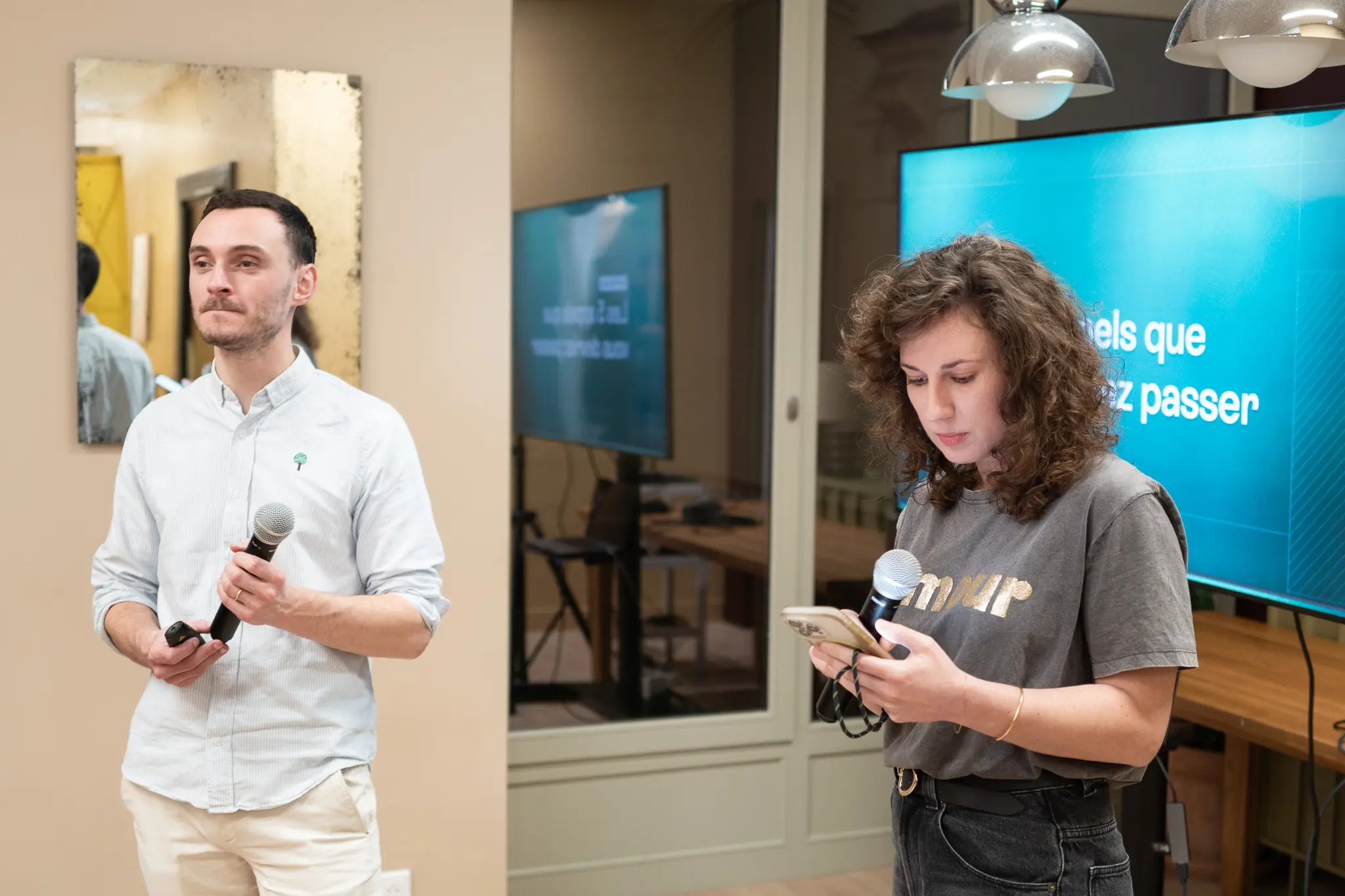
A few weeks ago, we brought together two cold-calling practitioners who have nothing left to prove:
- Pauline Perez, founder of Boucan Factory and Halo Académie, who has 12 years of B2B telephone prospecting experience in agency and training roles.
- Adrien, a sales freelancer and ex-Spendesk who built and coached an outbound team from scratch at Spendesk.
While Pauline and Adrien come from different backgrounds, they've reached the same conclusion: most sales teams repeatedly make the same foundational mistakes, year after year. These errors have nothing to do with their technology or the elusive "perfect script" they continue to seek.
This article brings together what we took away from that masterclass, crossed with the in-depth interviews we conducted with Pauline.
This guide is based on real-world results.
It details what is actually working in cold calling today, what isn't, the reasons behind both, and practical ways to immediately improve your approach.
1. "Cold Calling Is Dead":
It's the line you've heard at every sales conference since 2018.
Pauline has a direct response, almost playful: "Cold calling is dead, long live cold calling."
What's dead is bad cold calling. Robotic scripts read word for word. Mass calls with zero preparation. Sales reps who were never properly trained and who turn to automation because picking up the phone fills them with dread.
What's very much alive is direct contact, when it's done right. And the reason is contradictory: the more we digitize, the more people crave human interaction. Inboxes are flooded with automated emails, LinkedIn sequences generated by AI agents, messages that all start with "I hope this finds you well." Against that noise, someone who calls, adapts their tone, and actually listens to what you say stands out immediately. It creates a connection that written communication simply can't.
The data backs this up: teams that combine cold calling with multichannel sequences generate more meetings than those relying exclusively on digital outreach. The phone remains the fastest feedback loop, which is exactly what makes it so valuable for refining your ICP and your message.
2. The 5 Situations Where You Should Pick Up the Phone
During the masterclass, Adrien highlighted a crucial point that most teams completely miss: the phone is not just for prospecting strangers. There are five concrete situations where a call massively outperforms an email, and they are systematically underused.
- The referral asks after signing. The best time to ask a new customer to introduce you to their network is within 3 to 4 days of signing their contract, when the excitement is still fresh. Not in 6 months once you've "proved yourself." At this point, the customer is proud of their decision; they want to talk about it. A focused 5-minute call ("do you have former colleagues at X or Y who might face the same challenge?") converts far better than a generic referral email.
- Pre-meeting preparation. In teams with an SDR/Account Executive split, there's often a gap between the initial qualification and the demo. The AE who inherits the file without having spoken to the person walks in blind. A 10-minute requalification call before the demo, to fill in missing information, confirm who will be in the room, and anticipate objections, radically changes the quality of what follows. Adrien made this a systematic practice at Spendesk, especially when the decision committee had expanded between discovery and demo.
- Responding to a positive signal (NPS or review). When a customer gives you a high NPS score, most teams fire off an automated thank-you email. That's a missed opportunity. A call to thank them genuinely, ask for feedback on what could still improve, and naturally slide in a referral or testimonial request—that's where the real value is. Adrien had set up an automated Slack channel at Spendesk that surfaced NPS scores in real time so sales reps could react the same day.
- Handling dissatisfaction. When a customer is unhappy, email threads turn passive-aggressive, defensive, and endless fast. A call cuts through all of that. Acknowledge the issue, listen without interrupting, clarify what happened, propose a concrete solution, sometimes with a commercial gesture attached. That resolves in 20 minutes what a week of email chains never will.
- Upsell and cross-sell. Growing an existing customer costs less and takes less time than acquiring a new one, because the trust is already there. The triggers for calling: a fundraise, visible headcount growth, heavy product usage, or an annual business review. These are moments when needs are evolving and your contact is receptive to a conversation about what comes next.

3. Preparation: What Separates Results From Excuses
Pauline is categorical on this: most of the problems she sees in coaching have very little to do with call technique. They start upstream.
The scenario she describes, and still sees too often: a rep spends 10 minutes searching for someone on LinkedIn, calls them, gets no answer, then spends another 10 minutes searching for someone else.
The result? An exhausting day for 6 real conversations. The fix isn't to search faster, it's to separate the preparation phase completely from the calling sessions.
Good preparation breaks down into three distinct things:
- A clean, enriched database. Pauline repeats this in every training: building databases is a profession. Giving LinkedIn Sales Navigator and Apollo to a sales rep without training them in list creation or without providing support (a dedicated data analyst, a growth person, or someone in the team who owns this) is setting them up to burn out and hate prospecting. The tools exist, but they don't replace the thinking about who to target and why.
- A precisely defined ICP. When Pauline hears "my target is every startup in California" she already knows it's going badly. Same solution, entirely different pitch depending on whether you're talking to the CEO (focused on numbers and ROI) or the HR director (focused on recruiting and compliance). ICP and persona definition is the founder's responsibility, not the rep's. A sales rep sent out to prospect without that groundwork done is a sales rep being set up to fail.
- A Sales Book, not a script. Pauline hates the word "script" because it conjures bad B2C calls, rigid conditional flowcharts, phrases the rep reads off their screen. A Sales Book is different: it's the collection of hooks by persona, open questions prepared in advance, pain points you address, common objections with possible responses. A tool you draw from, not a cage you lock yourself in.
4. The Opening: The First 10 Seconds, For Real
Pauline often corrects trainings that talk about the "critical first 30 seconds." In practice, the first 10 seconds are decisive. Thirty seconds is a very long time to talk without interruption when you've just cold-called a stranger.
Here’s the structure she uses, tested and refined over thousands of calls:
Two induced "yeses," not requested ones. First, confirm the person's first name with a questioning intonation, not an affirmative one. "Hi, Julie?" If it's a namesake or the name in your database is wrong, the person corrects you immediately, and you avoid a clumsy opening. Then introduce yourself and validate their role: "I saw on LinkedIn you're the Sales Director." That's an induced question, not a statement. If the person isn't in charge of that topic, they'll say so. You get information without sounding like you're reading off a sheet.
What never to say in your opening. "Am I catching you at a bad time?" Pauline is categorical: never ask this unless you already have a clear signal that the person is in the middle of something (meeting noise, train sounds, a child in the background). Asking the question unprompted is an invitation for them to say yes, they are busy. The "permission-based" approach ("this is a prospecting call, do you want to hang up or give me 30 seconds?") has the same problem: when the person says no, the rep looks ridiculous.
Tone of voice over words. Tone matters more than the exact words you use. Pauline adapts her pace and energy to her interlocutor, which she calls mirroring. She has a favorite story: one day, someone answers and starts whispering. She starts whispering too. The person asks why she's whispering. She says she doesn't know. The person laughs and leaves the room they were in. The call goes well. This isn't technique, it's human adaptation.
5. Objections: Stop Treating Them as Obstacles
Most sales reps handle objections badly because they've misunderstood what they are. An objection is not a refusal. It's a disguised request for information, or a signal that your approach hasn't yet created enough value for the person to engage.
Pauline separates two categories that need to be handled completely differently:
- Classic objections ("I don't have time," "send me an email," "it's not the right moment," "I'm not interested"): these are reflexes, often said before the person has even understood what you're offering. They deserve to be tested, not passively accepted.
- Industry-specific objections ("we already work with your competitor," "our budget is frozen until January," "we just finished a vendor selection on this"): these can be real. They require a different kind of rebound, usually an open question to understand the precise situation.
On "send me an email": Pauline doesn't say “yes” or “no”. She asks exactly what topic to cover in the email (outsourcing? training? CRM setup?), which lets her qualify the interest, and she immediately fixes the next step ("I'll send it over and follow up in 10 days to get your thoughts").
On "I'm not interested" said before you've finished your first sentence: that's a signal the person wants to get rid of you without knowing what you do. It's information, not an answer. If instead the person says it after understanding your proposition, they will naturally explain why, and it becomes a real conversation.
On "it's not the right moment": Pauline has a favorite example. A prospect tells her he's on vacation. She asks where. He tells her. She says "great, when do you get back?" The conversation opens up naturally, and she hangs up with a confirmed meeting for his return. "It's not the right moment" wasn't a refusal, it was context.
6. Active Listening: The Superpower Nobody Actually Trains
Pauline uses a simple image: "a sales rep on the phone has one mouth and two ears." They should be listening twice as much as they speak. In practice, the call recordings she plays for her students show the opposite: the rep talks, explains their solution, runs through their arguments, and the prospect waits patiently for a chance to hang up.
Active listening starts the moment someone picks up. If you hear a meeting noise, a train, a child in the background: you acknowledge it, you offer to call back, and you show that you actually heard something. That's what separates a human call from an automated one.
When you ask the right questions, people open up. Pauline regularly plays a recording where a prospect starts by saying "wait, you're calling me by my first name, I don't know you, who are you?" Her reaction: she doesn't apologize, she calmly explains, she listens. And a few minutes later, the person goes into a full monologue about their internal organization, gives Pauline the name of the right contact in another department and shares their details. A less experienced rep would have hung up at the first sign of friction.
Active listening also means knowing when to stop. There are clear signals that someone genuinely doesn't want to talk, and pushing becomes harassment. The line between persistence and aggression is the quality of the exchange, not the number of attempts.
7. What Experienced Reps Get Wrong Without Knowing It
Pauline has a firm theory about senior reps: the hardest people to train aren't juniors, they're the seniors who think they already know everything.
Here are the most common mistakes senior salespeople make:
- Refusing to prospect. "I'm a senior salesperson, cold calling is for juniors." Pauline has zero tolerance for this. A sales rep who doesn't prospect is not a sales rep; they're an account manager, which is a different job. Prospecting is not a punishment for beginners, it's the engine of any commercial growth, regardless of seniority.
- Talking too much about themselves. A rep who mentions three times in the same call that a well-known company uses their solution. Who speaks more than they listen. Who runs through product features before knowing whether the prospect even has the problem those features solve. The cold call is not a demo, it's a qualification.
- No clear next step at the end of the call. Pauline considers this the most expensive mistake. Whether it's a cold call, a demo, a first or second meeting: you never hang up without having set the next step. The person is busy but the topic interests them? Set a callback. They want to think it over? Propose a specific date to come back. Without a next step logged in the CRM, the opportunity disappears.
- Poor discipline with tools. A poorly maintained CRM, untracked follow-up tasks, Excel files full of color codes nobody understands anymore: these are signs of a lack of rigor that costs meetings. Not because the rep is bad, but because they haven't built the right habits.
8. The Tech Stack: What Top Performers Actually Use
Pauline is equally clear on this: technology doesn't replace skill, but it multiplies good ones. A rep without the right tools can be excellent in the moment, but won't last over time. The administrative friction around calls (writing notes, updating the CRM, scheduling follow-ups) accumulates and eventually erodes the energy available for actual prospecting.
Pauline recommends this minimum stack for a team of 3 to 5 cold callers:
- An enrichment and database creation tool (Apollo, Kaspr, or equivalent).
- A connected CRM (HubSpot at its accessible tier runs between $15 and $25 per user per month).
- A telephony tool integrated natively with the CRM.
On that last point, Pauline doesn't hide her enthusiasm for Allo since she started using it in her agency in September 2024.
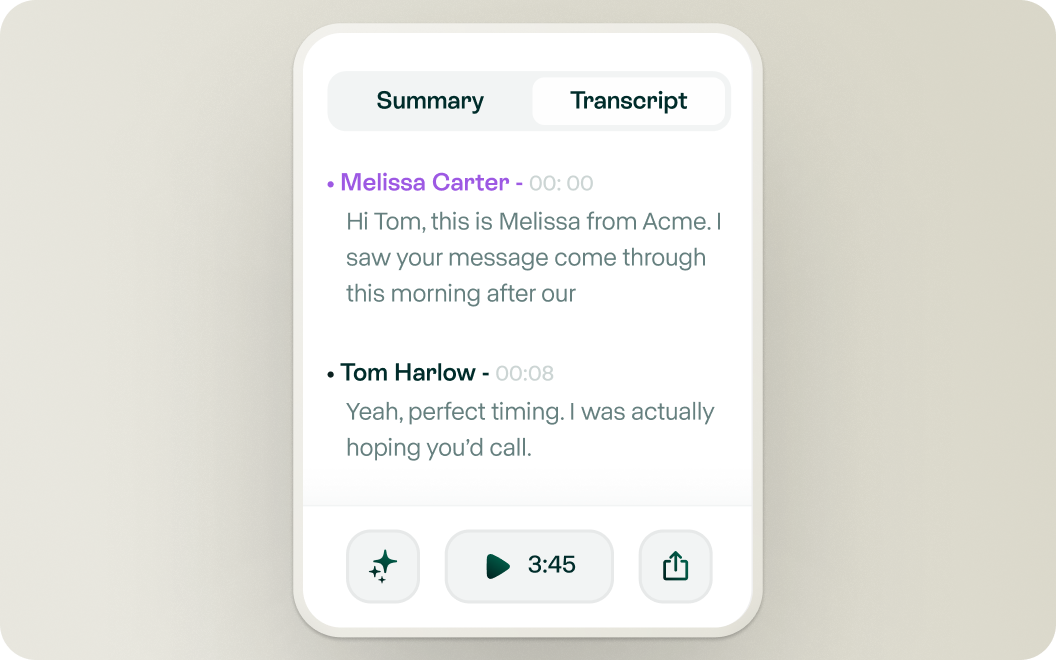
What convinced her was very concrete: she no longer needs to be in front of her computer during calls to take notes. Transcription and automatic summaries happen on their own and go directly into her CRM contact record. "I'm two hundred percent present with my prospect, at the moment, without worrying that I missed something worth writing down."
She also highlights the transcription reliability. Word for word. No interpretation, no hallucination. And the summary quality surpasses what she'd write herself ("I used to note 'not interested, already has a solution.' Allo would generate a full synthesis with the details of the competing tool mentioned, the constraints raised, the next steps"). For managers with remote teams, it's also a non-intrusive way to understand what's actually happening on calls and coach on concrete elements rather than impressions.
The parallel dialer question is also worth addressing directly. Pauline is against it in B2B, without ambiguity. Launching 5 simultaneous calls and hanging up on people who pick up at the wrong moment is importing a B2C call center practice into a context where the relationship matters. People block numbers. A sales team's reputation is built or destroyed on these micro-interactions.
9. Multichannel: Phone, Email, LinkedIn, in What Order?
The short answer: there is no universal order, but there is a principle.
Pauline starts with the phone when she can, because it delivers results fastest and tells her within a few calls whether the target is right. When volume is high and the target is on LinkedIn, Adrien, who works with a multichannel AI agent (LEO, a solution Pauline is a partner in), sometimes prefers to open with a LinkedIn + email sequence before calling non-responders.
What's clear is that multiplying channels increases your chances of reaching people, because everyone has different habits. Some never pick up unknown numbers. Others ignore all their professional emails. Others will never read a LinkedIn message. Multichannel isn't redundancy; it's coverage.
The golden rule: when a meeting is booked on the phone, the calendar invite goes out immediately, during the call. Pauline confirms the invite was received before hanging up. No pompous follow-up email "further to our conversation today," that adds nothing and smells like a template.
On voicemails: Pauline never leaves them in prospecting. The main reason, often misunderstood: leaving a voicemail can get your number blocked. Someone who doesn't want to be called back may decide to blacklist the number after listening. Better to hang up and try at a different time. Exception: to confirm or reschedule an already booked meeting.
10. Mindset, Rejection, Burnout: What Nobody Tells You in Sales Training
Pauline has a direct response to the statistic that circulates in sales circles: 63% of reps say cold calling is the part of their job they hate most. Her answer: "They're not properly equipped, and they don't know how to do it right."
That's not harshness; it's a diagnosis. Call reluctance, the fear of picking up the phone, almost always comes from two sources:
- The person doesn't have a solid database and exhausts themselves searching in real time
- They're not prepared and don't know what to say. Fix both problems, and the resistance drops considerably.
On rejection itself, Pauline is philosophical: "A no is not a cannon shot." The rep who takes every refusal personally can't sustain the work over time. The person isn't being rejected, the proposal is, at this specific moment, in this specific context. The same person called 6 months later might become a customer.
She turns this into a systematic practice in her agency: calling back people who said no the previous year. Last November, she called every CFO who had declined earlier in the year. Result: 3 meetings generated.
On burnout: Pauline created a dedicated training for managers after noticing a recurring pattern. The reps she'd trained would come back a year later saying the training was great, but their managers had no idea how to lead the team through prospecting. Cold-calling burnout doesn't come from the phone. It comes from a lack of process, structure, and tools. A rep with no CRM, no database, no clear objectives, and no regular feedback will burn out regardless of their skill level.
11. What the Best Do That Everyone Else Doesn't
In summary, what comes out consistently from our conversations with Pauline and Adrien:
- The best salespeople establish a prospecting routine and never let anything encroach on their calling blocks. When the slot is in the calendar, it's sacred.
- They know their ICP better than their prospects know themselves. They arrive on a call with the 2 or 3 main constraints of their interlocutor already in mind, before the first word has been exchanged.
- The best salespeople actually listen. They ask a question and let the prospect answer fully. They don't jump to the next question before the response is complete.
- Tracking is everything. Every call, every interaction, every next step, must be logged in the CRM. Not because a manager is watching, but because they know tomorrow's results depend on what they logged today.
- The best callbacks? The "nos" from 6 months ago. Because a “no” in March doesn't mean “no” in September.
Conclusion: The Fundamentals Don't Change, the Context Does
What's striking about the masterclass we hosted in Paris is that the core principles of cold calling haven't really changed since Pauline picked up her first telephone 12 years ago. Active listening, preparation, objection handling, the systematic next step: these are human principles, not software features.
What changes is the context in which those principles apply. The administrative load around calls can now be largely automated (transcription, summaries, CRM sync). Research and enrichment can be accelerated. Multichannel sequences can be orchestrated by AI agents.
But none of those tools make the call for you. None of them listen on your behalf. None of them create the human connection that makes a prospect decide to give a meeting to someone they've never heard of.
The question isn't choosing between human and technology. It's knowing exactly where each one adds value, and not confusing the two.
-
Allo is a cloud phone system built for modern sales teams. Automatic transcription, call summaries, native CRM integration. Learn more at withallo.com.
[[second-button]]