Minimalist Software: Why the Best Business Tools Are the Ones That Need No Training
In this post, our founder explains the concept of minimalist software and why he believes it represents the future of the industry.

Less features. Less settings. Less complex onboarding. Less add-ons. That's what the world wants now. Something simple, easy to use, and easy to adopt.
Today, we're drowning in software, and most of it, nobody knows how to use.
The average company now deploys 106 SaaS applications. Yet half of those licenses sit untouched for more than 90 days. Then, Feature bloat contributes to roughly 40 percent of product abandonment. We've spent two decades adding features, building settings panels, shipping configuration wizards.. And all we've managed to do is make simple things impossibly complex.
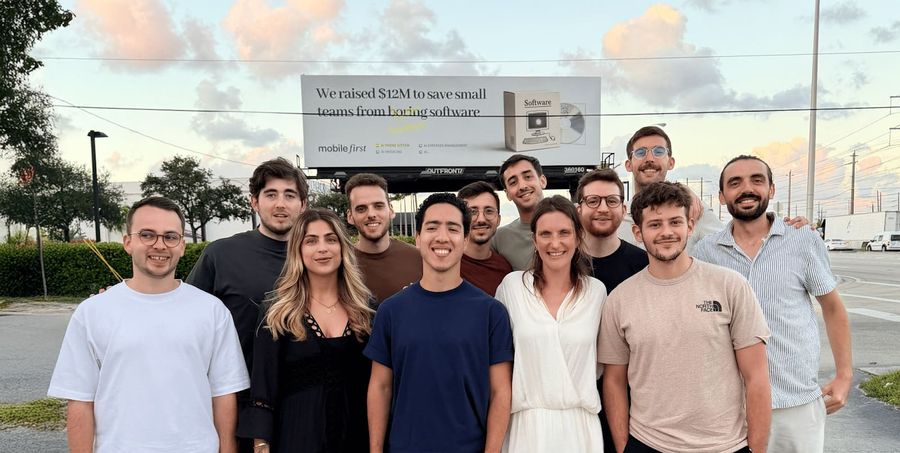
Here, at The Mobile-First Company, our entire philosophy is rooted in one conviction: the best business tools are the ones that need no training.
This isn't a design trend. It's a movement. And it's being driven by two powerful forces that are converging at the same time.
The Two Forces Driving the Minimalist Software Movement
Force One: The Self-Serve User
The first force is self-serve users, the people who choose their own tools. They don't wait for a procurement committee. They don't request a demo. They find something that looks good, try it, and start working. These people want software for themselves, not software chosen by someone three management layers above them.
They want something that feels like the apps they already use every day. Like Granola. Notion. Linear. Gemini. These products feel like consumer apps, but they solve professional problems. Nobody taught you how to use them. You just opened them and started working.
This is the consumerization of enterprise software playing out in real time.
Andreessen Horowitz's Martin Casado spoke about this: consumer apps have always prioritized product simplicity while enterprise tech focused on product value. That gap is now closing — fast. Consumer-grade B2B tools are winning because they respect the user's time, intelligence, and attention span.
Force Two: The Exhausted Enterprise
The second force is the enterprise world, and they're exhausted. Exhausted from building dedicated training programs for every new tool. Exhausted from hiring customer success armies just to get employees to log in. Exhausted from producing thousands of guides that nobody reads.
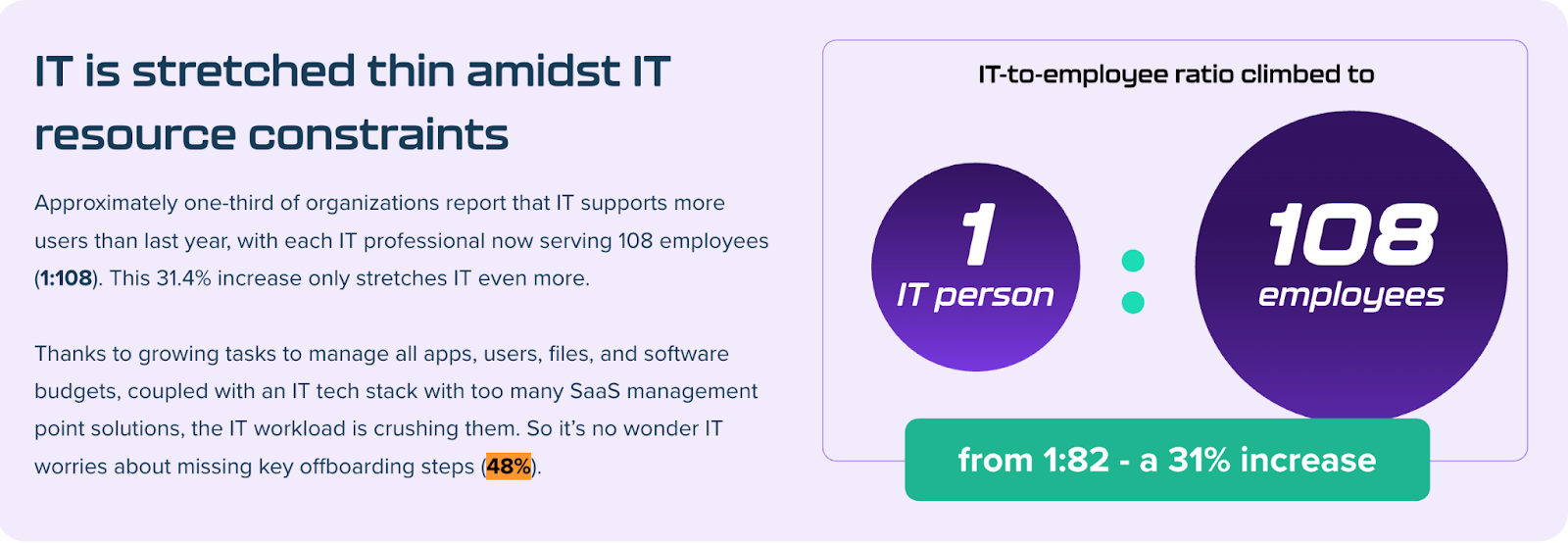
That shadow IT number is the tell. When 48 percent of enterprise apps are tools employees found on their own — bypassing the company's official stack — that's not a security problem. That's a product feedback loop. Employees are voting with their behavior: they'd rather find a simple alternative to Salesforce or RingCentral on their own than fight through the bloated platforms their company paid for.
And the IT teams supposed to manage all of this? They're stretched thinner than ever. The IT-to-employee ratio has grown 31 percent year-over-year to 1:108. That's one IT person for every 108 employees. They're not evaluating new tools. They're barely keeping the lights on.
Both forces, the self-serve user and the exhausted enterprise, are converging on the same demand: business software that needs no training. Simple SaaS tools that work on day one. Easy-to-use business tools that don't require a two-week implementation project.
That's the minimalist software movement. And it's reshaping every category in B2B.
What 7 Years of Building Enterprise Software Taught Me
I didn't start here. I arrived at minimalist business software the hard way... by building the opposite.
After building enterprise software for seven years, I had a painful realization. We needed an army of customer success managers and support agents just to make people use our product. We produced thousands of how-to guides, product walkthroughs, and onboarding sequences, and still, users didn't know which features to use. Our own engineers were lost and couldn't understand the full product anymore. Our sales team was unaware of 50 percent of the features they were supposed to sell.
We had created a huge platform that looked incredibly smart inside a sales demo and checked every box in a company tender. But the moment a real user sat down to actually do their job — they were completely lost.
That's the dirty secret of enterprise software. It's designed to win deals, not to be used. It's optimized for the procurement process, not for the human being who has to stare at it eight hours a day.
This is why enterprise software is so complex. The incentive structure is broken. The person who buys the software isn't the person who uses it. So the product is designed for the buyer's checklist, not the user's workflow. More features means more checkboxes. More checkboxes means more deals won. The fact that nobody can actually figure out the product afterward? That's what the "customer success" team is for.
This is B2B software complexity at its worst, and it's everywhere. Why is enterprise software so complex? Because complexity sells. Until it doesn't.
I didn't want to build that again. For my new company, I wanted to build something fundamentally different. I wanted to bring consumer DNA, the B2C mindset, to solve boring business problems.
Consumer DNA — Building Software for People, Not Companies
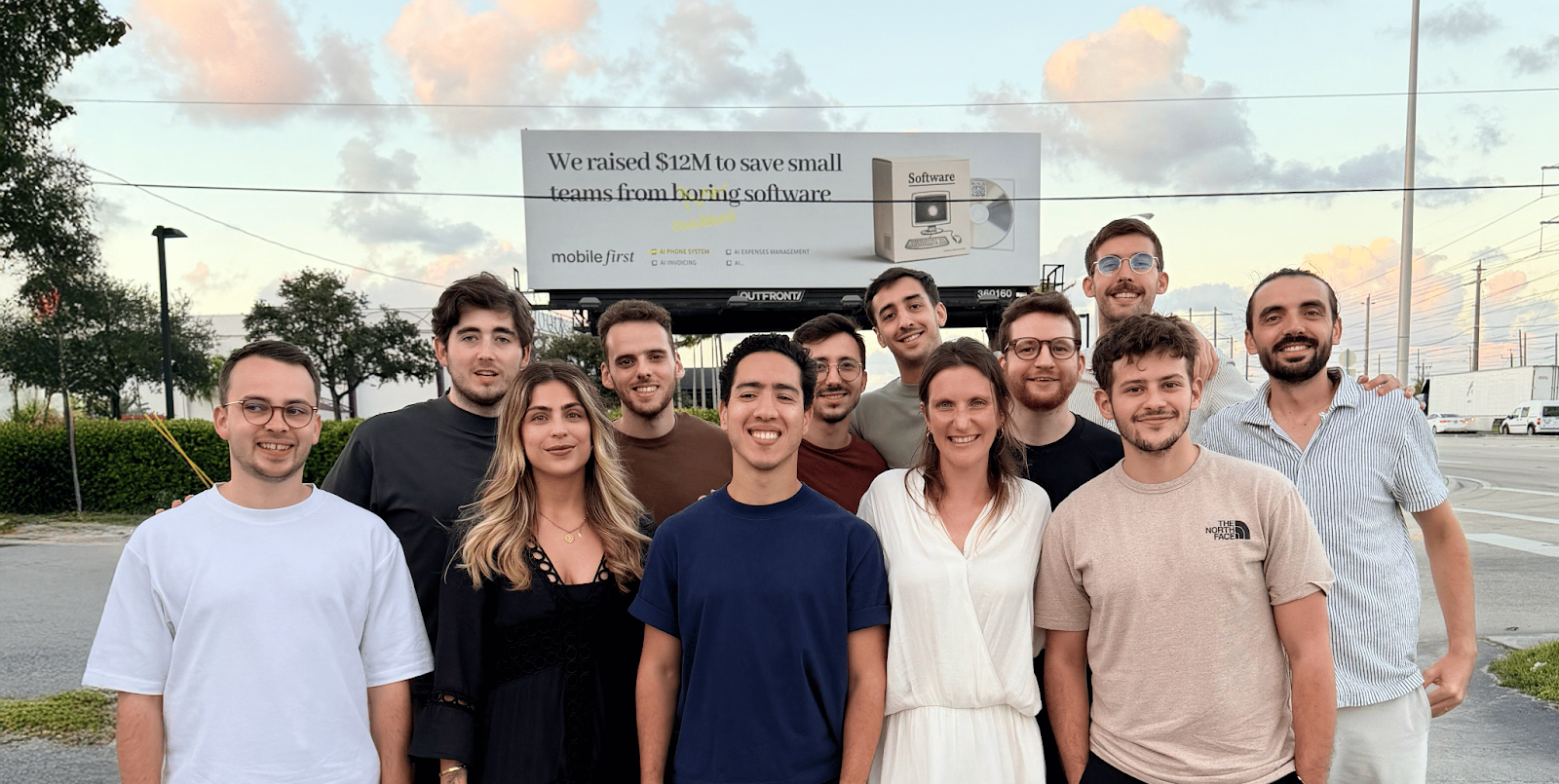
So we built a team of people coming from the consumer world. Dating apps. Neobanks. Social networks. YouTube. People who had spent their careers making products that millions of people use without a single training session.
We brought that DNA to business software, starting with a phone system (Allo), then invoicing (Due), then expense management (Claim).
The goal was radical simplicity: bring the ease of a consumer app to tools that businesses actually need.
Here's my test. I call it the WhatsApp Test.
My grandmother is 82 years old. She figured out how to use WhatsApp for the first time without anyone teaching her. No training. No guide. No onboarding flow. She just opened it and started messaging.
So why do you need training to use a business phone system?
This doesn't make sense. If an 82-year-old can master a messaging app on her own, something is deeply broken when a 30-year-old professional needs a two-day workshop to make a phone call through their company's VoIP platform.
The answer is that we've been building software for companies, not for people. We've been optimizing for org charts and procurement processes instead of optimizing for the human being sitting at the desk. We've been thinking in terms of "enterprise requirements" instead of asking: would a real person choose to use this?
At The Mobile-First Company, we flipped the question. Instead of asking "what features does this category require?", we ask: "What would make someone actually want to open this app?"
That's the consumer DNA in B2B software. It's not about making things pretty. It's about respecting the user enough to make things obvious. It's about recognizing that the person using your invoicing tool also uses Instagram, Uber, and WhatsApp, and they have zero patience for a product that doesn't meet that bar.
The AI Epiphany — When Minimalism Became a Product Category
The vision we had for The Mobile-First Company had a strong epiphany moment, the day OpenAI released the ChatGPT mobile app, and then when Anthropic followed with Claude.
Look at those interfaces. A single text box. Almost no settings. No complex setup. No onboarding tutorial. You land directly on the product, and you already know how to use it. Your grandmother could use it. Your intern could use it. Your CEO could use it. Everyone starts from the same place.
That's when we realized: our vision wasn't just a product philosophy, it was becoming a product category.
Minimalist software. Simple interface. Almost no settings or complex setup. You land directly on the product. You already know how to use it. And behind that simplicity, AI handles the complexity you never see.
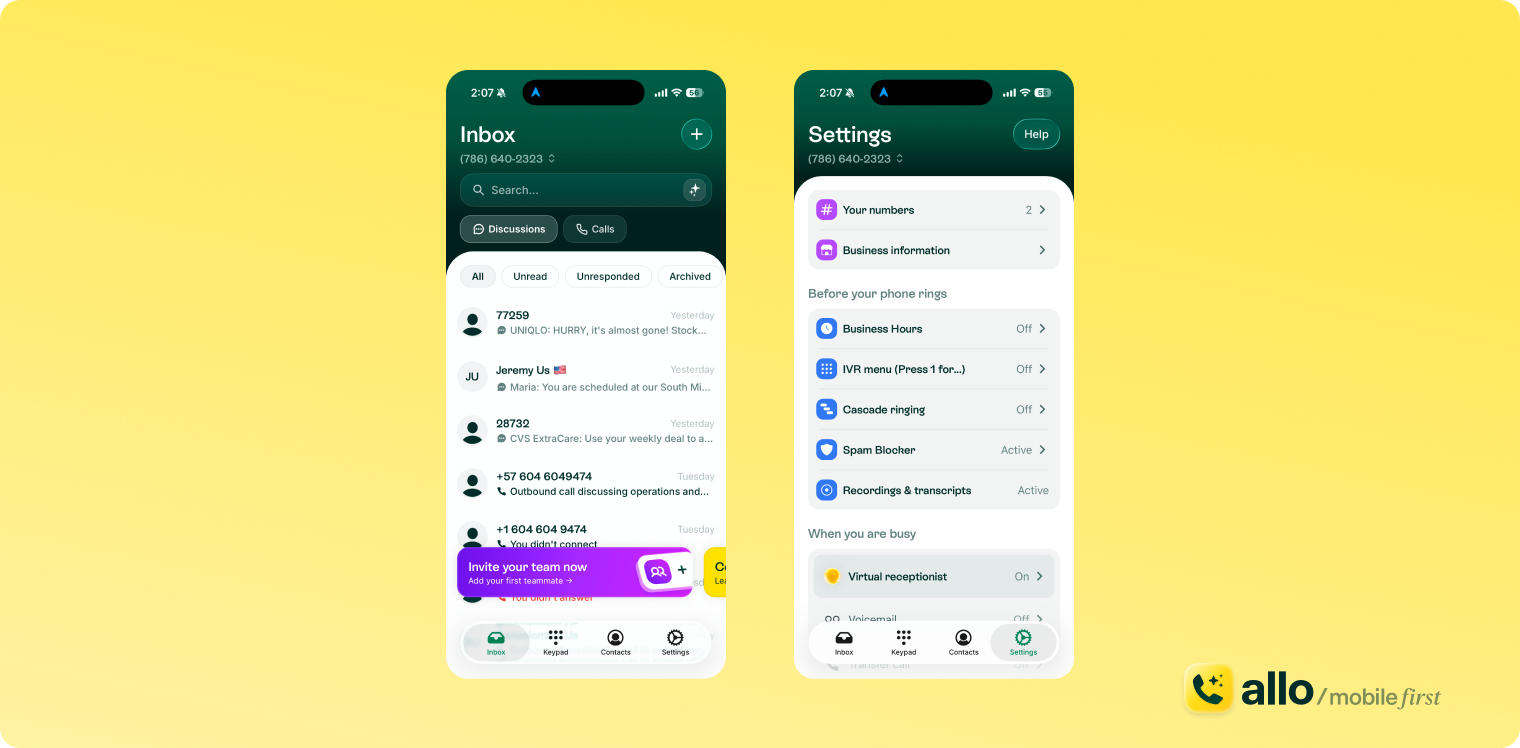
This is the key insight that separates minimalist software from "dumbed down" software. Minimalism doesn't mean fewer capabilities. It means the complexity exists, but the user never touches it. With Allo, the AI handles the heavy lifting behind the scenes, so the interface can stay radically simple. No-training software isn't software that does less. It's software that hides more.
This pattern is emerging across the entire software landscape, and the results are staggering.
Linear replaced Jira's 50 dropdown menus with clean, fast simplicity, and reached a $1.25 billion valuation with just 100 employees and barely $35,000 spent on marketing. That's not a typo. Thirty-five thousand dollars. The product was so good it sold itself.
Granola built an AI note-taker that's invisible: no bots joining your meetings, no learning curve, just a small icon in your menu bar. It records, transcribes, and summarizes, without anyone in the meeting even knowing it's there. That's no-training software taken to its logical extreme: the user barely interacts with it at all.
Notion started as a blank canvas and grew to 100 million users, with 80 percent discovering it organically. No sales team knocked on their door. They just tried it, loved it, and told their friends. This is product-led growth in its purest form, the product is the marketing.
Superhuman made email feel like a consumer app again. Keyboard-first, blazing fast, radically opinionated about what email should be.
These companies share the same DNA: they're built for the user, not the buyer. They grow bottom-up, not top-down. And they never require training.
The data backs this up. 88 percent of SaaS professionals now view product-led experiences as crucial to competing. Atlassian built a $42 billion company and literally wrote in their S-1 filing that users drive adoption. Dropbox generated 90 percent of revenue through self-serve. The old model — sales-led, top-down, deploy-and-train — is dying. Product-led growth software is the future, and it requires one thing above all else: simplicity.
Meanwhile, the bloat is getting cut. Mid-sized companies reduced their SaaS stacks by 29 percent in 2025. SaaS prices are climbing 13 percent year-over-year. The era of "add another tool" is over. The tools that survive the purge will be the ones that are simple enough to justify their existence every single day.
Companies Leading the Minimalist Software Movement
The minimalist software movement isn't theoretical. Real companies are proving that simple alternatives to Salesforce, RingCentral, Zoho, and other bloated platforms can win, and win big. Here are the companies that embody consumer DNA in B2B software.
| Company | Category | Why It's Minimalist |
|---|---|---|
| Linear | Project Management | Replaced Jira's complexity with speed and clarity. $1.25B valuation, 100 employees, $35K total marketing spend. |
| Granola | AI Note-Taking | Invisible — sits in your menu bar, no bots join meetings. Zero learning curve. You forget it's even running. |
| Superhuman | Made email feel like a consumer app. Keyboard-first, blazing fast, radically opinionated. | |
| Notion | Workspace | Started as a blank canvas. 100M users, 80% discovered it organically. No sales team needed. |
| Allo | Business Phone System | Consumer DNA applied to business telephony. Clean interface, Mobile-first, AI-powered, instant setup, no IT department required. Built by ex-consumer app makers. |
| ChatGPT / Claude | AI Assistant | Single text box. No training needed. Everyone, from interns to executives, can use it immediately. |
| Basecamp | Project Management | Pioneer of the "less is less" philosophy. Jason Fried's 37signals proved opinionated software works. |
What connects every company on this list? They're all product-led growth examples. Users discover them, try them, adopt them, often without a single conversation with a salesperson. The product is the pitch. The interface is the onboarding. The simplicity is the strategy.
The Minimalist Software Manifesto
After years of building products this way, here are the rules we apply every time we launch something at The Mobile-First Company. I believe these are the rules of the emerging minimalist software category, and any founder building simple SaaS tools should steal them.
The Feature Subtraction Principle
Before you add a feature, ask yourself if you can remove two. Jason Fried of Basecamp calls this “less is less”, not even “less is more,” because that still implies more is better. Like Henry Ford said: any color you want, so long as it’s black. Opinionated software makes decisions for the user so the user doesn’t have to.
Defaults Over Settings
The best setting is no setting at all. Sensible defaults beat infinite configuration every time. Every setting you add is an admission that you couldn’t make the decision yourself.
The Product is the onboarding
If you need a tutorial, the UI has failed. The interface should teach the user how to use it through doing, not through reading. If you find yourself writing documentation, stop and ask why the product isn’t self-explanatory.
Build for user, not buyers
Your software should win in daily use, not just in a procurement demo. The checkbox mentality, adding features to win RFPs, is what created the software bloat crisis in the first place. Build for the person who has to use it at 3 PM on a Tuesday, not the VP who approved the purchase order.
Mobile-First is a philosophy
It’s not a responsive CSS breakpoint. It means the product was conceived for a phone screen first. When you start with the constraints of a 6-inch screen, you’re forced to strip away everything that doesn’t matter. That discipline carries over to every platform. Mobile-First business software isn’t a feature, it’s a design philosophy that produces better products everywhere.
AI should hide complexity
Use AI to handle the heavy lifting behind the scenes, so the interface can stay radically simple. The user doesn’t need to know how the sausage is made. They need the sausage to be delicious. AI lets you build software that is simultaneously powerful and effortless, which was impossible before this moment in technology.
The Future Belongs to Software People Actually Use
Minimalist software isn't a design trend. It's a correction.
For decades, B2B software was designed to impress executives in sales demos, not to help real users do their jobs. That era is ending. A new generation of workers grew up on Instagram, WhatsApp, and Uber. They don't accept that professional tools should be harder to use than their personal ones. They won't sit through a training session for a phone system. They won't read a 40-page implementation guide for an invoicing tool. They'll find something simpler, or they'll build it themselves.
The numbers tell the story. SaaS stacks are shrinking. Shadow IT is exploding. Feature bloat is killing adoption. The companies that win the next decade won't be the platforms with the most features. They'll be the ones people actually use every day without training, without thinking, without friction.
This is bigger than product design. It's a fundamental shift in how business software gets built, sold, and adopted. The old model was top-down: sell to the executive, deploy to the organization, train the users, manage the change. The new model is bottom-up: build something so simple that one person tries it, loves it, and tells their team. Product-led growth isn't a strategy, it's the inevitable outcome of building software that respects its users.
The winners of the next decade won't be the platforms with the most features. They'll be the ones people actually use every day — without training, without thinking, without friction.
That's the future we're building at The Mobile-First Company. With Allo, Due, and Claim, we're proving that you can take the hardest, most boring business problems, phone systems, invoicing, expense reports, and make them feel as effortless as the apps you use in your personal life.
We're not the only ones. Linear, Notion, Granola, Superhuman, Basecamp, there's a whole generation of builders who believe that simple business software is better business software. That the best interface is the one you never notice. That the best onboarding is no onboarding at all.
The minimalist software movement is here. And we think it's a future worth fighting for.