The Best Vonage Alternatives in 2026
Vonage has evolved, but so has the market. We explore modern competitors that now outpace it with robust AI tools and better pricing transparency.


Key Takeaways
- Allo is the best alternative to Vonage for small teams because of its strong AI features, deep CRM integrations and transparent $32/user pricing.
- Zoom Phone is best for teams seeking simplicity and value because the $15/user plan delivers unlimited calling, SMS, and AI-powered features for 40% less than Vonage's comparable tier.
- Dialpad is best for companies wanting AI without add-on fees because their proprietary AI model powers real-time coaching and call scoring in every plan starting at $27/user.
Introduction
Vonage has served businesses since 2001, but that two-decade history comes with baggage. Teams today struggle with billing surprises, features buried in expensive tiers, and support that's hard to reach when problems arise.
Your team deserves better. Modern alternatives now deliver mobile-first experiences, AI that actually helps close deals, and pricing you can understand without a calculator.
This comparison breaks down seven Vonage competitors worth considering. We'll show you exactly what each platform costs, which AI features come included versus require add-ons, and how they stack up for small sales teams.
By the end, you'll know which solution matches your budget, team size, and workflow.
| Solution | Starting Price | Best For | G2 Rating |
|---|---|---|---|
| Allo | $25/user/mo | Small sales teams that want AI and CRM sync without the admin grind. Best value | 4.6 / 5 |
| Nextiva | $23/user/mo | Large teams unifying voice, video, chat, and SMS on one platform. Unified comms | 4.5 / 5 |
| RingCentral | $30/user/mo | Enterprises with complex workflows that need deep customization. Enterprise | 4.3 / 5 |
| Dialpad | $27/user/mo | Teams that want AI built in, with no usage caps or add-on fees. AI-first | 4.4 / 5 |
| Zoom Phone | $15/user/mo | Teams already on Zoom that want simple, low-cost calling. Zoom users | 4.6 / 5 |
| Microsoft Teams Phone | $10/user/mo | Microsoft 365 teams that want calling inside the tools they already use. Microsoft 365 | 4.4 / 5 Microsoft Teams overall; no Teams Phone-only score |
Allo, Best for Small Sales Teams
What is Allo?
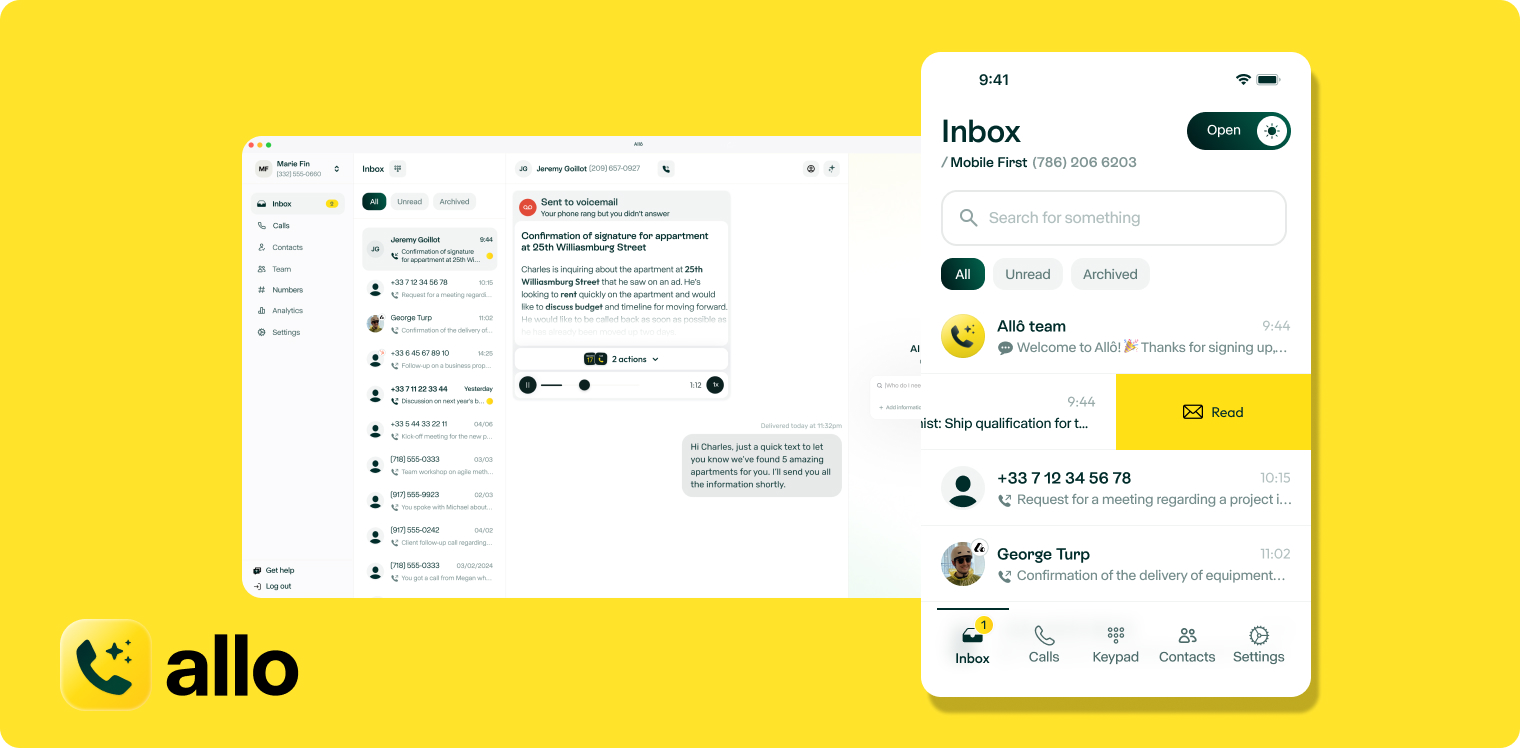
Allo was started in 2024 by a team focused on bringing AI capabilities to small businesses. Allo tackles a specific problem: sales reps and business owners drowning in administrative work. Rather than retrofitting AI onto an existing platform, the team designed their phone system from scratch around AI automation.
The platform handles what most teams hate—logging calls, writing follow-ups, updating CRM fields. Call recording, transcription, and CRM sync happen automatically. The mobile app delivers call quality that rivals desk phones, designed for teams that close deals from coffee shops, client offices, or home.
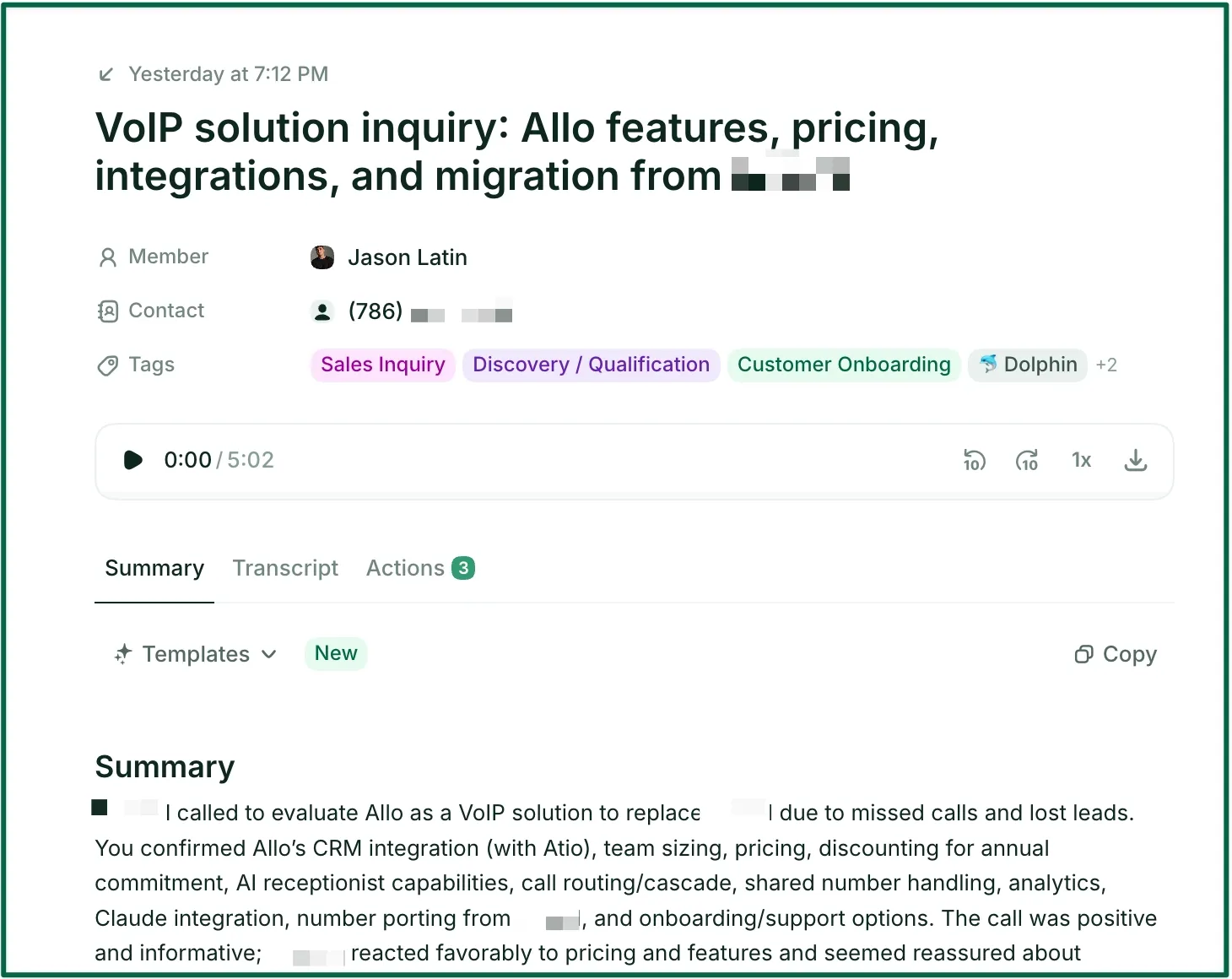
With presence in 20 countries and calling capabilities to 86 destinations, Allo's AI receptionist operates in English, Spanish, and French. The system's AI assistant can even answer questions using your conversation history as context.
Why Allo is a Good Alternative to Vonage
Vonage's tiered pricing creates frustration. Their Basic plan at $19.99/user lacks visual voicemail and call recording. Want those features? Upgrade to Advanced at $39.99/user. Then comes the add-on parade: $49.99/month for business call recording, $9.99/month for business inbox, $4.99/month for local phone numbers. Your actual cost can hit $70+/user monthly.
Allo flips this model: $32/user includes everything. Call summaries, CRM logging, transcription, AI answering service—no usage limits, no surprise fees. The platform connects natively to 18 CRMs including HubSpot, Salesforce, Attio, and Apollo. Unlike Vonage's poorly-reviewed HubSpot connector, Allo's integrations actually log calls with full recordings automatically.
Setup speed matters too. Vonage requires multiple purchases (phone system, potentially a Teams license, often a third-party calling plan) and configuration that takes days. Allo gets your team making calls in under five minutes. For mobile-first teams, this means business calls with automatic CRM updates from anywhere—no desktop required.
Allo Pricing
• Starter: $25/month - Solo user plan with unlimited calling, local number, AI summaries, and IVR. Maximum 1 user.
• Business: $45/month per user - Team plan adding CRM integrations, unlimited AI answering service, SMS capabilities, and international calling.
AI functionality costs nothing extra—no per-minute billing, no transcription limits, no hidden charges.
Allo Demo
See Allo in action:
Nextiva, Best for Large Teams Needing Unified Communications
What is Nextiva?
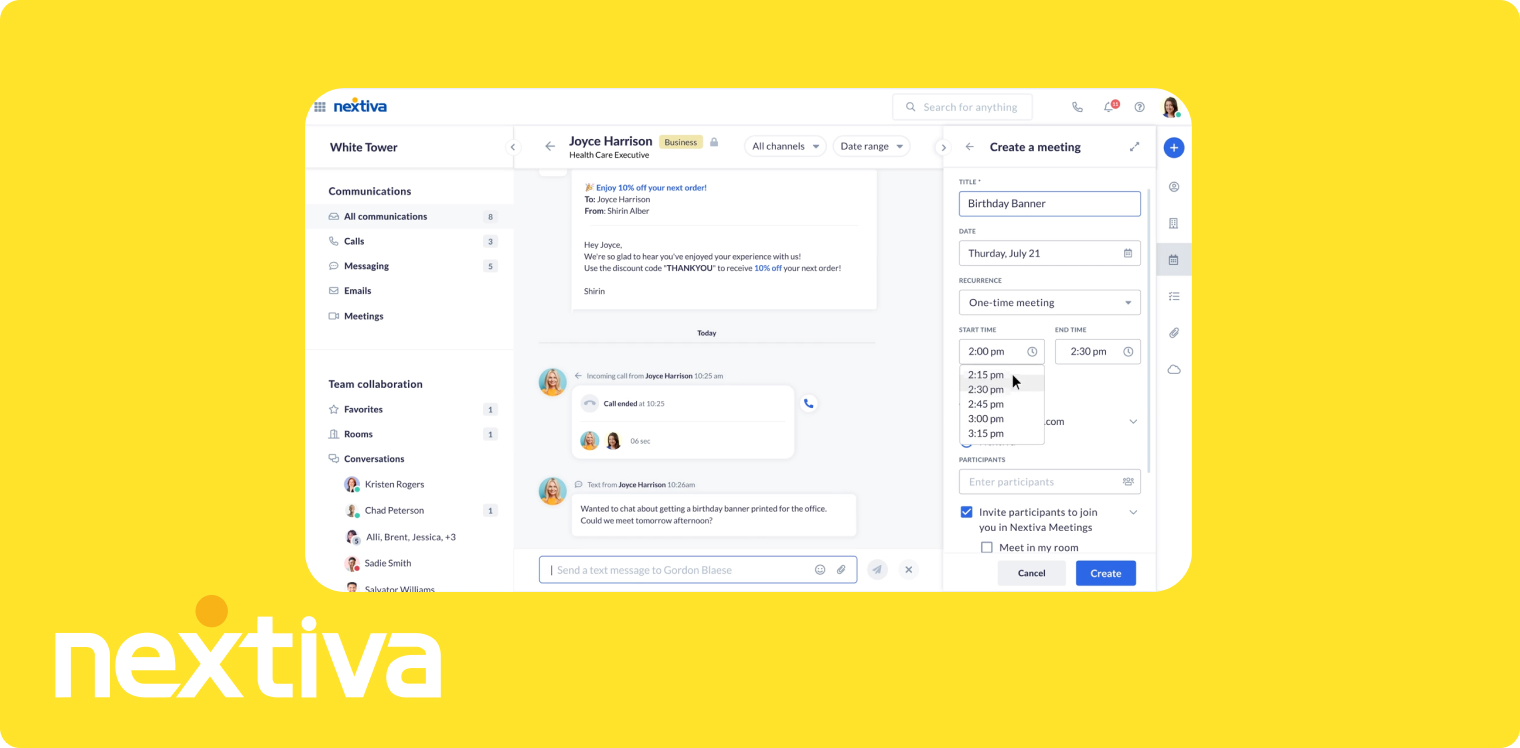
Since 2008, Nextiva has built a unified communications platform targeting support teams and larger organizations. The company's strength lies in consolidating voice, video, team chat, and SMS into a single system optimized for US-based SMB and mid-market operations.
Beyond basic phone service, Nextiva offers live chat functionality and analytics dashboards that appeal to operations handling significant call volumes daily. The platform serves teams that value having one provider for all communication channels rather than stitching together multiple tools.
Why Nextiva is a Good Alternative to Vonage
Vonage and Nextiva compete for similar customers, but their pricing philosophies differ substantially.
At first glance, Nextiva's $23/user Core plan costs more than Vonage's $19.99 Basic tier. However, Nextiva includes SMS, video meetings, call routing, and team chat from the start. To match this with Vonage requires jumping to their $29.99 Premium plan—and even then, you still lack call recording and visual voicemail until you reach $39.99/user.
AI pricing reveals bigger gaps. Nextiva bundles voicemail transcription in all plans, but real-time transcription, call summaries, and emotion scoring demand the $75/user Power Suite CX plan. Their AI receptionist adds another $99/monthly for the first 100 interactions. Vonage's approach differs: AI virtual assistant and call transcription come with the $39.99 Advanced plan, though with a 15-hour monthly cap.
Customer satisfaction tells an interesting story. Nextiva earns 4.5/5 on G2 and 4.8/5 on Trustpilot, while Vonage sits at just 2.7/5 on Trustpilot. Support responsiveness appears meaningfully better with Nextiva.
The geographic limitation matters: Nextiva operates in the US only, while Vonage covers 90+ countries. Teams needing international presence should weigh this carefully.
Nextiva Pricing
• Core: $23/user/month - Delivers phone number, SMS, video meetings, call routing, and team chat as foundation features.
• Engage: $50/user/month - Brings advanced reporting, web chat capabilities, and toll-free numbers for customer-facing operations.
• Power Suite CX: $75/user/month - Unlocks AI transcription, summarization, intelligent routing, and advanced analytics for teams serious about AI.
Premium add-ons are available for live chat automation, priority-based routing, and enterprise CRM connections.
RingCentral, Best for Enterprises with Complex Needs
What is RingCentral?
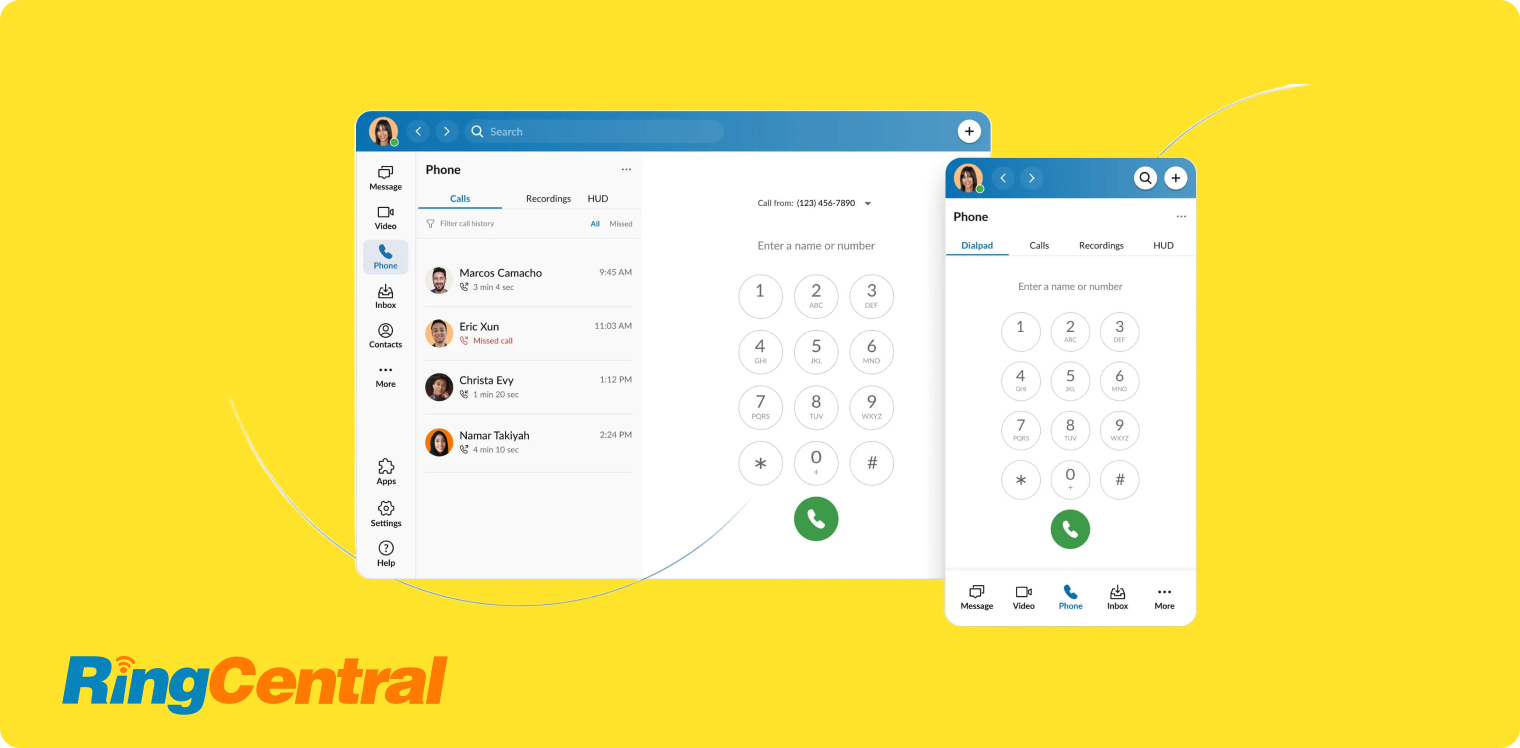
Starting in 1999, RingCentral grew into one of the largest VoIP providers globally. The platform serves organizations ranging from 10-person startups to 10,000+ employee enterprises with a comprehensive suite covering phone service, video conferencing, team messaging, and contact center operations.
The system offers extensive customization for businesses with complex communication workflows. International coverage spans dozens of countries, and the integration marketplace includes 300+ connectors for connecting your entire tech stack.
Why RingCentral is a Good Alternative to Vonage
Both platforms target enterprise and mid-market segments, but their value propositions diverge in meaningful ways.
Vonage's pricing structure appears straightforward until you need actual features. The $19.99 Basic plan lacks call recording and visual voicemail—both standard needs for sales teams. RingCentral's $30 Core plan includes these capabilities upfront, along with team messaging, video meetings, and basic CRM connectivity. Minimum 2 users required.
Integration depth separates them significantly. RingCentral's App Gallery hosts 300+ native integrations versus Vonage's 27. While both platforms receive mixed reviews for specific CRM connectors (RingCentral's HubSpot integration has mixed feedback, Vonage's scores poorly), RingCentral generally offers more robust connection options.
Reliability favors RingCentral with 99.999% uptime commitment. Their Advanced plan at $35/user includes AI transcription, call summaries, and sentiment analysis without usage caps. Vonage's comparable AI features sit in the $39.99 Advanced tier but limit call transcription to 15 hours monthly.
Both share frustrating similarities: difficult phone-only cancellation processes with long hold times, and "unlimited" calling restricted to US and Canada. RingCentral also prohibits lead generation and affiliate marketing activities, which affects certain sales operations.
RingCentral Pricing
• Core: $30/user/month - Delivers unlimited US/Canada calling, team messaging, video conferencing, choice of toll-free or local number, and basic CRM connectivity. 2-user minimum.
• Advanced: $35/user/month - Adds unlimited storage, advanced analytics, automatic call recording, and AI transcription with summaries. 2-user minimum.
• Ultra: $45/user/month - Brings advanced call handling, priority support, hot desking, and AI-powered analytics for larger operations.
RingCentral Demo
See RingCentral's AI receptionist in action:
Dialpad, Best for Teams Prioritizing AI Features
What is Dialpad?
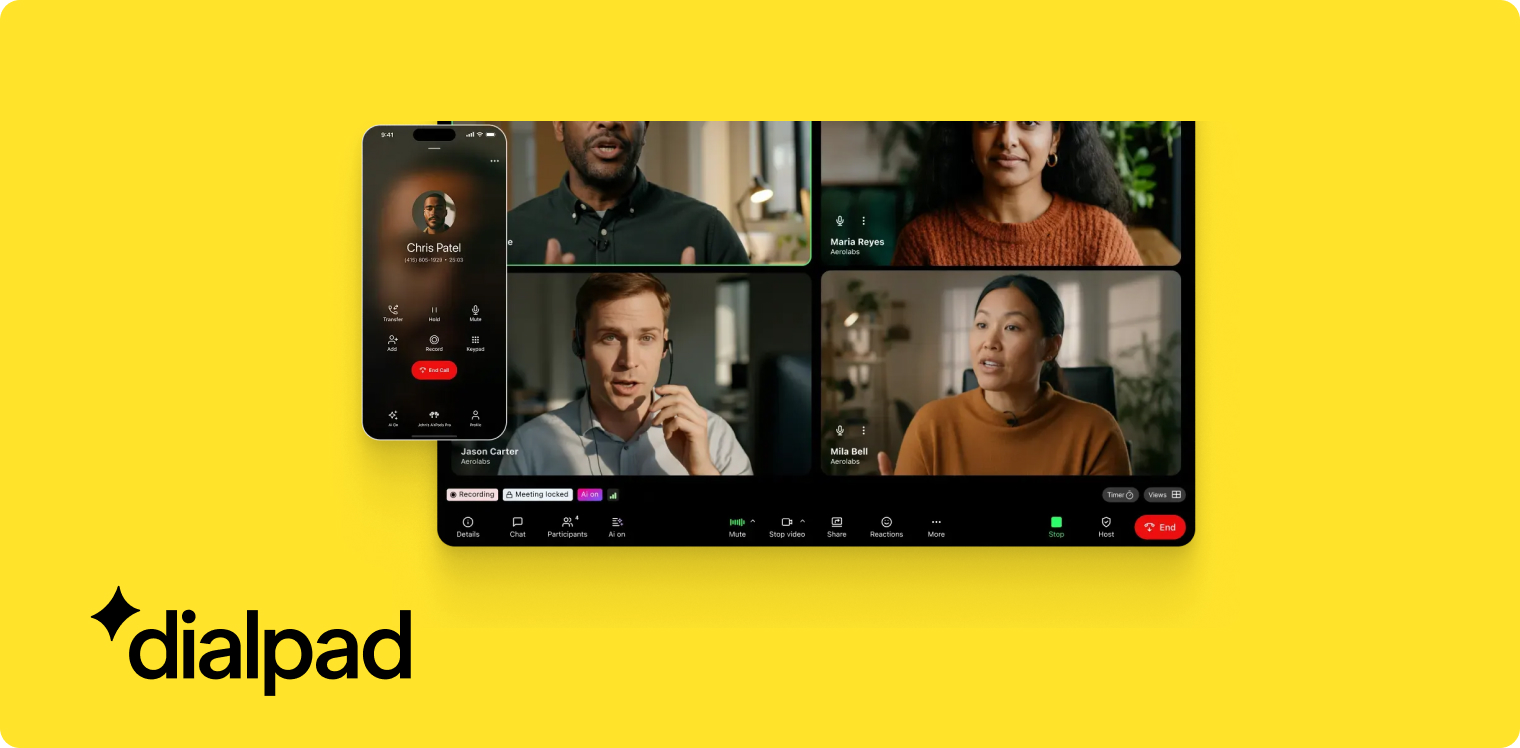
Dialpad emerged in 2011 with a cloud-first approach to business communications. What distinguishes them: developing their own AI model starting in 2018 rather than licensing technology from others.
The company operates three specialized products—Connect for general business use, Support for customer service teams, and Sell for sales organizations. Each product carries distinct pricing and capabilities, letting teams pay for exactly what they need. Operations span 70 countries with local number availability in the US, Canada, UK, Australia, France, and more.
Why Dialpad is a Good Alternative to Vonage
AI implementation philosophy separates these platforms fundamentally. Vonage charges extra for AI and caps call transcription at 15 hours monthly in their $39.99 Advanced plan. Dialpad bundles call summaries, live coaching, call scoring, and an AI support agent into every plan with no usage restrictions.
Cost comparison shifts when you examine what's included. Vonage Basic at $19.99 lacks call recording entirely. To match Dialpad's Standard plan capabilities (unlimited calling, call recording, AI features), you'd need Vonage Advanced at $39.99 plus add-ons—potentially hitting $50+/user monthly.
Integration breadth favors Dialpad with countless native CRM connections (Salesforce, HubSpot, etc.) plus Zapier for extending to thousands more apps. Both platforms support multiple channels—voice, text, video, WhatsApp—though Dialpad includes these without requiring add-on fees.
User experience differs too. Dialpad generally earns praise for being easier to use despite having a learning curve. Vonage users cite complexity and configuration challenges. Both platforms struggle with support responsiveness and call quality complaints in user reviews.
The nine-language AI support (versus Vonage's 20+) may matter for international operations. Dialpad's Standard plan starts at $27/user versus Vonage's $19.99, but the value equation tilts heavily toward Dialpad given included features.
Dialpad Pricing
• Standard: $27/user/month - Covers unlimited calling (your country plus US and Canada), local number, call forwarding, call recording, complete AI feature set, and 3 departments.
• Pro: $35/user/month - Brings SSO, phone support access, and expands to 25 departments for scaling operations.
AI capabilities (summaries, coaching, scoring) carry no additional charges or per-minute fees.
Specialized products available: Internet Fax, Rooms for video conferencing, and Contact Center with separate pricing structures.
Dialpad Demo
See Dialpad's capabilities in action:
Zoom Phone, Best for Teams Already Using Zoom
What is Zoom Phone?
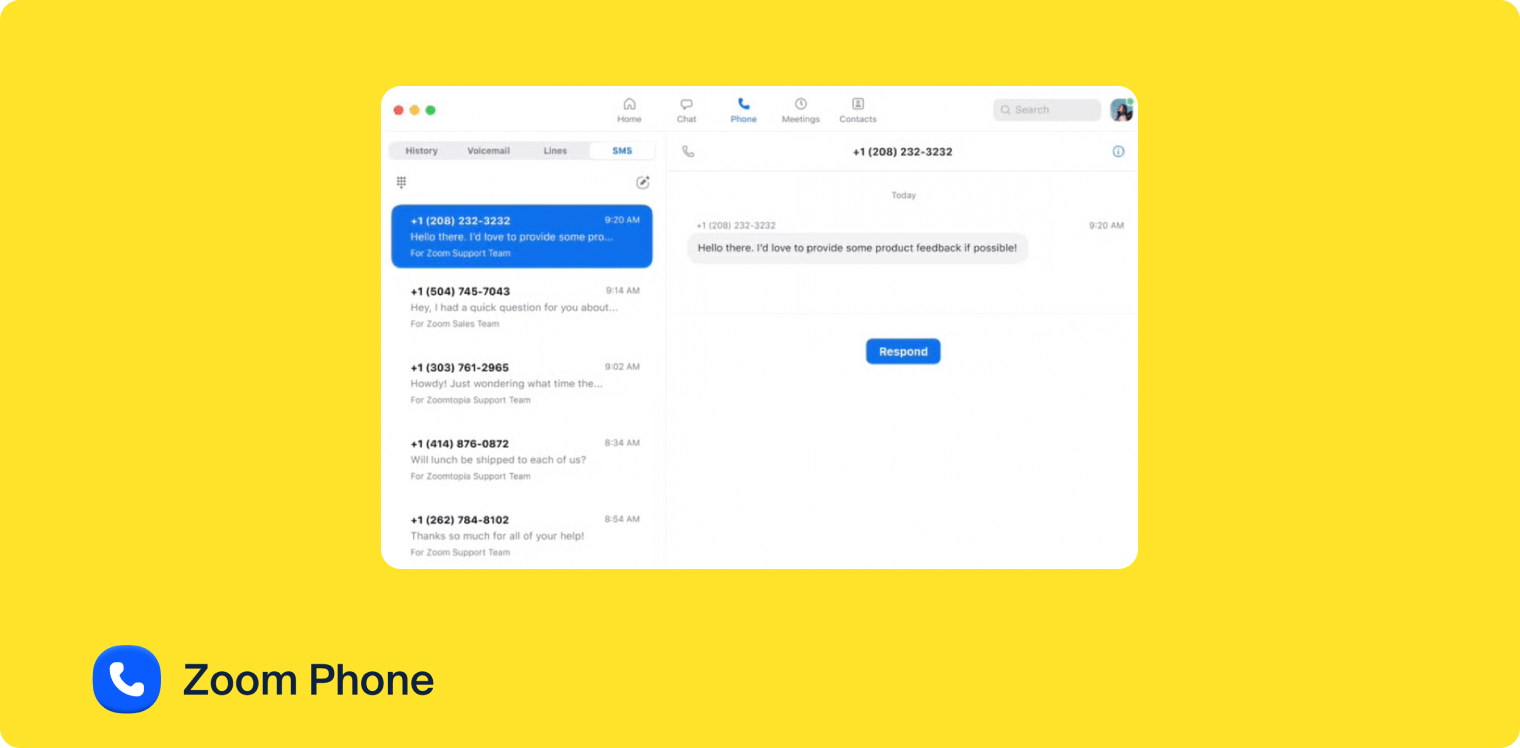
Zoom introduced their phone system in 2019 to complement their video conferencing dominance. Rather than building a standalone platform, they integrated voice calling directly into the Zoom interface millions already knew.
The design prioritizes simplicity for teams embedded in Zoom's ecosystem. The interface feels familiar, clean, and straightforward—no learning curve if you've used Zoom Meetings. Coverage includes 49 countries for local numbers, with texting available in 4 countries.
Why Zoom Phone is a Good Alternative to Vonage
The cost difference stuns most teams. Zoom Phone's US & CA Unlimited plan costs $15/user monthly and includes unlimited calling, free SMS, call recording, Salesforce and Slack integrations, plus AI features like call summaries and voicemail prioritization. Vonage's $19.99 Basic plan lacks call recording, visual voicemail, and CRM integrations entirely.
To match what Zoom Phone includes at $15, you'd need Vonage's $39.99 Advanced plan—spending 2.6x more per user. Vonage also caps call transcription at 15 hours monthly while Zoom Phone imposes no restrictions.
Integration quantity differs dramatically: Zoom Phone offers 195+ native connections versus Vonage's 27. The catch: Zoom Phone's HubSpot integration receives negative marketplace feedback, mirroring Vonage's HubSpot struggles. Core integrations with Salesforce and Slack perform well, though.
The bundled approach creates additional value. Zoom's Pro Plus bundle at $21.99/user combines phone service with Zoom Meetings, Team Chat, Zoom Docs, Zoom Mail, and Live Chat. That's comprehensive collaboration tools for less than Vonage's Premium plan, which still lacks call recording.
Limitations exist: Zoom Phone omits AI answering service and AI-powered IVR that newer platforms provide. Users mention rushed onboarding and shared contacts not syncing properly on mobile apps. Call quality and connectivity generally earn positive marks, with smooth transitions between phone calls, meetings, and mobile devices.
Zoom Phone Pricing
• US & CA Unlimited: $15/user/month - Delivers unlimited calling (US and Canada), free SMS, phone number, call recording, CRM integrations, and AI capabilities including call summaries, voicemail prioritization, and task extraction.
• Pro Plus: $21.99/user/month - Bundles Zoom Phone with complete Zoom Workspace: Zoom Meetings, Team Chat, Zoom Docs, Zoom Mail, and Live Chat.
• Business Plus: $26.99/user/month - Expands storage, meeting capacity, and adds SSO for enterprise requirements.
Zoom Phone Demo
See Zoom Phone in action:
Microsoft Teams Phone, Best for Microsoft 365 Users
What is Microsoft Teams Phone?
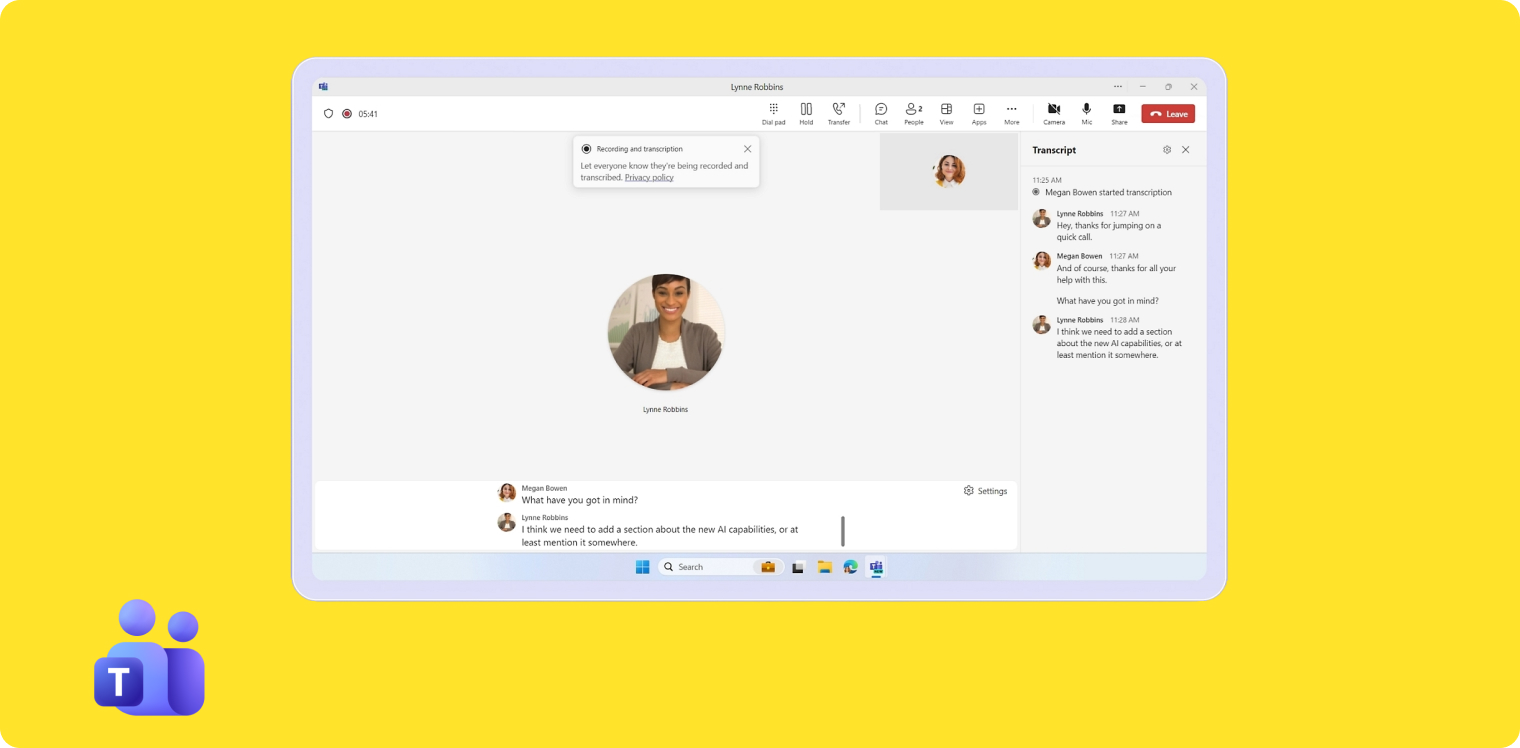
Microsoft introduced Teams Phone in 2017 as an integrated component of Microsoft 365 and Teams. Rather than building a standalone phone system, they embedded voice calling into the collaboration platform millions already use daily.
The service operates across dozens of countries with local number purchasing available worldwide. It's architected specifically for organizations living in Microsoft's world—Teams for collaboration, Outlook for contacts, Microsoft 365 for productivity.
Why Microsoft Teams Phone is a Good Alternative to Vonage
Surface-level pricing makes Microsoft look cheaper. Teams Phone Standard costs $10/user monthly versus Vonage's $19.99 Basic tier. Reality differs significantly once you account for required components.
Teams Phone demands a separate Microsoft Teams license (minimum $4/user monthly) just to function. Most organizations also need a third-party calling plan since Microsoft's direct calling rates run expensive. Base cost quickly reaches $14+/user before making any calls.
AI features reveal steeper costs. Vonage bundles AI virtual assistant and call transcription into their $39.99 Advanced plan. Microsoft requires the Copilot add-on at $30/user monthly stacked atop phone and Teams licenses. Full AI capability runs approximately $44+/user monthly with Microsoft compared to $40 with Vonage.
Integration tells a different story. Teams deeply connects with Outlook contacts, synchronizes presence status based on call activity, and provides familiar UI for Microsoft users. Everything feels native if your team operates in the Microsoft ecosystem.
CRM connectivity lags though. HubSpot integration scores 3.3/5 on their marketplace, and no native Salesforce connector exists. Vonage offers both connections, though their HubSpot integration also struggles with poor ratings.
Configuration complexity creates friction. Setting up calling plans, porting numbers, and configuring emergency calling typically requires IT administrator involvement. Vonage's setup process, while not simple, generally needs less technical expertise.
Microsoft Teams Phone Pricing
• Teams Phone Standard: $10/user/month - Provides core phone technology only. External calling requires purchasing a separate plan from Microsoft-certified providers.
• Teams Phone with Pay-as-You-Go: $13/user/month - Brings outbound calling service directly from Microsoft with per-minute billing.
• Teams Phone with Calling Plan: $17/user/month - Bundles 3,000 domestic outbound minutes for US, UK, or Canada.
Separate Microsoft Teams license required ($4+/user monthly, paid annually). AI capabilities demand the Microsoft Copilot add-on ($30/user monthly). Total costs range from $21-$51+/user monthly depending on configuration needs.
Microsoft Teams Phone Demo
See Microsoft Teams Phone in action:
Conclusion
Choosing the right Vonage alternative depends on your team's specific situation.
Small sales teams frustrated with billing surprises will find value in Allo's straightforward $32/user pricing. AI-powered CRM updates happen automatically, setup takes minutes instead of days, and no hidden add-ons inflate your monthly bill.
Teams already collaborating in Zoom should examine Zoom Phone closely. At $15/user monthly, you get unlimited calling, SMS, call recording, and AI features—less than Vonage charges for their basic tier that lacks these capabilities. The Pro Plus bundle combines phone and video for $21.99/user.
Organizations prioritizing AI without additional fees fit Dialpad's model. Their proprietary AI powers call summaries, live coaching, and scoring across all plans starting at $27/user. No usage caps, no per-minute charges.
Microsoft 365 users might justify Teams Phone despite layered costs and setup complexity. Deep ecosystem integration matters if your team operates primarily in Outlook, Teams, and Microsoft applications. Just budget accurately: phone license plus Teams license plus calling plan plus potentially Copilot for AI.
Enterprises requiring comprehensive unified communications with extensive customization should evaluate RingCentral or Nextiva. Both platforms deliver robust feature sets and integration options, though expect steeper costs and longer implementation timelines.
The pattern emerges clearly: contemporary phone systems now deliver AI automation, CRM connectivity, and mobile-optimized experiences that established providers like Vonage haven't matched. Your team shouldn't settle for hidden fees, frustrating cancellation processes, and essential features locked behind premium tiers.
FAQ about Vonage Business alternatives
Who are the competitors of Vonage?
The main competitors of Vonage include Allo, RingCentral, Nextiva, Zoom Phone, Dialpad, Microsoft Teams Phone, and 8x8. Each platform targets slightly different audiences—Allo focuses on small sales teams with transparent pricing, RingCentral and Nextiva serve mid-market and enterprise, while Zoom Phone and Microsoft Teams Phone work best for teams already using those ecosystems.
Which VoIP provider is best?
The best VoIP provider depends on your specific needs. Allo is best for small sales teams wanting AI-powered features and deep CRM integrations at transparent pricing. Zoom Phone is best for budget-conscious teams already using Zoom Meetings. Dialpad is best for companies prioritizing AI features without extra charges. RingCentral and Nextiva serve enterprises needing comprehensive unified communications. Microsoft Teams Phone makes sense only if you're deeply embedded in the Microsoft 365 ecosystem and can manage the complex setup and hidden costs.
Is Vonage still worth it?
Vonage can work for larger organizations with complex call routing needs and the budget for add-ons, but most small to mid-sized teams find better value elsewhere. The $19.99 Basic plan lacks essential features like call recording and visual voicemail, pushing real costs to $40+/user/month once you add necessary features. Modern alternatives like Allo ($32/user), Zoom Phone ($15/user), and Dialpad ($27/user) include more features at lower total costs without hidden fees.