
Key Takeaways
• Allo is best for small sales teams because it combines AI-first automation with transparent pricing at $25-45/user/month—no hidden add-ons or complex setup required.
• Aircall is best for mid-sized companies already using Salesforce or HubSpot because it offers deep enterprise integrations and advanced analytics, though you'll pay $40-70/license with a three-user minimum.
• Zoom Phone is best for teams already using Zoom Meetings because it seamlessly integrates phone functionality with your existing video conferencing setup for just $15/user/month.
Introduction
While CallHippo started strong helping small teams establish an international presence, many users are now looking elsewhere due to unresponsive support, an outdated interface, and issues with phone numbers being flagged as spam.
Finding the right phone system matters. Your team needs reliable calling, CRM integration that actually works, and support that shows up when problems arise. Whether you're frustrated with CallHippo's complicated refund policy or just want AI features that don't require expensive add-ons, this guide walks you through seven proven alternatives.
We'll compare pricing, standout features, and real user experiences to help you pick the phone system that fits your team. From AI-native options built for small teams to enterprise-grade systems with global coverage, here's what you need to know about the best CallHippo competitors in 2026.
Allo, Best for Small Sales Teams
What is Allo?
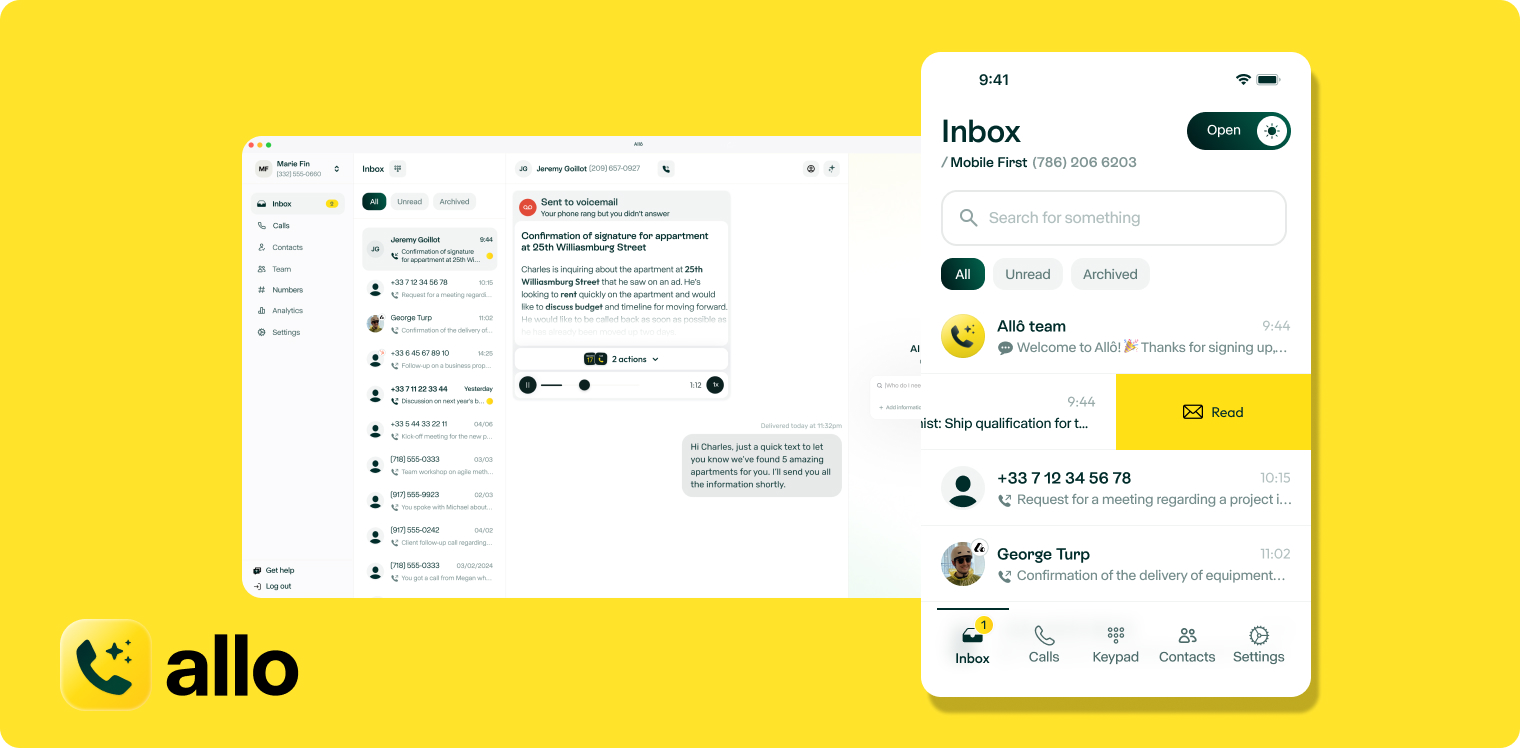
Allo represents a fundamental rethink of what phone systems should do for small sales teams. Instead of adapting decades-old telephony infrastructure with AI add-ons, the platform started with a simple question: what if your phone system actually reduced your workload instead of creating more admin tasks?
The answer shows in practical ways. Calls automatically become CRM entries. Voice messages turn into searchable text. An AI receptionist fields incoming calls in three languages without configuration files. Everything works from your phone—no desktop required, no IT team needed. The company keeps pricing simple: two plans, all AI features included, no surprise charges that appear on renewal.
Why Allo is a Good Alternative to CallHippo
While CallHippo charges extra for AI features and has faced criticism for unresponsive support, Allo includes all AI capabilities in the base price and maintains a hands-on approach with customers. You won't find yourself waiting days for support responses or dealing with spam-flagged numbers.
The pricing structure tells the story: CallHippo's Professional plan at $39 requires add-ons for AI analytics and coaching. Allo's Business plan at $45 includes unlimited AI answering service, call summaries, transcription in 36 languages, and native CRM integrations—everything you need without hidden costs.
CallHippo offers more native integrations (110 versus Allo's 18), but Allo's integrations run deeper where it matters most. The HubSpot and Salesforce connections automatically log calls, sync notes, and update records without manual work. Plus, with Zapier integration and API access, you can connect the apps CallHippo doesn't support.
For mobile-first teams, Allo's app outperforms CallHippo's dated interface. Setup takes minutes instead of hours, and the AI answering service speaks three languages natively—no complex configuration needed.
Allo Pricing
Allo keeps pricing simple with two straightforward plans:
• Starter: $25/month - Perfect for solo entrepreneurs. Includes unlimited calls, a local phone number, AI summaries, and IVR. Limited to 1 user.
• Business: $45/month per user - Everything your sales team needs. Includes CRM integrations, unlimited AI answering service, SMS, international calling, and all AI features built-in.
Both plans include a 7-day free trial. No credit card required, no hidden fees, no surprise charges for AI capabilities.
Allo Demo
See Allo in action:
Aircall, Best for Mid-Sized Companies
What is Aircall?
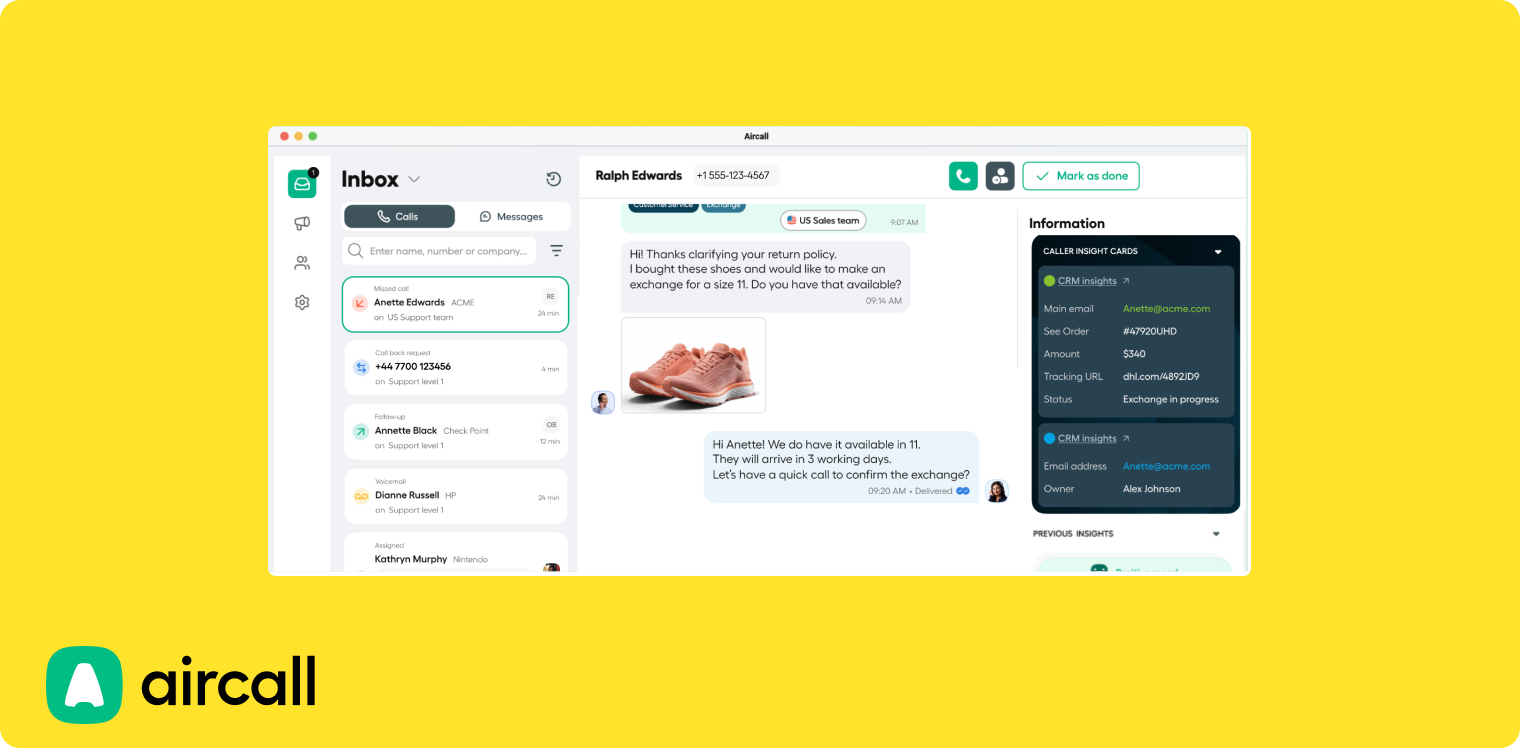
Aircall has carved out its position as the phone system companies feel confident choosing. Operating in 38 countries with deep integrations across major enterprise software, the platform handles the communication needs of medium and large organizations that can't afford downtime or integration failures.
The system delivers call analytics that help managers spot coaching opportunities, team dashboards that surface performance trends, and monitoring features that let supervisors jump into live calls when needed. For companies already invested in Salesforce, HubSpot, or Zendesk, Aircall's advanced integrations go beyond basic webhooks to provide two-way data sync and automated workflow triggers.
Why Aircall is a Good Alternative to CallHippo
Aircall delivers enterprise-grade reliability that CallHippo struggles to match. While both systems offer CRM integrations, Aircall's connections with Salesforce, HubSpot, and Zendesk run deeper and receive consistent updates. Users report better call quality and more stable performance compared to CallHippo's platform.
The support experience differs significantly. CallHippo users frequently complain about unresponsive support and long wait times. Aircall, despite some users feeling left behind when problems arise, maintains more consistent communication channels and faster response times for active accounts.
However, Aircall costs considerably more. Starting at $40/license for Essentials (versus CallHippo's $25 Starter plan), you'll need at least three licenses minimum. The Professional plan jumps to $70/license for advanced analytics and sales features. CallHippo's pricing becomes more competitive here, though you'll still face add-on costs for AI features that Aircall includes.
Both platforms limit AI language support—Aircall only supports English and French, while CallHippo offers 25+ languages. For international teams, this matters. Aircall also charges separately for features like the AI Voice Agent ($0.49/minute), WhatsApp ($10/month/user), and advanced analytics ($15/user/month).
Choose Aircall if you're a growing company (50+ employees) that needs proven integrations and can justify the higher cost. Stick with CallHippo if you're watching budget closely and need broader language support.
Aircall Pricing
Aircall requires a minimum of three licenses and offers a 7-day free trial:
• Essentials: $40/license - Includes a local number, unlimited US & Canada calls, IVR, call recording, and SMS/MMS messaging.
• Professional: $70/license - Adds advanced analytics, Power Dialer, Voicemail Drop, and unlimited call recordings for serious sales teams.
AI features like the Voice Agent, WhatsApp integration, and advanced analytics cost extra on top of your base plan.
Aircall Demo
See Aircall in action:
CloudTalk, Best for International Sales Teams
What is CloudTalk?
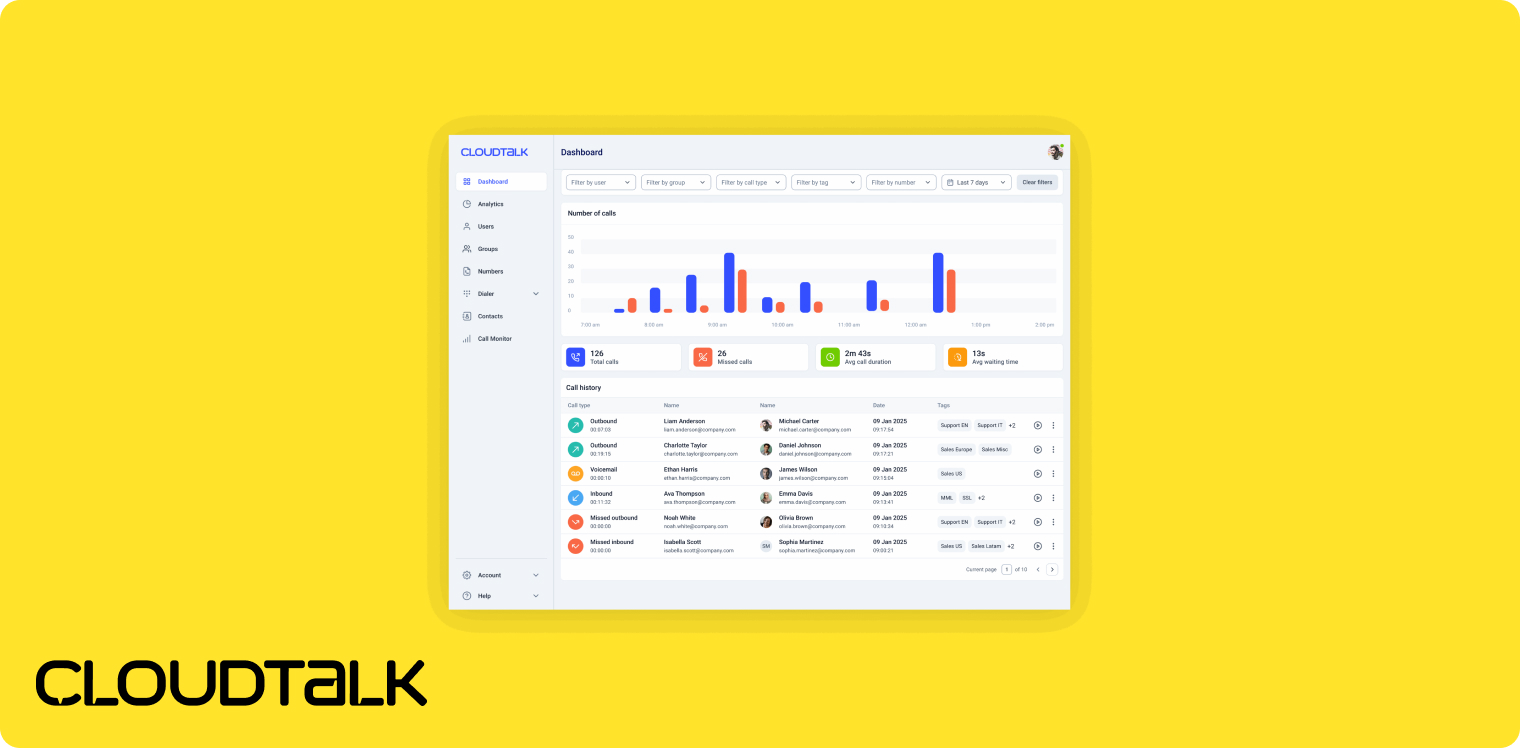
CloudTalk's founders understood international business from day one. Building their platform from Slovakia with a remote-first team spread across continents, they created a phone system that treats global calling as the default, not an afterthought. Today, 4,000 companies across 100 countries rely on CloudTalk to connect with customers wherever business takes them.
The platform's real strength emerges in how it handles cross-border communication. Local number provisioning in 160+ countries happens automatically. The system detects which country you're calling and routes through appropriate local infrastructure. For sales teams reaching international prospects, this automatic number switching reduces spam flags and increases answer rates—two metrics that directly impact revenue.
Why CloudTalk is a Good Alternative to CallHippo
Both CloudTalk and CallHippo target similar audiences—sales and support teams needing international calling. But CloudTalk pulls ahead on user experience and reliability. Users consistently rate CloudTalk's interface as cleaner and more modern compared to CallHippo's old-school UI.
International calling works better on CloudTalk. The system automatically switches to local numbers when calling different countries, improving answer rates and reducing spam flags. CallHippo users report frequent issues with numbers being flagged as spam—a problem that kills sales efficiency.
Pricing sits slightly higher than CallHippo. CloudTalk's Lite plan starts at $27/user/month (versus CallHippo's $25 Starter), but you'll need the Essential plan at $39/month to access integrations and core features. CallHippo's Professional plan matches this price point while including more features before add-ons.
The integration story differs: CallHippo lists 110 native integrations versus CloudTalk's 70. However, CloudTalk's HubSpot integration scores 4.3/5 on the HubSpot marketplace versus CallHippo's 4.5/5—both solid ratings suggesting reliable CRM connectivity.
Where CloudTalk struggles is call quality and support speed. Some users report occasional call quality issues, and support response times can drag. CallHippo faces the same support criticism, making this a wash between the two options.
Choose CloudTalk if reliable international calling and a modern interface matter most. Stay with CallHippo if you need the absolute widest range of integrations and don't mind the older UI.
CloudTalk Pricing
CloudTalk offers a 14-day free trial with no credit card required:
• Lite: $27/month/user - Unlimited domestic calls and local numbers in 160+ countries, but lacks integrations and most advanced features.
• Essential: $39/month/user - Adds business hours, IVR, ring groups, and CRM integrations that most teams need.
• Expert: $69/month/user - Requires minimum 3 licenses. Includes Power Dialer, live monitoring, advanced reporting, and WhatsApp support.
AI Voice Agents are billed separately as an add-on.
CloudTalk Demo
See CloudTalk in action:
JustCall, Best for Teams Wanting Affordable AI Features
What is JustCall?
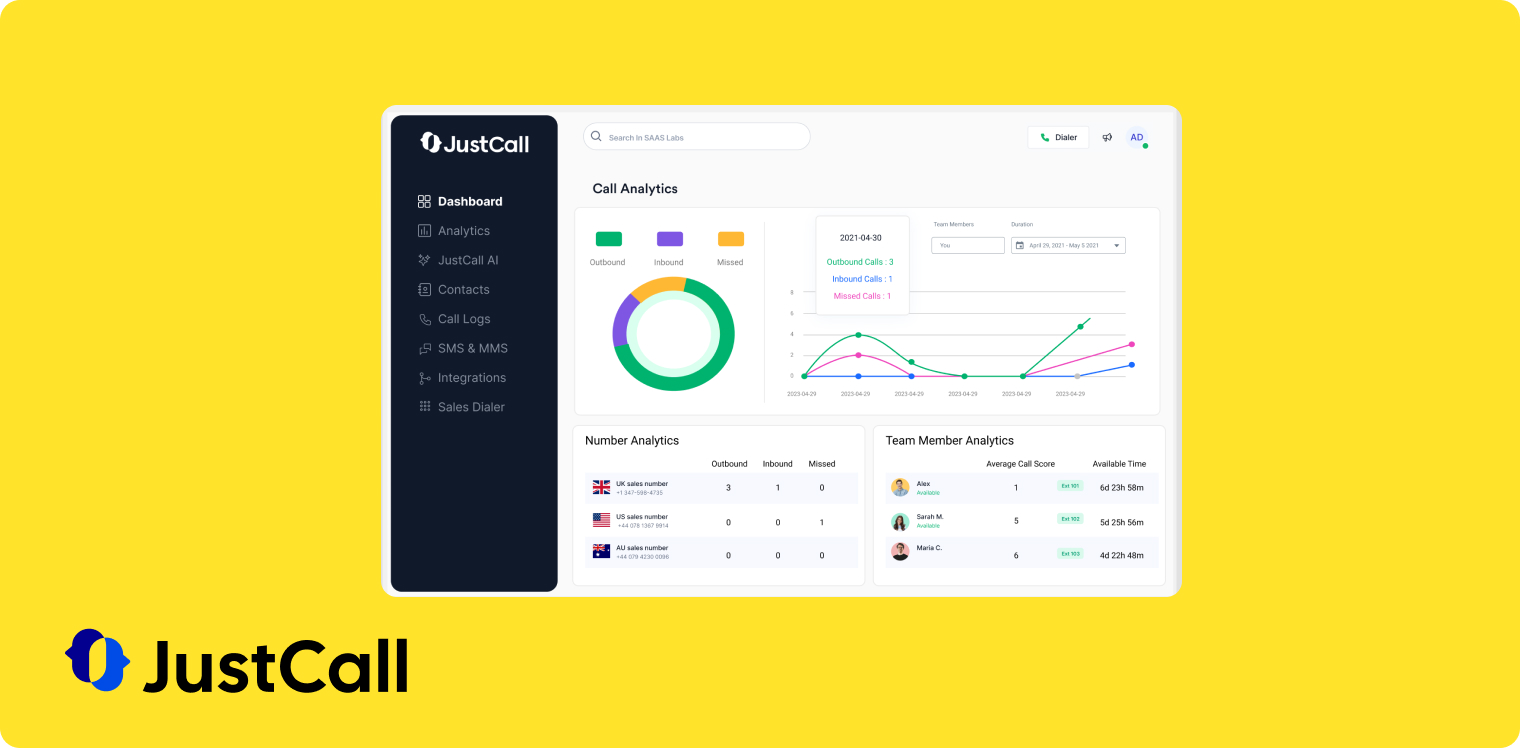
When SaaS Labs launched JustCall, they focused on one frustration every sales rep knows: the hours spent manually logging calls and updating CRM records. The platform automated this busywork first, then expanded into a complete communication hub that now serves teams across 90+ countries.
What makes JustCall notable is its evolution beyond voice. The platform handles SMS, email, and WhatsApp in addition to phone calls—all from one interface. This unified approach means sales reps aren't juggling multiple apps to reach prospects. Power dialing accelerates outbound campaigns, while AI features analyze conversations to surface coaching opportunities and track sentiment across customer interactions.
Why JustCall is a Good Alternative to CallHippo
JustCall and CallHippo share similar roots—both started in India focusing on international calling and CRM automation. The key difference lies in AI pricing and platform stability.
CallHippo requires paid add-ons for AI analytics and coaching features. JustCall includes call transcripts free in all plans, then offers AI Review Assist (summaries, sentiment analysis, topics, CRM logging) for just $9/user/month. That's significantly cheaper than CallHippo's add-on pricing, though CallHippo doesn't publish exact AI feature costs publicly.
Integration quality favors JustCall. Their HubSpot integration scores 4/5 on the HubSpot Marketplace—high compared to competitors. CallHippo's HubSpot integration gets 4.5/5 but with only 22 reviews versus JustCall's larger review base, suggesting more active users trusting the connection.
Support experiences differ. JustCall users appreciate reaching actual human beings who respond helpfully. CallHippo faces consistent complaints about unresponsive support. However, JustCall users note occasional difficulty reaching support agents during peak times, and the platform can be glitchy.
Both systems face similar spam flagging issues with assigned numbers—a problem that disrupts sales work. CallHippo's refund policy adds frustration; JustCall's approach to refunds hasn't generated the same negative feedback.
Language support: CallHippo covers 25+ languages for AI features versus JustCall's 17 languages. For teams working in less common languages, CallHippo wins here.
Choose JustCall if you want affordable AI features with helpful support. Consider CallHippo if broader language support outweighs the support experience concerns.
JustCall Pricing
JustCall requires a minimum of two licenses and offers a 14-day free trial:
• Team: $39/user/month - Includes unlimited US/Canada calls, AI transcription, a local number, SMS and WhatsApp messaging, and CRM integrations.
• Pro: $69/user/month - Adds Power Dialer, bulk SMS, Salesforce integration, roles and permissions, and reporting capabilities.
• Pro Plus: $109/user/month - Includes real-time agent assist, sentiment analysis, and call scoring for advanced coaching.
Add-ons: AI Review Assist costs $9/user/month, while the AI Voice Agent runs $99/month with 100 minutes included.
JustCall Demo
See JustCall in action:
RingCentral, Best for Enterprise Teams Needing Proven Reliability
What is RingCentral?
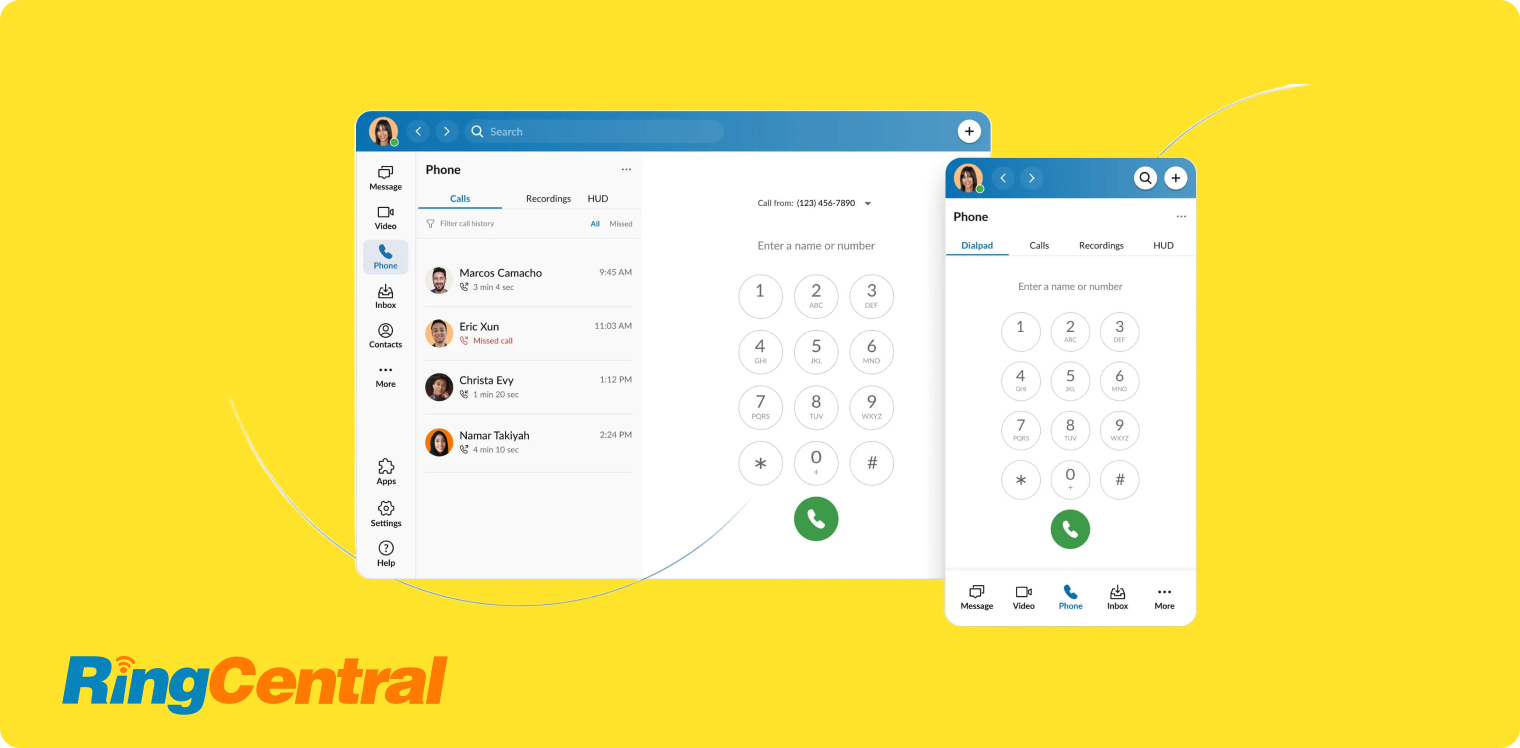
RingCentral has spent 25 years becoming the phone system enterprises default to when reliability can't be compromised. With infrastructure tested by thousands of large organizations, the platform handles everything from basic calling to complex contact center operations with tools that just work.
The breadth of RingCentral's capabilities sets it apart. Fax integration for industries that still require it. Video conferencing built-in. An AI assistant called AVA that answers questions using your call history. More than 500 native integrations connecting to nearly every business tool imaginable. For organizations where "it doesn't integrate" means a dead project, RingCentral's ecosystem coverage eliminates that concern.
Why RingCentral is a Good Alternative to CallHippo
RingCentral operates in a different league than CallHippo—comparing them directly misses the point. CallHippo targets small teams watching costs. RingCentral serves enterprises willing to pay premium pricing for proven infrastructure.
The integration ecosystem dwarfs CallHippo's 110 connections. RingCentral's 500+ native integrations cover every niche tool, every industry-specific CRM, every workflow automation platform. For complex enterprises, this breadth prevents the "this doesn't integrate" problem that blocks adoption.
Support quality differs dramatically. CallHippo users report unresponsive support and frustrating wait times. RingCentral's support for SMBs faces similar criticism, but their enterprise accounts receive dedicated attention. The huge community and extensive FAQ library help teams solve problems faster without waiting for support tickets.
Pricing reflects the enterprise focus. RingCentral's Core plan starts at $30/user/month—similar to CallHippo's Professional plan at $39. But RingCentral adds costs: AI Receptionist requires a $39/month minimum, Conversation Intelligence adds $60/user/month. CallHippo also charges for AI add-ons, but the base pricing remains lower.
Major concerns with RingCentral: they prohibit lead generation and affiliate marketing (deal breaker for some teams), cancellation requires a phone call with notoriously long wait times, and users report aggressive sales practices and difficult contract terms. CallHippo's refund policy frustrates users, but RingCentral's cancellation process generates more complaints.
Choose RingCentral if you're an enterprise needing bulletproof reliability and can navigate long-term contracts. Consider CallHippo if you're a small team that needs flexibility and transparent pricing without enterprise overhead.
RingCentral Pricing
RingCentral's Business Phone plans include:
• Core: $30/user/month - Unlimited domestic calling, call recordings, and video meetings for basic communication needs.
• Advanced: $35/user/month - Adds CRM integrations and reporting capabilities for growing teams.
• Ultra: $45/user/month - Includes unlimited storage, webinars, and device analytics for power users.
Add-ons: AI Receptionist starts at $39/month (100 minutes included). Contact Center (RingCX) starts at $65/agent/month, paid annually.
RingCentral Demo
See RingCentral's AI features in action:
Quo, Best for Small Teams Wanting Built-In CRM
What is Quo?
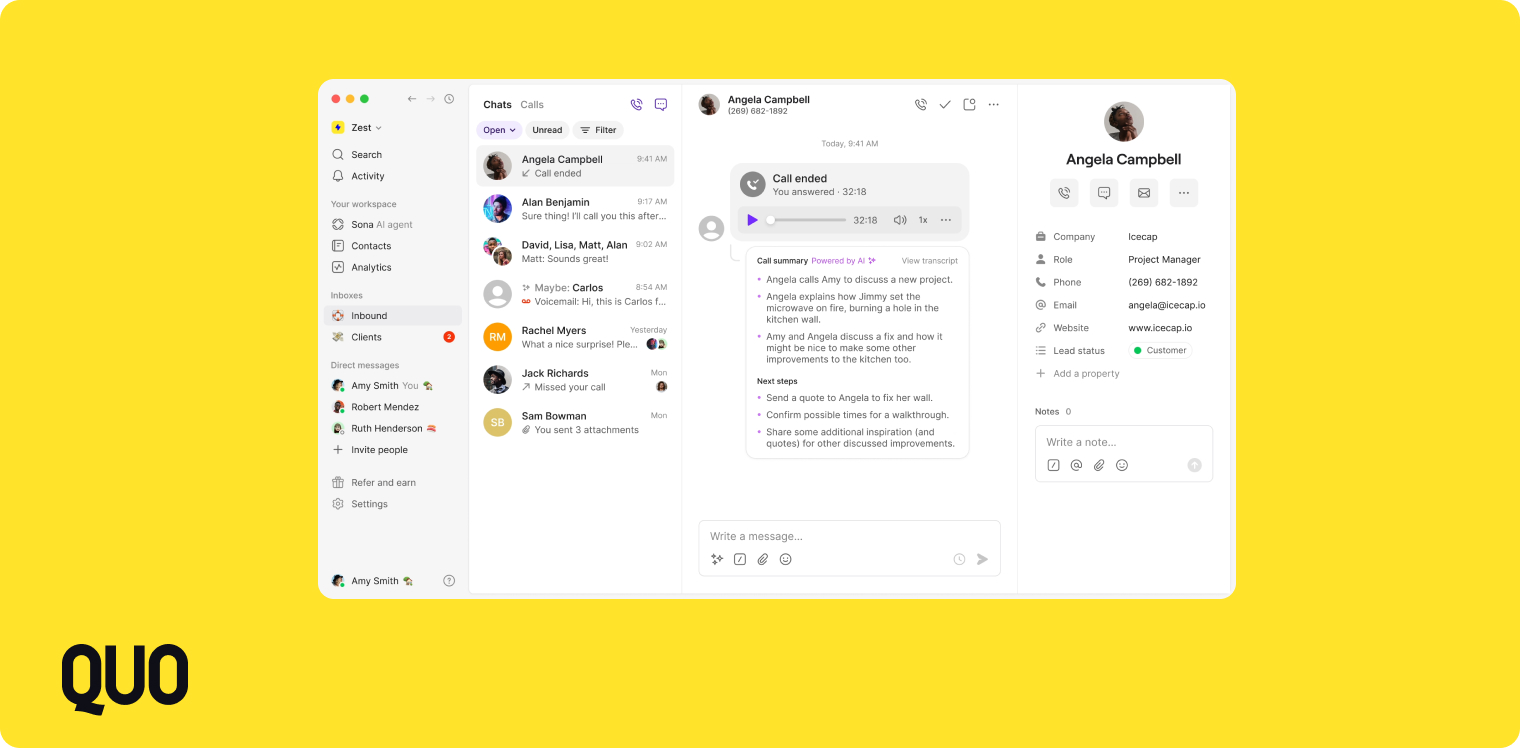
Quo (previously known as OpenPhone) designed their system around how small teams actually work. Rather than forcing you to buy separate CRM software and then integrate it, they included lightweight customer management right in the phone system. The shared inbox uses threading and tagging so everyone sees conversation history. Internal chat keeps team coordination out of customer-facing channels.
The company's stance on collaboration shows in features other systems skip. Group calls happen natively without workarounds. Smart routing directs calls to available team members automatically. Sona, their AI answering service, handles routine inquiries so your team focuses on conversations that matter. For small teams that want solid communication tools without enterprise complexity, Quo strips away the unnecessary parts.
Why Quo is a Good Alternative to CallHippo
Quo takes a fundamentally different approach than CallHippo. While CallHippo focuses on international calling and wide integration coverage, Quo concentrates on team collaboration with built-in tools that small teams actually need.
The built-in CRM sets Quo apart. Instead of relying on HubSpot or Salesforce integrations (which CallHippo offers more extensively), Quo handles basic contact management, call history, and notes natively. For teams not ready for full CRM complexity, this simplicity helps.
Pricing comparison shows Quo starting lower: $19/user/month for the Starter plan versus CallHippo's $25 Starter. Quo's Business plan at $33/user/month includes AI call summaries and transcripts in 34 languages, HubSpot and Salesforce integrations, and group calling. CallHippo charges $39 for Professional with similar features but requires AI add-ons for some capabilities.
Support quality heavily favors Quo. Users consistently praise the support team's responsiveness and helpfulness. CallHippo faces the opposite reputation—slow responses and minimal help for issues. For small teams without IT departments, support quality makes or breaks the experience.
The major Quo limitation: they prohibit cold calling and can block accounts suspected of violating this rule. CallHippo allows sales outreach without these restrictions. For outbound sales teams doing cold calling, this makes Quo unusable regardless of other advantages.
Text messaging registration on Quo can take time—a frustration users note. CallHippo doesn't face the same delays. Both systems struggle with spam filtering; Quo users report needing better spam protection while CallHippo users report their numbers getting flagged as spam.
Choose Quo if you're a small team (under 20 people) doing inbound support or warm outreach, and you want simple tools with great support. Stay with CallHippo if you need cold calling capabilities and extensive third-party integrations.
Quo Pricing
Quo offers a 7-day free trial with three plan options:
• Starter: $19/user/month - Includes a local number, unlimited US/Canada calling and messaging, voicemail transcripts, and 10 calls handled by Sona AI.
• Business: $33/user/month - Adds AI call summaries and transcripts in 34 languages, group calling, call transfers, analytics, and HubSpot/Salesforce integrations.
• Scale: $47/user/month - Includes dedicated onboarding, priority support, and inbound phone support for teams needing extra attention.
Sona AI includes 10 calls free in all plans, then costs $0.75 per call after that.
Quo Demo
See Quo in action:
Zoom Phone, Best for Teams Already Using Zoom Meetings
What is Zoom Phone?
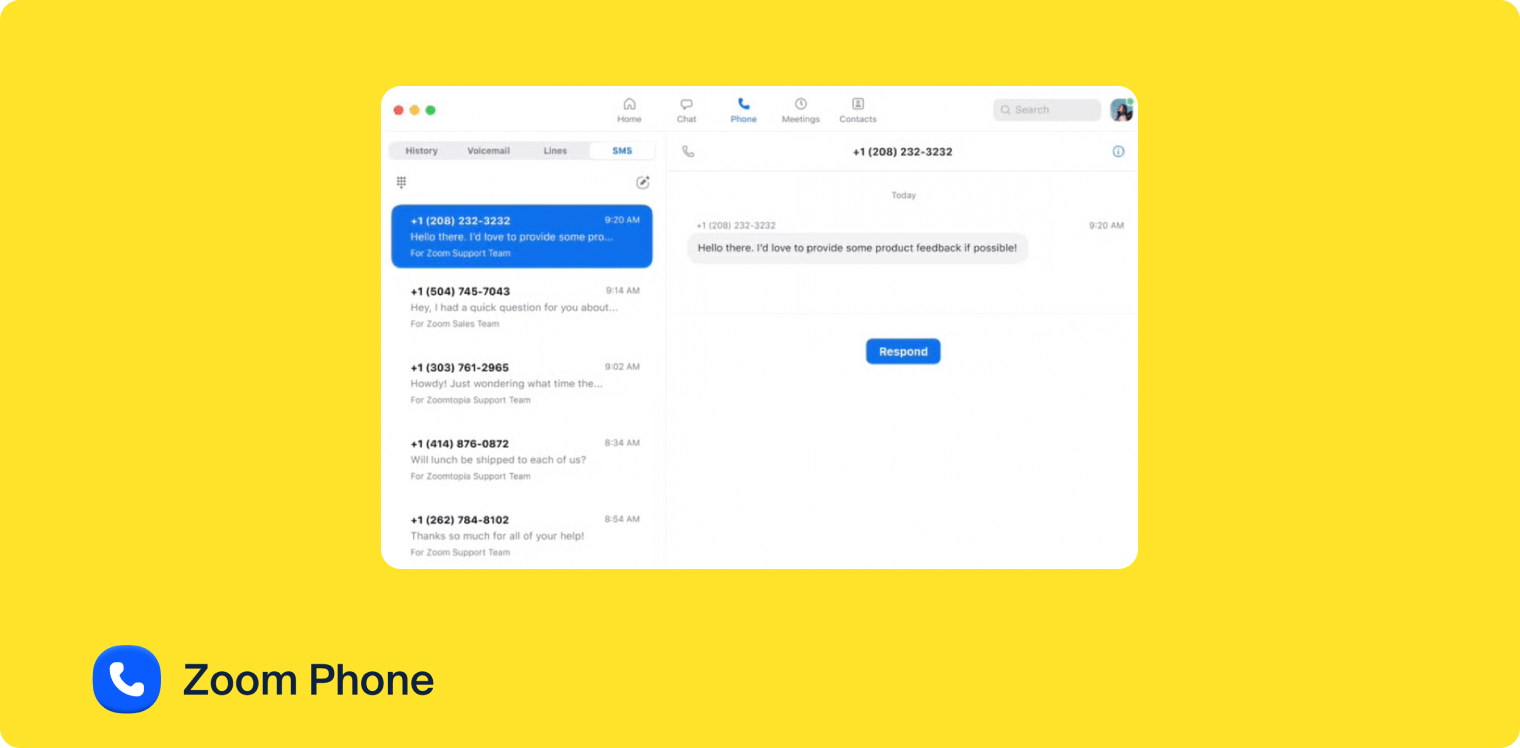
When Zoom added phone capabilities in 2019, they solved a specific problem: too many apps fragmenting team communication. For organizations already running Zoom Meetings, adding voice calling means one less platform to manage, one less login to remember, one less invoice to process.
The integration runs deeper than shared branding. Switch from a video meeting to a phone call without changing apps. Access your Zoom contacts directly when placing calls. Use the AI Companion you already know from meetings to summarize phone conversations and extract action items from voicemails. This unified experience reduces the friction that kills productivity when teams bounce between disconnected tools.
Why Zoom Phone is a Good Alternative to CallHippo
The value proposition for Zoom Phone comes down to integration simplicity. If you're already paying for Zoom Meetings, adding phone functionality costs just $15/user/month—significantly less than CallHippo's $25 Starter plan. The bundled Pro Plus plan at $21.99/user/month includes both Zoom Meetings and Zoom Phone, potentially eliminating a separate video conferencing subscription.
Call quality and connectivity consistently earn praise from Zoom Phone users. CallHippo faces more complaints about international call quality and reliability. Zoom's infrastructure investment in its core meeting platform carries over to phone service, delivering stable connections.
The interface familiarity reduces training time. Teams already comfortable with Zoom pick up the phone features immediately. CallHippo's outdated UI requires more onboarding time and faces criticism for being less intuitive.
However, Zoom Phone lacks critical features for sales teams. No AI answering service, no AI IVR, limited sales-specific tools like power dialers. CallHippo offers parallel dialing and more sales-focused features before add-ons. The 195 native integrations Zoom Phone offers pale compared to CallHippo's 110, but the depth matters less when Zoom integration is what you need most.
Support experiences vary. Zoom Phone users report difficulty reaching support teams—similar to CallHippo's support problems. Onboarding for Zoom Phone tends to be brief, leaving some teams wanting more guidance. CallHippo doesn't offer significantly better onboarding.
Mobile app limitations frustrate Zoom Phone users. Shared contacts don't sync to mobile apps properly. CallHippo's mobile experience also faces criticism for its dated interface.
Choose Zoom Phone if you're already invested in Zoom Meetings and want simple, affordable calling. Consider CallHippo if you need sales-specific features like outbound dialing tools and don't care about video conferencing integration.
Zoom Phone Pricing
Zoom Phone bundles well with Zoom Meetings and offers three main options:
• US & CA Unlimited: $15/user/month - Includes unlimited US/Canada calls, free SMS, a phone number, call recording, integrations (Salesforce, Slack, others), and basic AI features (call summaries, voicemail prioritization, task extraction).
• Pro Plus: $21.99/user/month - Bundles Zoom Phone with Zoom Workspace. Includes Zoom Meetings, Team Chat, Zoom Docs, Zoom Mail, and Live Chat for complete unified communications.
• Business Plus: $26.99/user/month - Adds more storage, larger meeting capacity, and SSO for growing teams with enterprise needs.
All plans include AI Companion features at no extra charge.
Zoom Phone Demo
See Zoom Phone in action:
Conclusion
Switching from CallHippo doesn't mean compromising on features or international calling capabilities. Each alternative in this guide solves specific problems better than CallHippo's aging platform.
Small sales teams frustrated with CallHippo's add-on pricing and support issues will find relief in Allo's transparent AI-first approach. Mid-sized companies needing enterprise-grade integrations can trust Aircall's proven reliability. Teams calling internationally get better results with CloudTalk's automatic local number switching. JustCall delivers affordable AI features with actual human support. RingCentral serves enterprises demanding bulletproof infrastructure. Quo simplifies everything for small teams not doing cold calling. And Zoom Phone makes sense when you're already living in Zoom Meetings.
The right choice depends on your team size, budget, and specific workflow needs. But one thing's clear—you don't have to accept CallHippo's limitations in 2026.
FAQ About CallHippo Alternatives
Who are CallHippo's competitors?
CallHippo's main competitors include Allo, Aircall, CloudTalk, JustCall, RingCentral, Quo, and Zoom Phone. Each alternative offers different strengths—Allo focuses on AI automation for small teams, Aircall serves mid-sized companies with deep CRM integrations, and CloudTalk excels at international calling.
Which phone system is better than CallHippo?
The best CallHippo alternative depends on your team's needs. For small sales teams wanting transparent AI pricing without add-ons, Allo outperforms CallHippo with better AI features and modern mobile apps. For teams already using Zoom, Zoom Phone costs less and integrates seamlessly. CloudTalk delivers superior international calling without the spam flagging issues that plague CallHippo users.