
Introduction
After working in the SaaS industry for a decade and helping build a unicorn from the ground up (Spendesk), I'm convinced of something that might sound radical: SaaS is dead.
And I am not saying it is dying. It’s Dead. Let me explain to you.
Three years ago, we started building another SaaS. Classic playbook: subscription model, feature roadmap, sales team. But something shifted along the way. Our customers started expecting something completely different.
This is what I call the GPT effect.
Suddenly, users wanted software that was fast, intuitive, beautifully designed – but most importantly, software that took actions for them. Not dashboards to analyze. Not tools to operate. They wanted AI that does the work while they focus on their business.We listened. We rebuilt. And today, over 20,000 businesses use Allo, our first product.
What we discovered wasn't just a product insight. It was a fundamental shift in what software means in a post-AI world. The model that dominated for two decades, I’m talking about SaaS, where you pay for access to tools, no longer matches what customers expect. They don't want to pay $75 per seat for features they'll use only a fraction of the time. They want results.
That’s why I am here talking to you about RaaS: Results as a Service. And in this article I’ll explain why I believe it's the future of software.
In the following sections, I'll break down what RaaS actually means, how it differs from traditional SaaS, share real evidence from companies like Bairong deploying AI agents at scale, and show how we're building RaaS at Allo with concrete metrics and customer stories.
SaaS was the cloud revolution. RaaS is the intelligence revolution.
What is RaaS?
Let’s get nerdy here. The fundamental premise of RaaS flips the traditional SaaS script entirely: instead of paying subscriptions for software seats that may or may not deliver value, businesses now "hire" AI agents that guarantee measurable results. The transaction changes from "access to tools" to "delivery of outcomes" – and this distinction transforms everything about how software companies operate, how they price their products, and how they align their incentives with customers.
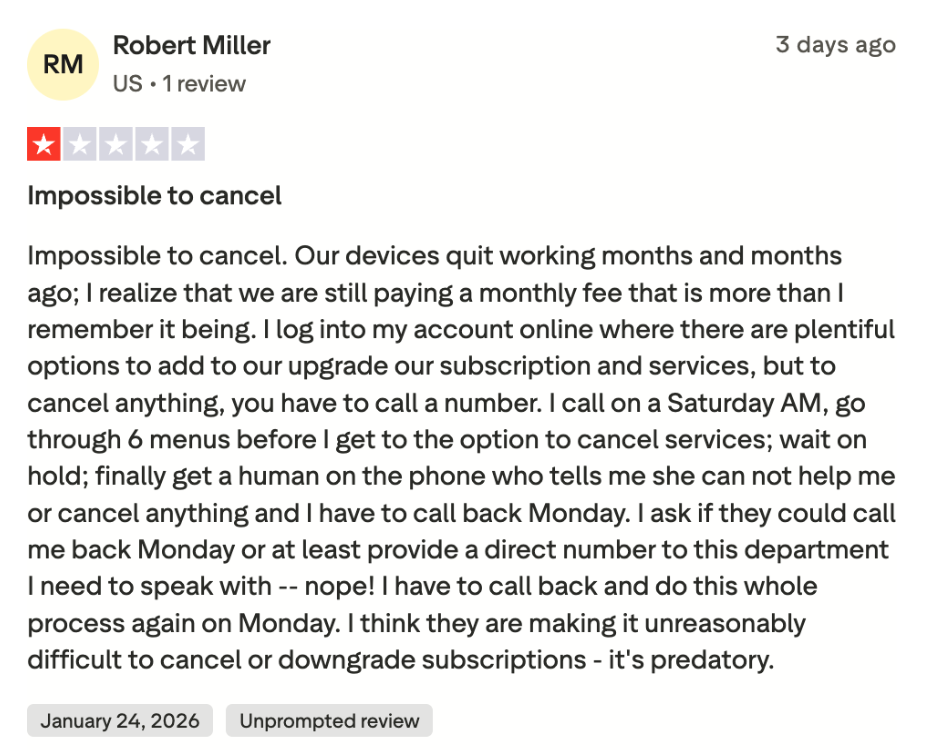
Consider the traditional SaaS model. A company pays $75 per seat per month for access to a platform. Whether employees use the software effectively, whether it generates ROI, whether it solves the problems it promised to solve – none of this affects the vendor's revenue. Studies consistently show that over 50% of SaaS licenses go unused, meaning customers pay for capabilities they never touch while vendors celebrate MRR growth regardless of customer success.
RaaS fundamentally restructures this relationship. When a business deploys an AI agent for recruitment, for example, the vendor only earns revenue when hiring cycles actually shrink – from 30 days to 2, or when 90% of legal tasks get automated successfully. The risk shifts from buyer to vendor, creating an alignment of incentives that SaaS never achieved. If outcomes falter, so does the bill.
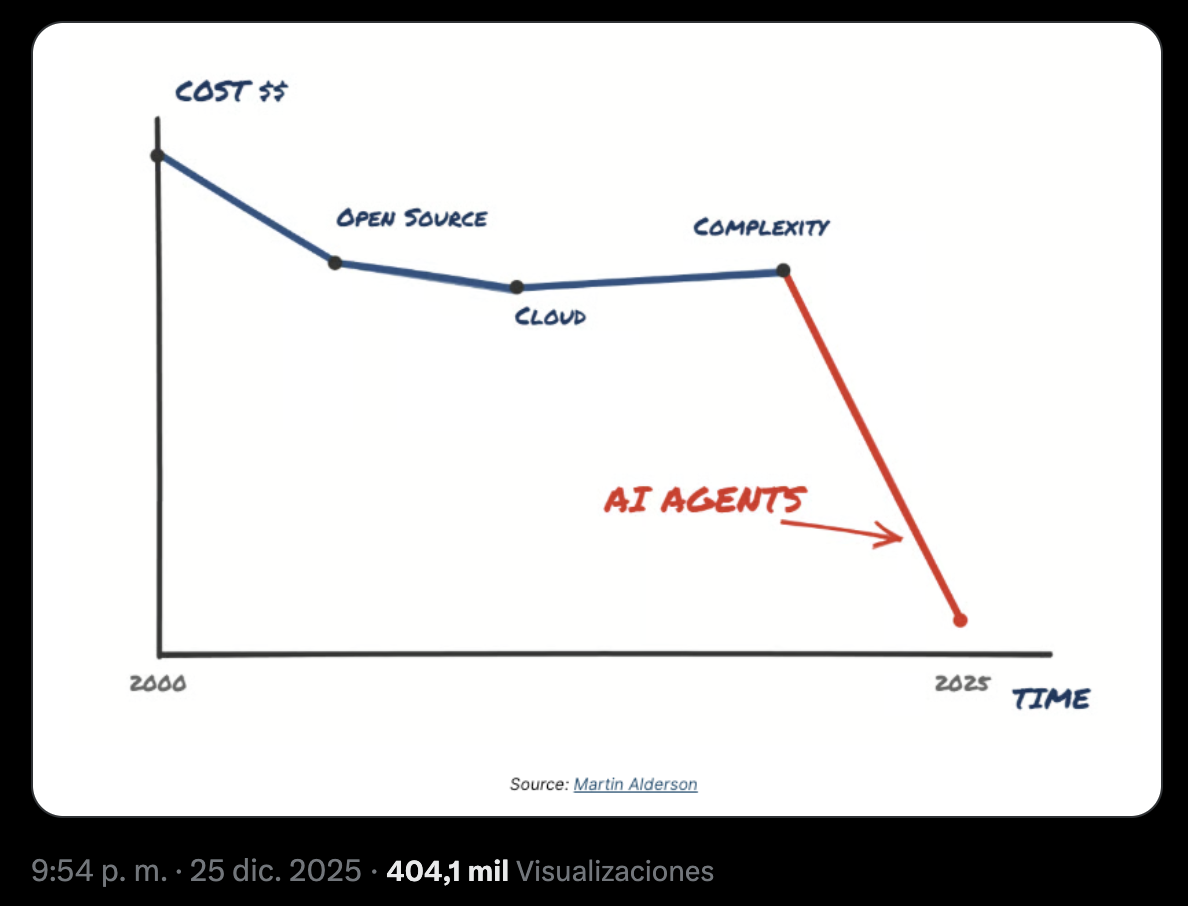
This model is powered by autonomous AI agents that transform software from passive tools into proactive workers with their own KPIs and job descriptions. Bairong's Results Cloud platform in China exemplifies this approach: their AI agents operate as "virtual employees" across sales, recruitment, and legal functions, processing billions of transactions with compensation tied directly to performance. As Teng Yan noted in his viral X thread that garnered over 3,000 engagements, this represents the birth of the machine economy – where agents don't just assist human workers but replace entire workflows, eating traditional software in the process.
RaaS vs SaaS: A Paradigm Comparison
Understanding the magnitude of this shift requires a direct comparison between the two models across key dimensions that matter to business buyers:
Traditional SaaS (Software as a Service):
- Customers pay upfront for access to software platforms
- All risk sits with the buyer – if the software doesn't deliver value, the subscription continues
- Tools remain passive, waiting for human operators to extract value
- Over 50% of licenses go unused, wasting significant portions of software budgets
- Vendors optimize for feature lists and sales cycles rather than customer outcomes
- Sales cycles stretch 31+ days with demos, negotiations, and procurement
RaaS (Results as a Service):
- Customers pay per outcome delivered, not per seat or subscription
- Risk shifts to the vendor – no results means no revenue
- AI agents work actively and autonomously, executing tasks without constant human oversight
- Customers only pay for value actually received
- Vendors optimize for efficacy and outcome delivery
- Adoption happens in minutes through product-led growth
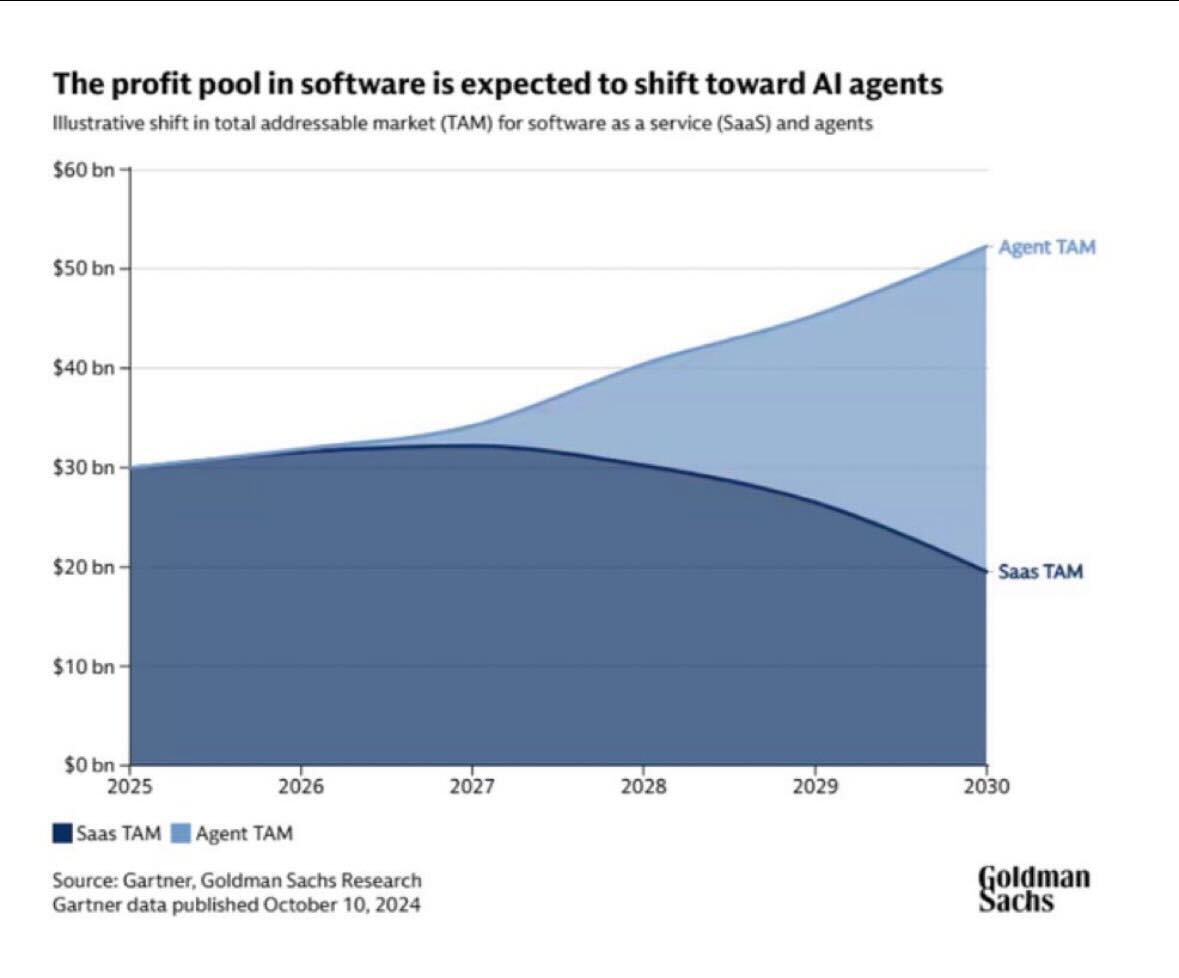
The data supporting this transition is compelling. According to Goldman Sachs Research, AI agents could account for more than 60% of software economics by 2030. McKinsey's 2025 State of AI survey reports that employees using AI see an average 40% productivity boost, with 62% of organizations now experimenting with AI agents.
At Allo, we see this playing out in our own metrics. Our retention curve doesn't decline after onboarding – it rises. We call it the "smiling curve." Top cohort users (those with 100+ calls per month) show 73.9% retention at month 1, and that number improves through month 5 at 52%+. In traditional SaaS, engagement typically drops after the initial excitement fades. In RaaS, engagement increases because customers experience compounding value from AI that learns and improves.
The Rise of RaaS: Evidence from Research and Real-World Deployments
Key Research Insights on RaaS and Agentic AI
The shift toward Results as a Service is not merely theoretical, it's documented across multiple research streams from leading technology analysts and publications:
- Goldman Sachs Research projects that agents will capture over 60% of software economics by 2030, redirecting funds from conventional SaaS subscriptions to dynamic, agent-driven workloads. The appeal lies in their efficiency: agents reduce human intervention by up to 80% and slash task costs by 70%.
- McKinsey's Global Survey on AI reveals that 88% of organizations now use AI, with 40% piloting agentic systems capable of handling autonomous tasks. Their research identifies a subset of "AI high performers" – 6% of respondents – who report both significant value from AI use an EBIT impact of 5% or more attributable to AI.
- The Thoughtworks Technology Radar highlights the rapid evolution of AI assistance, noting that "the dual rise of MCP and agents — and the expanding ecosystem of protocols and tools built around them — dominates this edition." Virtually every major vendor is adding agent capabilities to their tools.
Real Customers, Real Results: How we Deliver RaaS at Allo
For us, the most compelling evidence for RaaS comes not from analyst reports but from watching how our customers use the product. Here are some stories from our users at Allo:
- Andrei from Rentall Levage runs a crane rental business. In 30 days, he received 785 calls through Allo. He opened the app 1,250 times – that's 40 times per day. This isn't engagement theater or vanity metrics. This is where Andrei runs his business. Every call is transcribed, summarized, with contacts extracted and pushed to his systems. He's not logging into a dashboard occasionally. He's living inside a product that delivers results continuously.
- Keller Williams network in Florida shows how RaaS spreads organically. One real estate agent installed Allo in January. By May, 9 agents in his network were using it. The entire adoption cascade happened in a private channel among colleagues. Zero outbound from our sales team. In traditional SaaS, you'd need enterprise sales reps, demos, procurement cycles. In RaaS, the results speak for themselves and customers become evangelists.
- Pro Gestion, a property management company, started a free trial. Two weeks later, they cancelled Microsoft Teams entirely. They ported every branch number to Allo and rolled out to 26 agents in 48 hours. No implementation partner. No training sessions. No consulting fees. They saw how Allo transformed their client conversations and moved immediately.
- A 53-seat accounting firm initially tested Allo just to improve their voicemail experience. After seeing AI-generated summaries flow automatically to HubSpot, the partner requested 53 licenses. They replaced their entire legacy VOIP system plus their receptionist workflow. One small test became a complete infrastructure replacement because the results were undeniable.
- IAD France, a major real estate network, discovered Allo through a single agent who found us on LinkedIn. That agent became an internal evangelist, hosting private webinars for colleagues. 15 agents adopted without any sales involvement from our side. Chat-driven, organic, result-based distribution.
These stories share a common pattern: customers don't adopt Allo because of features. They adopt because they experience results immediately, and those results compound over time.
Why RaaS Fits the Mobile-First Future: Our Vision
RaaS and mobile-first design converge perfectly for small business owners. For me, the largest underserved market in software.
These entrepreneurs run their entire businesses from their phones. Not by choice, by necessity. The plumber doesn't return to the office to update his CRM. The real estate agent doesn't sit at a desk between showings. The accountant travels from client to client all day. They need software that works while they work.
Traditional VOIP solutions like Aircall and RingCentral charge $30-50 per seat for infrastructure: pay for access, get a dialer, but figure out the rest yourself.
Allo is 3x cheaper – not because we cut corners, but because AI handles what previously required expensive human support infrastructure. The AI answers calls, has conversations, extracts contact information, transcribes everything, generates summaries with action items, syncs to your CRM, blocks spam, and manages business hours – all autonomously.
The numbers validate this approach:
- 65% of revenue from the US and Canada
- 20 US companies installing daily
- 500+ new company sign-ups every week
- 50%+ monthly growth
- $12M seed round from Base10 Partners, Lightspeed, and Emblem
In a world projected to have 5 billion AI users by 2026, mobile RaaS democratizes access to outcomes that were previously available only to enterprises. Every small business owner deserves AI that delivers results.
Challenges and Ethical Considerations of the RaaS model
I want to be intellectually honest. RaaS brings real advantages, but it comes with real challenges too.
Runaway costs can devastate vendors when AI usage scales faster than anticipated – if you've promised outcome-based pricing but your AI infrastructure costs balloon, margins evaporate quickly. We've experienced this tension at Allo and learned to build pricing models that remain sustainable as usage grows.
Bias in training data creates outcomes nobody intended. When AI agents make decisions based on patterns in historical data, they can perpetuate or amplify existing biases. If your AI makes decisions based on flawed patterns, you as the vendor bear liability for those outcomes.
Auditability becomes critical when agents make thousands of decisions per day. Some researchers distinguish between RaaS as a pricing model and RAAS (Real-time Autonomous Action Systems) as a technical architecture – the latter demanding deterministic systems with verifiable receipts for every action taken.
We’re conscious of this, that’s why at Allo, we've built transparency into the core product to mitigate these risks:
- Every AI decision is logged and traceable
- Customers review full call transcripts
- The system explains why it took specific actions
- Human override is one tap away
- Call screening shows who's calling and why before you pick up
Building responsible AI isn't a feature we added. It's the foundation that makes RaaS viable for us.
The Visionary Horizon: RaaS as the Decade's Defining Model
The SaaS market currently commands approximately $200 billion in market capitalization. Goldman Sachs projects that a meaningful portion of that value will shift to RaaS players who can deliver outcomes instead of merely providing access to tools.
At The Mobile First Company, Allo is the RaaS business phone – but the phone is just the beginning. Our roadmap extends to a complete RaaS suite for small business:
- Allo (live now): AI business phone that makes every customer conversation count
- Expense (Q2 2025): AI that handles receipts, categorization, and reconciliation
- Invoicing (Q3-Q4 2025): AI that gets you paid faster by automating follow-ups
- CRM (Q1 2026): AI that runs your sales memory for people who sell on the phone, not cold email
- Sell Online (Q4 2026): AI that turns conversations into revenue
Our 18-month vision: 4 modules live, 2 best-sellers post product-market fit, €2M+ ARR per product, 8,000+ companies on Allo, team of 25. Not a SaaS bundle – an AI operating system for small businesses where every app delivers measurable outcomes.
This transition will reshape corporate structures and human work in profound ways. When AI agents handle coordination, execution, and routine decision-making, organizations need fewer middle managers. The org chart compresses. Human work moves up the value chain toward judgment, creativity, and relationship-building, the tasks that AI cannot replicate.
The companies that figure this out first will define the next decade. The ones clinging to seat-based SaaS will become the new legacy vendors – just like the on-premise software companies that refused to embrace cloud subscriptions 20 years ago.
Conclusion
RaaS marks the end of passive software and the beginning of outcome-driven AI agents that transform how businesses operate. The shift from "access to tools" to "delivery of results" represents for me, the most significant transformation in software economics since the original transition from licensed software to cloud subscriptions.
The evidence is clear. Bairong processes billions through AI agents in China. SMS-iT guarantees ROI or you don't pay. Teng Yan's viral thread captured what millions of software buyers feel: the seat model is broken.
And at Allo, we're proving the alternative works with over 20,000 businesses: 3-minute time-to-payment, smiling retention curves, organic adoption spreading through customer networks without enterprise sales teams.
The companies that embrace this shift will thrive. The ones clinging to seat-based SaaS will become legacy vendors faster than they expect. Read it again!
Experience RaaS today with Allo. No demo required. No sales call. Just results.