











Key Takeaways
• Allo is best for small sales teams because it delivers AI-powered call summaries and CRM syncing at a straightforward $45/user price with no hidden add-ons or minimum seat requirements.
• Dialpad is best for mid-market companies (20–1,000 employees) looking for robust AI capabilities built on proprietary technology that includes live coaching and call scoring across multiple products.
• Google Voice is best for budget-conscious Google Workspace users who need basic calling features without the complexity of a full-featured phone system.
––––––––––
Zoom Phone works well if you already live inside Zoom's ecosystem. But what happens when your sales team needs deeper CRM integrations, better AI automation, or more flexible pricing?
Plenty of teams find themselves in this spot. Maybe Zoom Phone's limited AI features leave you wanting more automation. Perhaps the SMS functionality feels restrictive (available in only four countries). Or you've discovered that the tight integration with Zoom Meetings matters less than having a phone system built specifically for sales workflows.
Whatever brought you here, comparing your options takes time. This guide breaks down eight Zoom Phone competitors worth evaluating: Allo, Google Voice, Quo, Dialpad, RingCentral, Nextiva, Microsoft Teams Phone, and Aircall. You'll find specific pricing, standout features, and honest takes on where each solution shines and where it falls short.
Allo, Best for Small Sales Teams
What is Allo?
Allo launched in 2024 with a clear focus: build an AI phone system from scratch for small teams and salespeople. Rather than bolting AI features onto legacy infrastructure, Allo was designed mobile-first and AI-native from day one. The result is a system where call recordings automatically sync to your CRM, AI summaries capture the important details, and an intelligent receptionist handles routing without complex setup.
The platform supports 18 native integrations including HubSpot, Salesforce, Attio, and Apollo. Every call gets transcribed, summarized, and logged automatically so sales reps spend time selling instead of updating records.
Why Allo is a Good Alternative to Zoom Phone
Where Zoom Phone offers basic AI features like post-call summaries and voicemail transcription, Allo takes automation further with its AI answering service included in every plan. Zoom charges extra for AI companion features at higher tiers. Allo bundles everything at $45/user.
The CRM integration story differs significantly too. While Zoom Phone connects to HubSpot and Salesforce, reviews mention integration limitations. Allo's native integrations were built specifically to log calls, recordings, transcripts, and summaries directly into your CRM without manual intervention.
SMS coverage tells another story: Zoom Phone supports texting in four countries. Allo's messaging works across more regions with fewer restrictions. For sales teams doing outbound across multiple markets, that flexibility matters.
Allo Pricing
• Starter: $25/month for a single user. Includes unlimited calls, a local phone number, AI summaries, and IVR.
• Business: $45/month per user. Adds CRM integrations, unlimited AI answering service, SMS, and international calling.
No minimum license requirements. No surprise add-ons.
Allo Demo
See Allo in action:
[[first-button]]
Google Voice, Best for Budget-Conscious Google Workspace Users

What is Google Voice?
Google Voice entered the business phone market in 2009 and has maintained its position through simplicity and tight Google Workspace integration. The interface stays clean and familiar for anyone already using Gmail, Calendar, or Google Meet. For consumers, there's a free version. For businesses, plans start at just $10/user.
The tradeoff? Features stay minimal.
You won't find advanced call routing, AI-powered summaries, or native CRM integrations. Google Voice handles the basics: calls, texts, and voicemail transcription.
Why Google Voice is a Good Alternative to Zoom Phone
Price drives the comparison here. Google Voice starts at $10/user/month versus Zoom Phone's $15/user entry point. For teams that only need basic calling without advanced features, that difference adds up.
Google Voice also works entirely within the Google ecosystem. If your team already relies on Google Workspace, switching between apps feels seamless. Contacts sync automatically from Google Contacts. Calendar integration happens natively.
The limitation? Google Voice only provides local numbers in the US and Canada. No CRM integrations exist. AI features stop at spam blocking and voicemail transcription. Teams needing sales-specific functionality will find Google Voice too basic.
Google Voice Pricing
• Starter: $10/user/month. Maximum 10 users, works in 14 countries. Includes unlimited domestic calling, US texting, and voicemail transcription.
• Standard: $20/user/month. Adds unlimited users, on-demand call recording, and call routing.
• Premier: $30/user/month. Includes automatic call recording and advanced reporting through BigQuery.
Requires a Google Workspace subscription for business use.
Google Voice Demo
See Google Voice in action:
Quo, Best for Teams Wanting Built-In Collaboration Features
What is Quo?
Quo (formerly OpenPhone) launched in 2018 to give small businesses and growing teams a modern phone system with collaboration at its core. The platform includes a built-in lightweight CRM, a shared inbox with threads and tagging, and internal chat for team members. Group calls, call routing, and caller ID round out the feature set.
The shared inbox approach sets Quo apart from traditional phone systems. Team members can see conversation history, tag colleagues, and hand off conversations without losing context.
Why Quo is a Good Alternative to Zoom Phone
Quo delivers collaboration features that Zoom Phone lacks at the individual phone system level. The shared inbox lets multiple team members view and respond to conversations. Internal chat keeps teams connected without jumping to a separate app.
Pricing aligns closely: Quo's Starter plan at $19/user undercuts Zoom Phone's $15/user entry point when you factor in included features. Quo includes unlimited calling and messaging to US and Canadian numbers plus voicemail transcripts from the start.
The AI answering service (called Sona) provides 10 free calls in every plan, then charges $0.75/call after. Zoom Phone's AI features require higher-tier plans. For teams wanting to test AI functionality without committing to premium pricing, Quo offers more flexibility.
Quo Pricing
• Starter: $19/user/month. Includes a local number, unlimited US/Canada calling and messaging, voicemail transcripts, and 10 Sona AI calls.
• Business: $33/user/month. Adds AI call summaries and transcripts, group calling, call transfers, analytics, and HubSpot/Salesforce integrations.
• Scale: $47/user/month. Includes dedicated onboarding, priority support, and inbound phone support.
7-day free trial available.
Quo Demo
See Quo in action:
Dialpad, Best for Mid-Market Teams Wanting Proprietary AI
What is Dialpad?
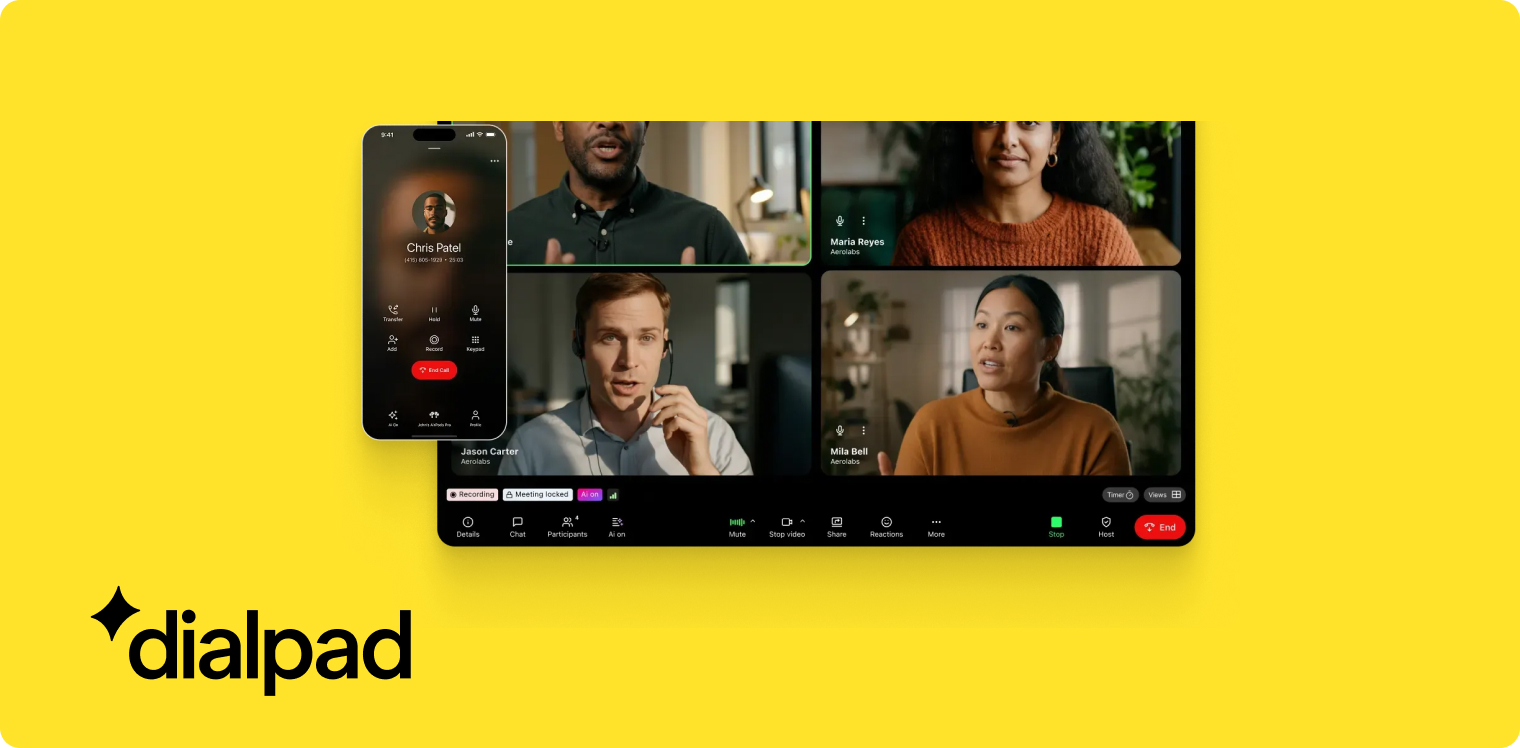
Dialpad entered the unified communications space in 2011 and has invested heavily in AI technology since 2018, developing proprietary models rather than relying on third-party solutions. The platform splits into three products: Connect for general business use, Support for customer service teams, and Sell for sales organizations.
This specialization means Dialpad can tailor features to specific workflows. Sales teams get conversation intelligence. Support teams get agent assist. Everyone gets AI call summaries and live coaching included in base plans.
Why Dialpad is a Good Alternative to Zoom Phone
Dialpad's AI runs deeper than Zoom Phone's offerings. Call scoring evaluates conversation quality. Live coaching surfaces real-time suggestions during calls. These features come included rather than requiring premium tiers or add-ons.
The integration library spans countless native connections including Salesforce and HubSpot, with Zapier extending reach further. Zoom Phone integrates with 195 apps, but user reviews mention friction points. Dialpad's integrations receive stronger user feedback.
International coverage expands to 70 countries with local numbers in 50+, compared to Zoom Phone's 49 countries. For global sales teams, that additional reach matters.
Dialpad Pricing
• Standard: $27/user/month. Includes unlimited calling in your country plus the US and Canada, a local number, call forwarding, call recording, and up to 3 departments.
• Pro: $35/user/month. Adds SSO, phone support, and up to 25 departments.
Additional products (Support and Sell) have separate pricing.
Dialpad Demo
See Dialpad in action:
RingCentral, Best for Enterprise Teams Needing Maximum Integrations
What is RingCentral?
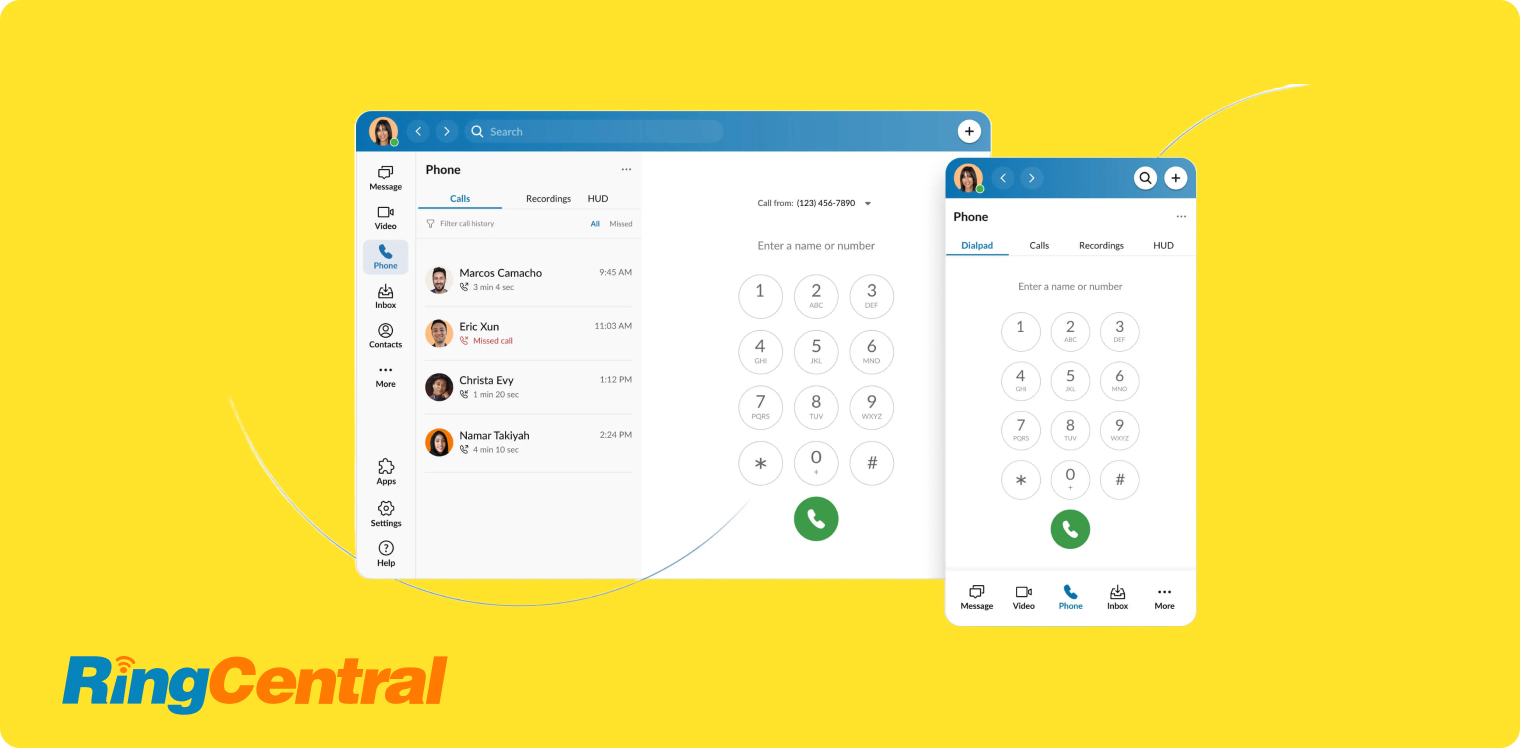
RingCentral has operated since 1999, making it one of the longest-running players in business communications. That history shows in two ways: the platform connects with over 500 native integrations, and the interface can feel overwhelming for smaller teams used to simpler tools.
The company serves enterprises across 100+ countries with voice, SMS, video conferencing, and even Instagram and WhatsApp messaging. An AI assistant called AVA allows teams to query their call data conversationally.
Why RingCentral is a Good Alternative to Zoom Phone
Integration depth drives the comparison. RingCentral's 500+ native integrations dwarf Zoom Phone's 195. For organizations with complex tech stacks, that breadth prevents gaps.
Global coverage extends further too. RingCentral operates in over 100 countries with local numbers available broadly. Zoom Phone covers 49 countries. For international sales operations, RingCentral reduces the need for multiple providers.
The AI receptionist, video tools, and fax capabilities add functionality Zoom Phone doesn't match. But RingCentral's pricing starts higher at $30/user for the Core plan, and add-ons like AI Receptionist ($39/month for 100 minutes) increase costs quickly.
RingCentral Pricing
• Core: $30/user/month. Includes unlimited domestic calling, call recordings, and meetings.
• Advanced: $35/user/month. Adds CRM integrations and reporting.
• Ultra: $45/user/month. Includes unlimited storage, webinars, and device analytics.
AI Receptionist starts at $39/month for 100 minutes as an add-on.
RingCentral Demo
See RingCentral in action:
Nextiva, Best for Large Teams Wanting Unified Communications
What is Nextiva?
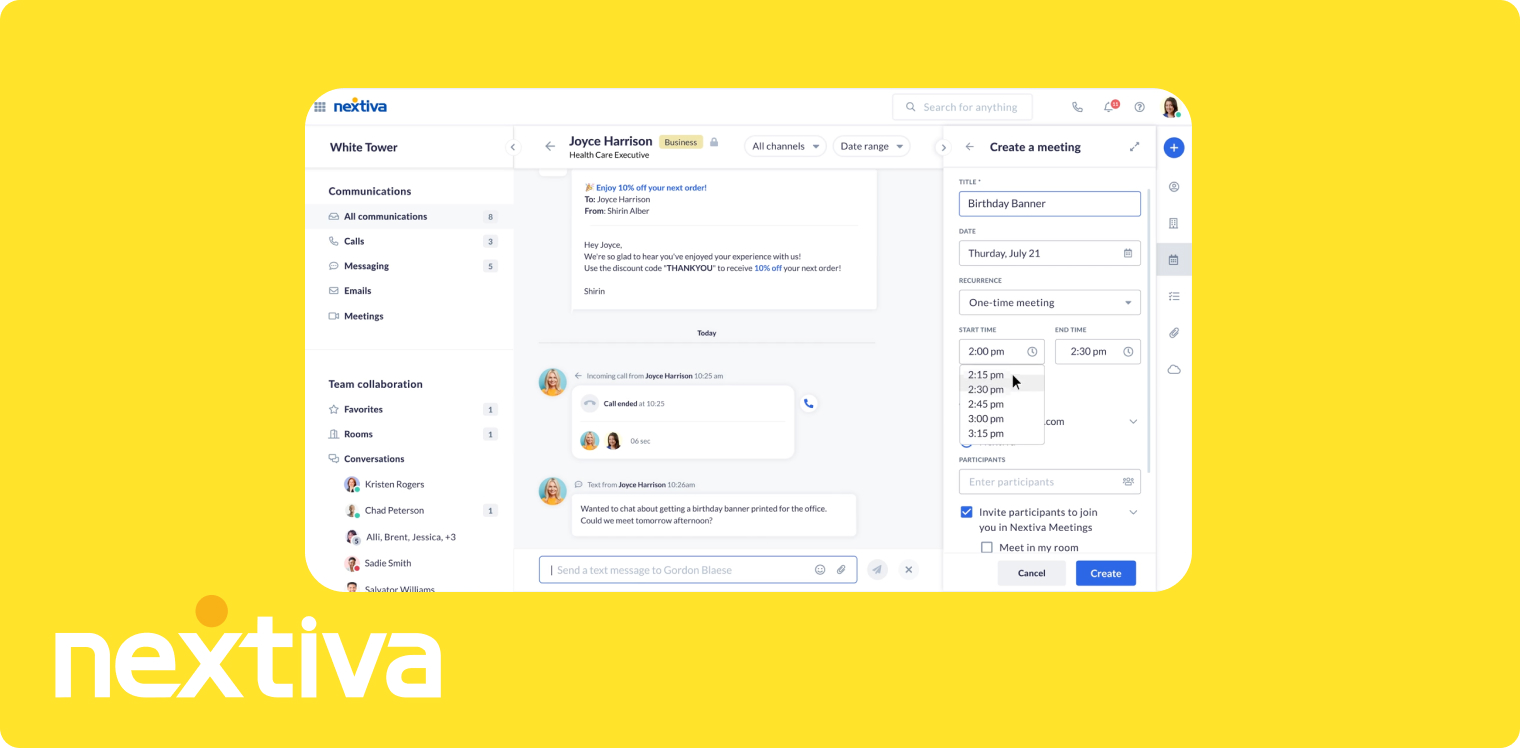
Nextiva launched in 2008 and evolved into a unified communications platform targeting large teams and support operations. The system combines voice, video meetings, team chat, SMS, and even light CRM and ticketing tools in one interface. Physical phone support adds flexibility for office environments that prefer hardware.
The platform recently introduced XBert, an AI receptionist that handles inbound calls, and expanded AI transcription and summarization capabilities. These features aim to compete with newer entrants that prioritize automation.
Why Nextiva is a Good Alternative to Zoom Phone
Nextiva bundles more communication channels in base plans. Voice, video meetings, team chat, and SMS come together where Zoom Phone requires separate Zoom subscriptions for full meeting functionality.
Analytics and reporting capabilities exceed Zoom Phone's offerings at comparable price points. The Core plan at $23/user includes call routing and team chat. Zoom Phone's equivalent features spread across tiers.
The tradeoff involves geographic restrictions. Nextiva works primarily in the US with limited Canadian coverage. Zoom Phone operates in 49 countries. International teams will find Nextiva restrictive.
Nextiva Pricing
• Core: $23/user/month. Includes a phone number, SMS, video meetings, call routing, and team chat.
• Engage: $50/user/month. Adds advanced reporting, web chat, and a toll-free number.
• Power Suite CX: $75/user/month (up to 100 agents). Includes AI transcription, summarization, and intelligent routing.
AI Receptionist (XBert) costs $99/month for 100 interactions, then $0.99 per interaction after.
Nextiva Demo
Visit Nextiva's website to request a demo. Official demos are gated.
Microsoft Teams Phone, Best for Organizations Already Using Microsoft 365
What is Microsoft Teams Phone?
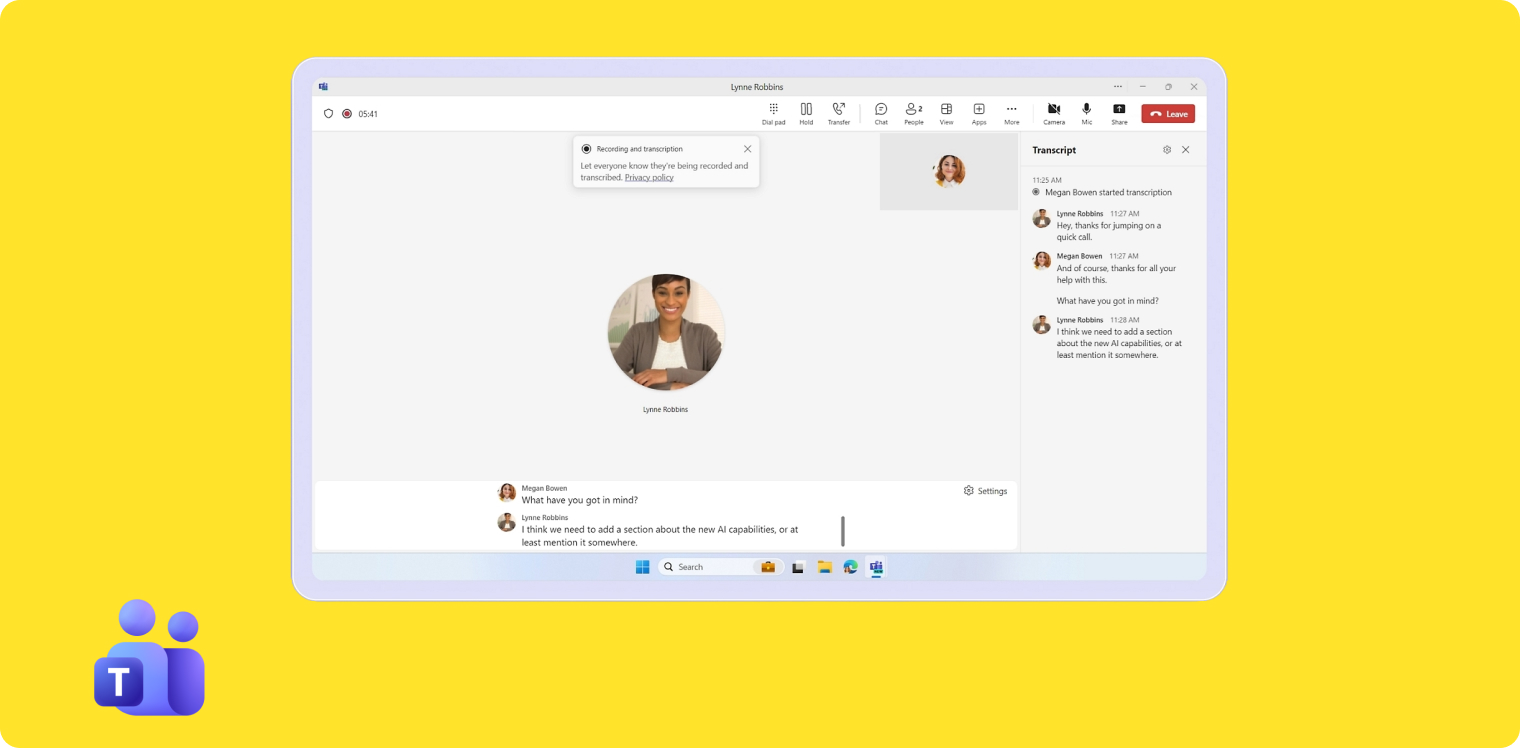
Microsoft Teams Phone arrived in 2017 as an extension of the Microsoft 365 suite. Rather than building a standalone phone system, Microsoft integrated calling directly into Teams. For organizations already running their workflows through Outlook, SharePoint, and Teams, this creates a unified experience without adding another application.
The platform covers voice and SMS, with AI capabilities powered by Microsoft Copilot. Calling features work across 30+ countries with local number availability in major markets.
Why Microsoft Teams Phone is a Good Alternative to Zoom Phone
Ecosystem integration defines Microsoft Teams Phone's value. If your organization already uses Microsoft 365, adding phone functionality happens within familiar interfaces. Outlook contacts sync automatically. Calendar integration comes built-in. No new apps to learn.
The base price looks attractive: $10/user/month for Teams Phone Standard. But that plan requires a separate Microsoft-certified calling service. Add the Teams license ($4/user minimum), calling minutes, and potentially the Copilot add-on for AI features ($30/user), and costs escalate quickly.
For Microsoft-committed organizations, that complexity resolves through existing enterprise agreements. For everyone else, Zoom Phone's simpler pricing may make more sense.
Microsoft Teams Phone Pricing
• Teams Phone Standard: $10/user/month (paid yearly). Includes phone system technology only. Requires a separate calling service for external calls.
• Teams Phone with Pay-As-You-Go: $13/user/month (paid yearly). Adds outbound calling with usage-based billing.
• Teams Phone with Calling Plan: $17/user/month (paid yearly). Includes 3,000 domestic minutes in US/UK/Canada.
Requires a separate Microsoft Teams license (from $4/user/month). Copilot for AI features costs $30/user/month extra.
Microsoft Teams Phone Demo
See Microsoft Teams Phone in action:
Aircall, Best for Established Sales Teams Needing Enterprise-Grade Features
What is Aircall?
Aircall launched in 2014 as a business phone system built for teams that rely heavily on CRM integration and call analytics. The platform has grown into a recognized brand with strong connections to Salesforce, HubSpot, and Zendesk. Coverage spans 38 countries with local number availability.
Features target medium-sized and larger companies: power dialer, voicemail drop, call monitoring (listen, whisper, barge), and advanced analytics dashboards. AI capabilities include transcription, summaries, sentiment analysis, and live coaching, though some features only support English and French.
Why Aircall is a Good Alternative to Zoom Phone
CRM integration depth separates Aircall from Zoom Phone. Salesforce, HubSpot, and Zendesk connections receive ongoing investment and strong user reviews. Zoom Phone's integrations exist but receive more mixed feedback.
Call center features give Aircall an edge for teams doing high-volume outbound work. The power dialer and voicemail drop accelerate calling workflows. Call monitoring lets managers coach in real time. Zoom Phone offers recording and basic analytics but lacks these specialized sales tools.
Geographic coverage matches closely (38 countries versus 49), but Aircall's minimum of three licenses and higher starting price ($40/user) push total costs above Zoom Phone for small teams.
Aircall Pricing
• Essentials: $40/license/month. Includes a local number, unlimited US/Canada calls, IVR, call recording, and SMS/MMS. Minimum 3 licenses required.
• Professional: $70/license/month. Adds advanced analytics, power dialer, voicemail drop, and unlimited call recordings.
7-day free trial available.
AI Voice Agent, WhatsApp, and Analytics+ cost extra as add-ons.
Aircall Demo
See Aircall in action:
Conclusion
Choosing a Zoom Phone alternative depends on what matters most to your team.
For small sales teams, Allo delivers the best value: AI features included at every tier, seamless CRM integration, and transparent pricing at $45/user with no minimums.
For budget-conscious teams already in Google's ecosystem, Google Voice handles basics at $10/user but lacks CRM integrations and advanced features.
For mid-market companies wanting sophisticated AI, Dialpad's proprietary technology and specialized products (Connect, Support, Sell) provide depth.
For enterprises needing maximum integrations and global coverage, RingCentral's 500+ connections and 100+ country reach justify higher costs.
For Microsoft-committed organizations, Teams Phone makes sense despite complex pricing layers.
For established sales teams doing high-volume outbound, Aircall's power dialer and call monitoring features support scaled operations.
Each option trades off differently on price, features, and complexity. The right choice matches your team's specific workflow.
Frequently Asked Questions About Zoom Phone Alternatives
Who are Zoom Phone's main competitors?
Zoom Phone competes primarily with business VoIP providers like RingCentral, Dialpad, Nextiva, and Aircall in the mid-market segment. For smaller teams, alternatives include Allo, Google Voice, and Quo. Microsoft Teams Phone competes for organizations already invested in the Microsoft ecosystem. Each competitor emphasizes different strengths: RingCentral leads in integrations (500+), Dialpad focuses on AI capabilities, and Allo prioritizes simplicity and transparent pricing for sales teams.
What are the top alternatives to Zoom Phone?
The top Zoom Phone alternatives depend on your team size and priorities. Allo stands out for small sales teams needing AI automation and CRM syncing at $45/user with no add-ons. Dialpad suits mid-market companies wanting advanced AI including live coaching and call scoring. RingCentral serves enterprises requiring extensive integrations and global coverage. Google Voice works for budget-conscious teams needing only basic calling. Microsoft Teams Phone fits organizations already using Microsoft 365. Aircall targets established sales operations needing power dialers and call monitoring.
Who are Zoom Phone's main competitors?
Zoom Phone competes primarily with business VoIP providers like RingCentral, Dialpad, Nextiva, and Aircall in the mid-market segment. For smaller teams, alternatives include Allo, Google Voice, and Quo. Microsoft Teams Phone competes for organizations already invested in the Microsoft ecosystem. Each competitor emphasizes different strengths: Allo prioritizes simplicity and transparent pricing for sales teams, RingCentral leads in integrations (500+), and Dialpad focuses on AI capabilities.
What are the top alternatives to Zoom Phone?
The top Zoom Phone alternatives depend on your team size and priorities. Allo stands out for small sales teams needing AI automation and CRM syncing at $45/user with no add-ons. Dialpad suits mid-market companies wanting advanced AI including live coaching and call scoring. RingCentral serves enterprises requiring extensive integrations and global coverage. Google Voice works for budget-conscious teams needing only basic calling. Microsoft Teams Phone fits organizations already using Microsoft 365. Aircall targets established sales operations needing power dialers and call monitoring.
.jpg)