The best phone systems for insurance agencies in 2026
Seven insurance phone systems ranked by agency size, AI receptionist, and real cost, so you never miss another quote call.


TL;DR
- Allo is best for solo agents and small agencies because the AI receptionist answers quote calls when you're on another line, and the whole thing starts at $25/month with no add-on roulette.
- Aircall is best for mid-sized agencies that live inside a CRM because its HubSpot and Salesforce sync logs every policyholder conversation automatically, though the three-license minimum makes it pricey under five seats.
- RingCentral is best for large, multi-location brokerages because it handles dozens of numbers, offices, and fax lines without breaking a sweat, even if canceling it later feels like filing a claim.
Picking a phone system for insurance isn't about who has the flashiest feature list. It's about who lets you answer the next quote call, record it cleanly for compliance, and drop it into your CRM without anyone lifting a finger. Below, we line up seven VoIP for insurance contenders against those three jobs, then sort them by the size of agency they actually fit. Solo producers and 200-seat call centers do not need the same tool, and we'll be blunt about which is which.
––––––––
Quick question: how many premium dollars walked out the door last month because nobody picked up?
In most agencies, nobody knows the answer. The phone rings during a renewal meeting, goes to a generic voicemail, and the prospect calls the next agent on their list. Insurance runs on the phone more than almost any other industry. A new quote, a claim, a first notice of loss, a billing question; they all start with a call, and the agency that answers first usually wins the policy.
That makes the choice of an insurance agent phone system a revenue decision, not an IT one. Yet most comparison articles treat all businesses the same. They rank tools on generic call quality and ignore the things that actually bite an agency: recording calls for errors-and-omissions protection, syncing conversations to your book of business, and capturing after-hours leads that arrive while you're asleep.
This guide fixes that. We pulled pricing, AI capabilities, integrations, and real review scores for seven phone systems, then pressure-tested each one against the way agencies really work. We also sorted them by company size, because the right answer for a one-person shop is the wrong answer for a regional brokerage.
By the end, you'll know which VoIP for insurance fits your team, your compliance needs, and your budget.
Best phone system for insurance at a glance
| Solution | Starting Price | Best For | G2 Rating |
|---|---|---|---|
| Allo | $25/mo Routing + CRM sync need Business ($45/user/mo) | Solo agents and small agencies that want AI answering without add-ons. Best for small agencies | 4.7 / 5 |
| JustCall | $39/user/mo 2-license min; AI receptionist is a $99/mo add-on | Outbound-heavy agencies dialing lead lists all day. Power dialer | 4.3 / 5 |
| Dialpad | $27/user/mo AI included in every plan | Growing agencies that want strong AI without paying extra for it. AI value | 4.4 / 5 |
| Aircall | $40/user/mo 3-license min; AI Assist from $9/user/mo | Mid-sized agencies that run everything through their CRM. CRM integrations | 4.4 / 5 |
| CloudTalk | $27/user/mo Local numbers in 160+ countries | Brokerages with international clients and cross-border books. Global coverage | 4.4 / 5 |
| Nextiva | $23/user/mo AI features need Power Suite CX ($75/user/mo) | US-based mid-market agencies wanting voice, video, and chat in one suite. All-in-one | 4.5 / 5 |
| RingCentral | $30/user/mo AI Receptionist add-on from $39/mo | Large, multi-location brokerages and contact centers. Enterprise scale | 4.3 / 5 |
How to pick the right insurance phone system
We didn't rank these tools on vibes. We scored each one against the criteria that actually move the needle for an agency, then tested the platforms ourselves where we could. Here's what we weighed, and what you should weigh too.
- Never missing a quote call. Speed-to-lead decides who writes the policy. We looked hard at AI receptionists, call routing, and after-hours handling, because a phone system that drops leads at 6 p.m. costs you money every single day.
- Compliant call recording. Recording protects you in an errors-and-omissions dispute and settles "you never told me that" arguments fast. We checked which plans include recording and whether it's standard or buried in a premium tier.
- CRM and AMS sync. Every call should land in your system of record without manual logging. We prioritized tools with native CRM integrations (HubSpot, Salesforce, Pipedrive) and flagged where agency management systems like EZLynx, Applied Epic, or HawkSoft would need a workaround.
- Pricing honesty. We punished tools that lure you in with a low headline price, then charge for AI, recording, and integrations separately. The sticker price and the real price are rarely the same number.
- Fit for your size. A solo producer needs one number and an AI that answers. A regional brokerage needs multi-location routing and call-center reporting. We sorted every tool by the agency size it serves best.
We evaluated all seven solutions below against these five criteria, leaning on published pricing, real G2 and Trustpilot scores, and hands-on testing where we had access.
Allo, best for solo agents and small agencies
Allo in a nutshell
Allo is an AI-first, mobile-first phone system built for small teams and salespeople.
The pitch is simple: give a small agency the call-handling muscle of a big one without the enterprise baggage. Its signature feature is an AI receptionist that picks up when you can't, greets the caller, and gathers the details you need before you ever dial back. For a two-person agency where both producers are mid-meeting at 4 p.m., that's the difference between catching a quote and losing it.
Why Allo works great for insurance
Allo nails the three jobs that matter most to a small agency. The AI answering service catches after-hours quote requests, the pricing stays flat with no add-on surprises, and the CRM sync logs calls automatically once you're on the Business plan.
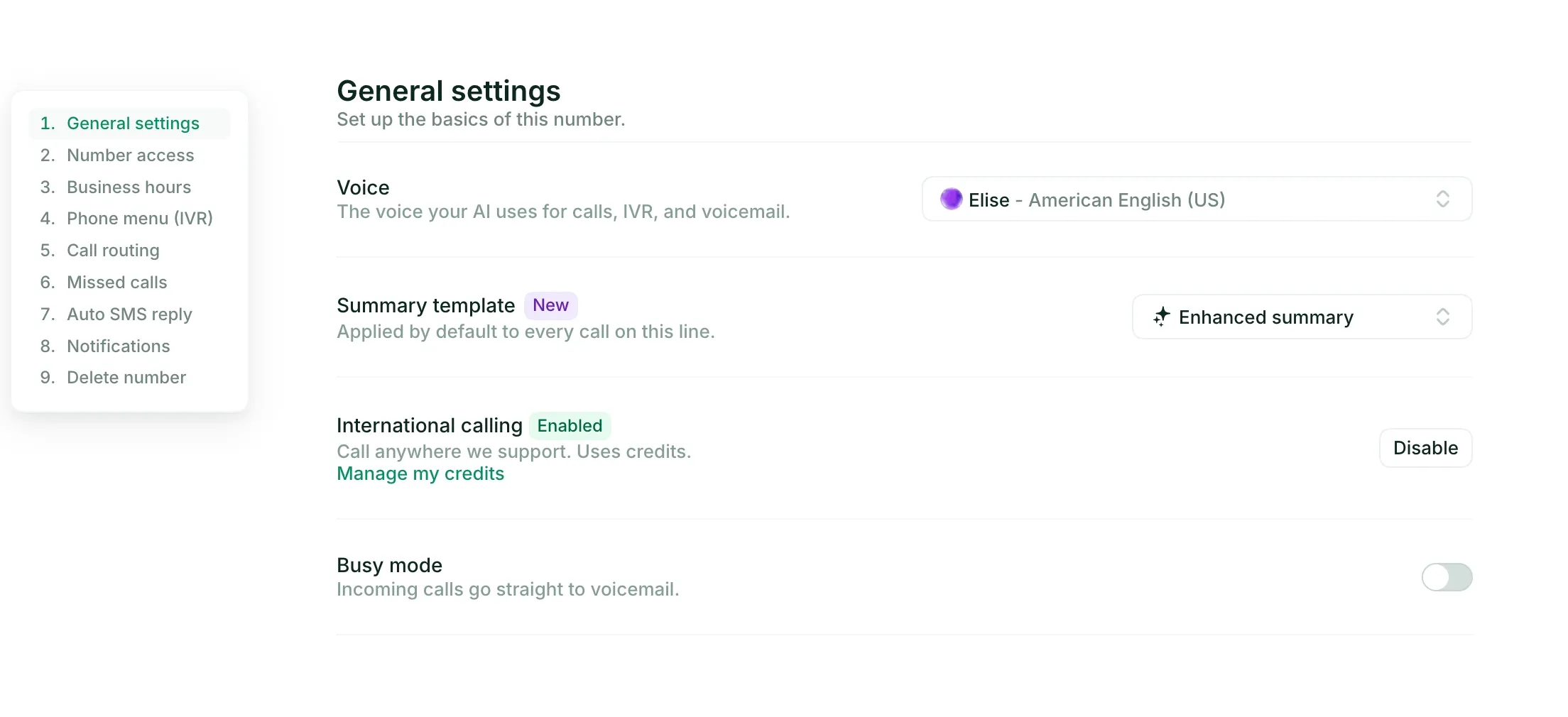
The main knock is maturity: it's a newer product, so a 200-seat carrier with byzantine routing rules should look elsewhere. For a small shop, that's rarely the constraint.
| Main pros | Main cons |
|---|---|
| • AI receptionist that answers, qualifies, and gathers caller details • Native CRM sync for recordings, transcripts, and contact updates • Flexible routing (cascading or simultaneous) with a shared number • Transparent pricing with no add-ons • Cancel anytime from the app, no questions asked | • Newer product with a shorter track record • Not built for large enterprises with complex workflows • Routing and integrations live only in the Business plan |
Allo pricing
Allo keeps the menu short, which we appreciate.
- Starter, $25/month (1 user max): unlimited calls, a local number, AI call summaries, and IVR. Fine for a true solo producer.
- Business, $45/user/month: adds the integrations, unlimited AI answering, SMS, international calls, and call routing. This is the plan most agencies will actually want.
AI is included in every plan rather than sold as an add-on, and your subscription comes with one local or toll-free number (extra numbers are $5/month).
Allo offers a 7-day free trial, and cancellation is genuinely self-service: a couple of taps in the app and you're done.
Demo video of Allo
See the AI receptionist and CRM sync in action here:
JustCall, best for outbound-heavy agencies
JustCall in a nutshell
JustCall is a sales-focused phone system built by SaaS Labs, an Indian startup. It was designed initially to automate the grunt work of logging calls and updating the CRM. It's best known for its power dialer, the feature that lets a producer rip through a list of renewal or cross-sell leads without manually dialing each one. If your agency runs outbound campaigns, that's a real time-saver.
Why JustCall works great for insurance
JustCall shines for agencies that treat the phone as an outbound weapon. The power dialer and strong CRM integrations keep a producer moving through lead lists, and the support team is staffed by actual humans, which is rarer than it should be.
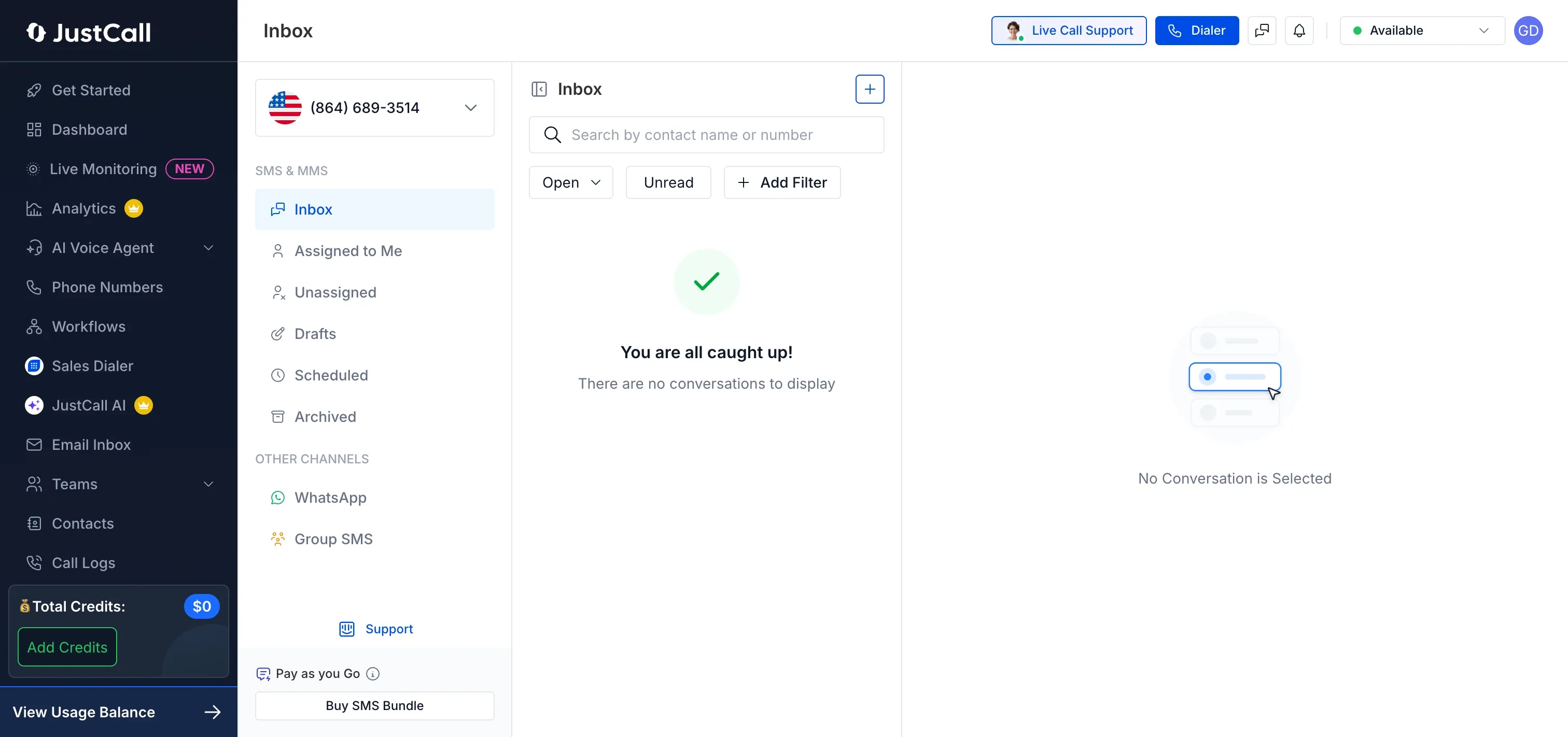
The catch for insurance: the AI receptionist that catches inbound quote calls is a pricey add-on, and some users report numbers getting flagged as spam, which is poison for a cold-calling agency.
| Main pros | Main cons |
|---|---|
| • Helpful support staffed by real people • Affordable for an outbound-focused team • Strong CRM integrations (Salesforce, HubSpot, Pipedrive) • Power dialer for high-volume calling • Local numbers in 70+ countries | • AI features billed as add-ons, not included • Platform can feel glitchy at times • Assigned numbers can get flagged as spam • Support can be slow to reach despite being helpful |
JustCall pricing
JustCall's tiers reward teams, with a two-license minimum on the lower plans.
- Team, $39/user/month (min 2 licenses): unlimited US/Canada calls, AI transcription, a local number, SMS and WhatsApp, and CRM integrations.
- Pro, $69/user/month (min 2 licenses): adds the power dialer, bulk SMS, Salesforce integration, roles and permissions, and reporting.
- Pro Plus, $109/user/month: adds real-time agent assist, sentiment analysis, and call scoring.
Note the AI receptionist is a separate add-on ($99/month for 100 minutes), so budget for it if inbound matters. JustCall offers a 14-day free trial, longer than most rivals here.
Demo video of JustCall
Watch JustCall's outbound and CRM workflow in action:
Dialpad, best for AI value
Dialpad in a nutshell
Dialpad was founded in 2011 by Craig Walker, the same person who built GrandCentral, the product Google bought and turned into Google Voice. That pedigree shows in the AI: Dialpad has trained its own model since 2018, and it bundles AI into every plan instead of charging extra. For an agency that wants call summaries and live coaching without a premium upsell, that's a genuine edge.
Why Dialpad works great for insurance
Dialpad's appeal is getting real AI without the add-on tax. Call summaries, live coaching, and call scoring come standard, which helps a growing agency train newer producers fast.
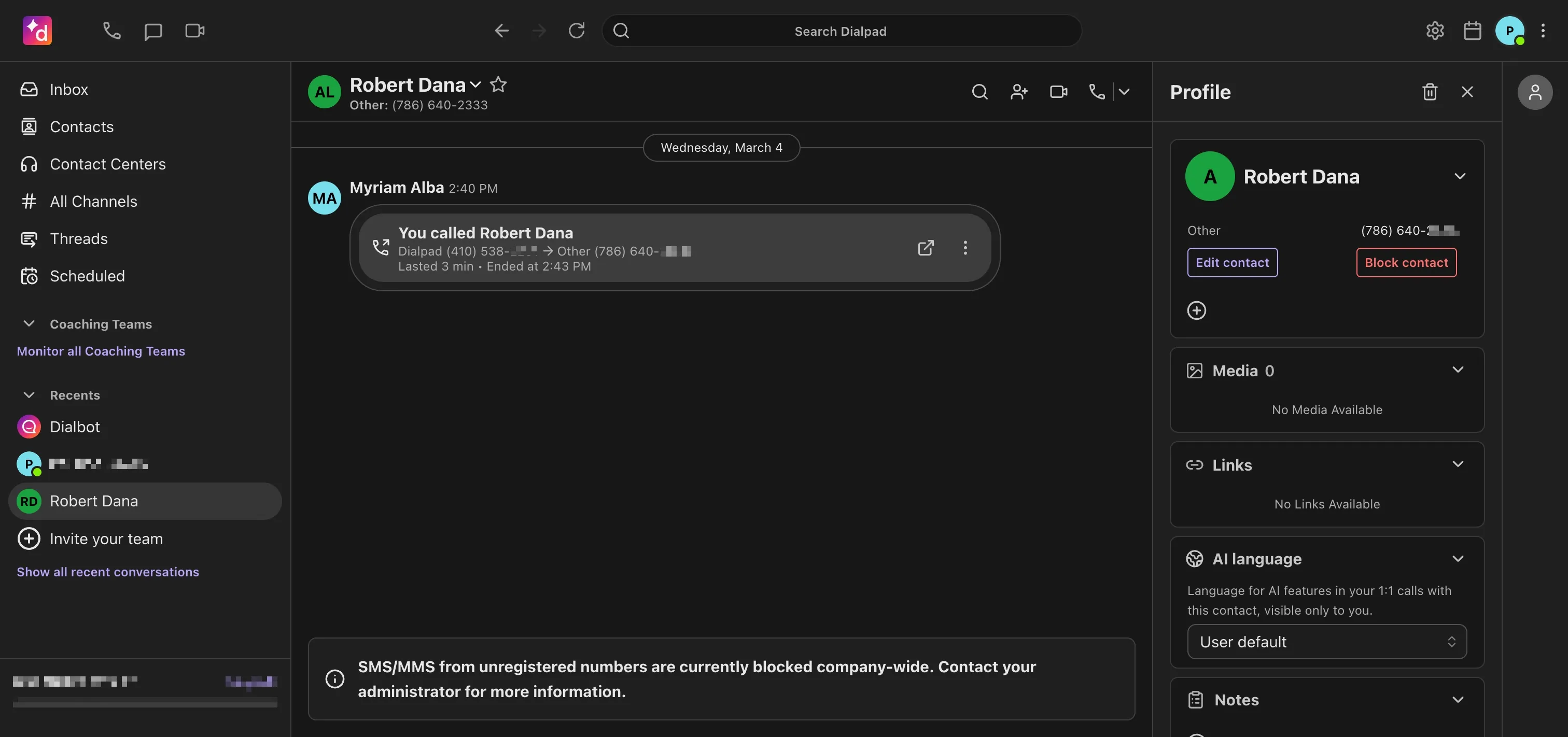
The trade-offs are real, though: several users flag inconsistent call quality and a learning curve, and the SMS approval process can be bumpy. For an agency that texts policyholders constantly, test that flow before committing.
| Main pros | Main cons |
|---|---|
| • Strong AI, built on a model trained since 2018 • AI included free in every plan • Generally easy to use • Solid CRM integrations and 50+ country coverage | • Inconsistent call quality reported by some users • Noticeable learning curve • Long support wait times • SMS approval process can be bumpy |
Dialpad pricing
Dialpad keeps two main tiers for its core phone product.
- Standard, $27/user/month: unlimited calling in your country plus the US and Canada, a local number, call forwarding, call recording, and up to 3 departments.
- Pro, $35/user/month: adds SSO, phone support, and up to 25 departments.
The headline here is that AI features cost nothing extra, which makes the effective price very competitive. Dialpad also sells Internet Fax, Rooms, and a Contact Center as separate options.
Demo video of Dialpad
See Dialpad's AI and calling experience here:
CloudTalk, best for international brokerages
CloudTalk in a nutshell
CloudTalk, founded in Slovakia in 2016, serves sales and support teams across more than 100 countries, with around 4,000 customers.
Its calling card is geography: local numbers in 160+ countries, more than anyone else on this list. For a brokerage placing cross-border coverage or serving expat clients, that reach is hard to match.
Why CloudTalk works great for insurance
CloudTalk is the pick when your book crosses borders. The international coverage is genuinely best-in-class, it automatically switches to a local number for outbound calls, and the platform is reliable with a clean UI.
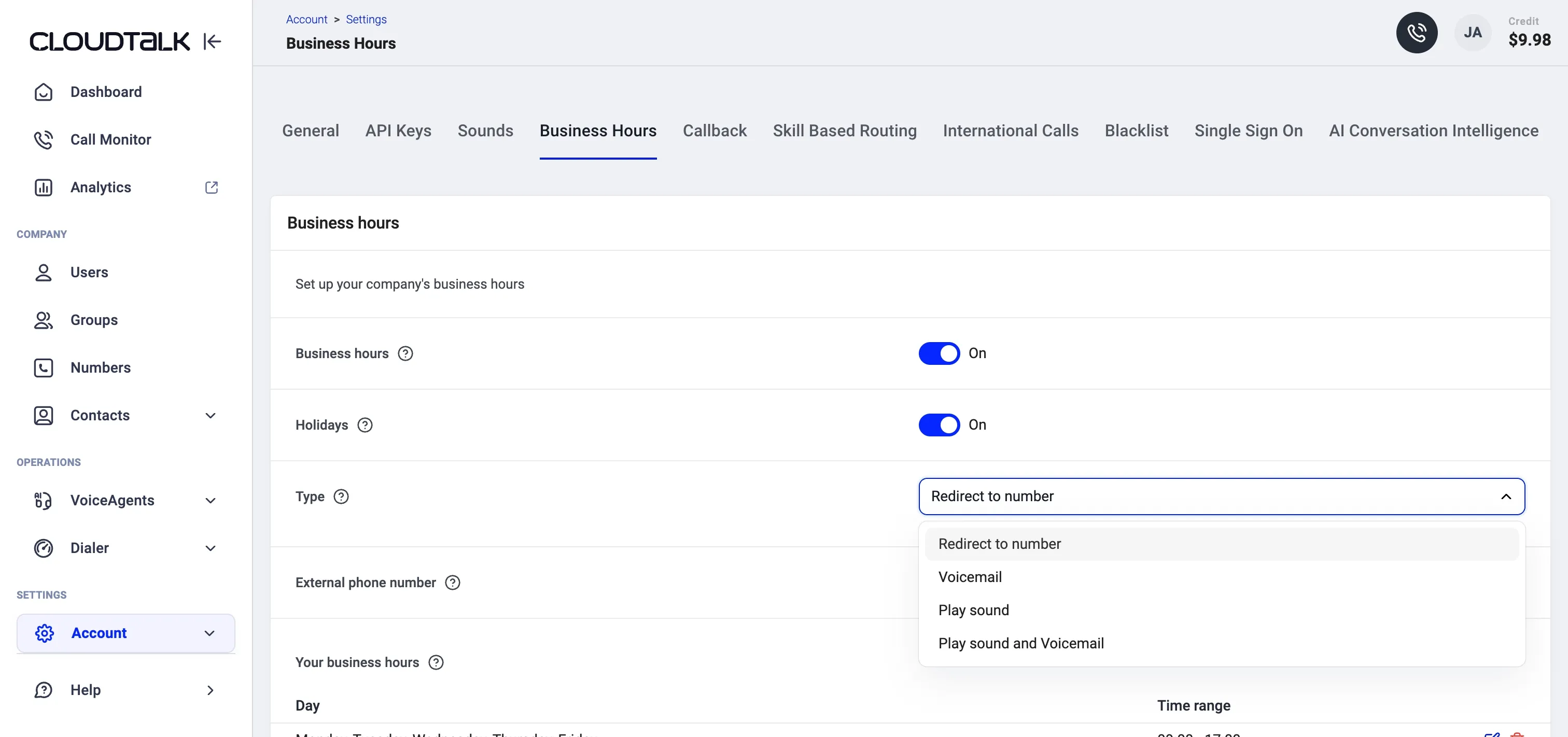
The weak spots are call quality, which some reviewers flag, and support that can be slow to respond. If your agency is purely domestic, you're paying for reach you won't use.
| Main pros | Main cons |
|---|---|
| • Local numbers in 160+ countries • Clean, easy-to-use interface • Reliable platform • Automatic switch to a local number on outbound calls • AI voice agent for inbound and outbound calls | • Call quality can be inconsistent • Customer support can be slow • AI voice agents are billed separately • Expert plan requires a 3-license minimum |
CloudTalk pricing
CloudTalk's tiers climb quickly once you want integrations.
- Lite, $27/user/month: unlimited domestic calls and local numbers in 160+ countries, but most features and integrations are locked.
- Essential, $39/user/month: adds business hours, IVR, ring groups, and integrations.
- Expert, $69/user/month (min 3 licenses): adds the power dialer, live monitoring, advanced reporting, and WhatsApp support.
AI voice agents are billed separately on top.
CloudTalk offers a 14-day free trial with no credit card required, which makes it low-risk to test.
Demo video of CloudTalk
Watch CloudTalk's calling and routing in action:
Nextiva, best for US-based all-in-one agencies
Nextiva in a nutshell
Nextiva launched in 2008 in Scottsdale, Arizona, with a mission to make any business "feel and operate like a Fortune 500 company." It bundles voice, video, team chat, SMS, and light CRM tooling into one platform. For a US agency that wants a single vendor for all internal and client communication, Nextiva is a natural shortlist entry.
Why Nextiva works great for insurance
Nextiva's strength is consolidation and reliability. You get voice, video, chat, and messaging in one place, with strong uptime and support for physical desk phones, which still matter in plenty of agency offices.
The big caveats are that it works in the US only, the AI features sit behind a steep $75/user plan, and the UI has a real learning curve. It's an all-in-one for domestic agencies, not a nimble tool for a lean startup shop.
| Main pros | Main cons |
|---|---|
| • Voice, video, chat, and SMS in one platform • Strong call reliability and uptime • Advanced call routing configuration • Support for desk phones | • Works in the US only • Steep learning curve and a confusing UI • AI features require the $75/user Power Suite CX plan • SMS registration can take weeks; HubSpot integration isn't out of the box |
Nextiva pricing
Nextiva's entry price is low, but the AI you'll want sits near the top.
- Core, $23/user/month: a phone number, SMS, video meetings, call routing, and team chat.
- Engage, $50/user/month: adds advanced reporting, web chat, and a toll-free number.
- Power Suite CX, $75/user/month (up to 100 agents): adds AI transcription, summarization, and intelligent routing.
The AI receptionist is a further add-on at $99/month per 100 interactions, then $0.99 per interaction after. Translation: the all-in-one promise gets expensive once you turn on the AI.
Demo video of Nextiva
See Nextiva's AI receptionist in action:
RingCentral, best for large multi-location brokerages
RingCentral in a nutshell
RingCentral has been around since 1999, and it's everywhere. It offers all the integrations in the world, a reliable core product, and a growing stack of AI. Think of RingCentral as the Salesforce of phone systems: it's old-school and can feel clunky, but it works well for large organizations that need scale and don't mind complexity. For a regional brokerage juggling offices, numbers, and fax lines, that heft is the point.
Why RingCentral works great for insurance
RingCentral earns its place on raw capacity. It handles multiple numbers and fax lines across multiple office locations, backs you with a huge support community and FAQ library, and offers 500+ native integrations.
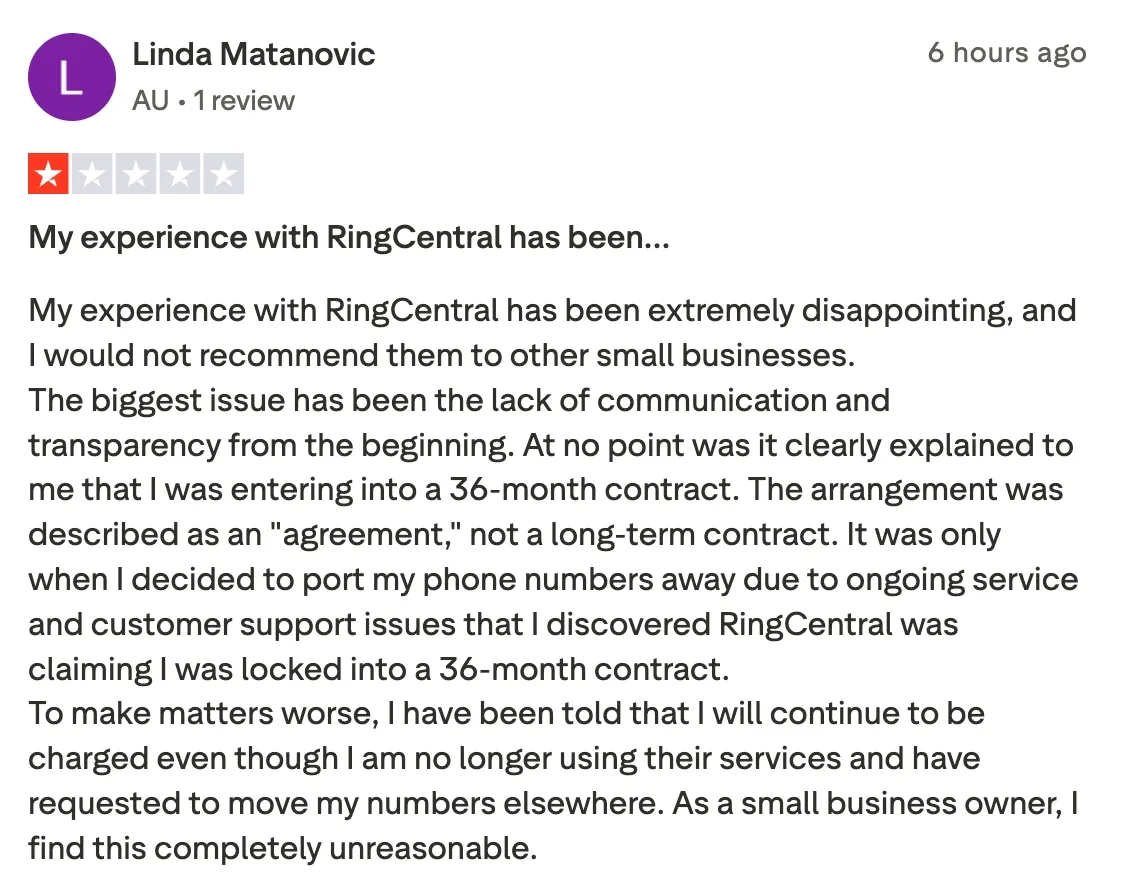
The downsides are equally large: it's pricey for small teams, support is hard to reach if you're not enterprise, and canceling is notoriously painful. The Trustpilot score (1.9/5) reflects that frustration.
| Main pros | Main cons |
|---|---|
| • Standout fax and video tools • Multiple phone and fax lines across multiple office locations • Huge community and FAQ library to resolve issues • 500+ native third-party integrations | • Pricey for small businesses • Unlimited calling limited to the US and Canada • Support is difficult to reach • Notoriously hard to cancel (phone-only, long waits) |
RingCentral pricing
RingCentral's core phone plans are straightforward; the AI is where it adds up.
- Core, $30/user/month: unlimited domestic calling, call recordings, and meetings.
- Advanced, $35/user/month: adds CRM integrations and reporting.
- Ultra, $45/user/month: adds unlimited storage, webinars, and device analytics.
The AI Receptionist is an add-on starting at $39/month for 100 minutes, and the RingCX contact center starts at $65/agent/month billed annually. One local or toll-free number is included, with extras at $4.99/month. There's a free trial, but read the contract terms carefully before signing. [Placeholder: confirm current RingCentral trial length and contract minimums.]
Demo video of RingCentral
See RingCentral's demo here:
Conclusion
There's no single best phone system for insurance, only the best fit for your agency's size and how it sells. Here's the short version:
- Solo agents and small agencies: start with Allo. AI answering is included, pricing is flat, and you can cancel from the app in seconds.
- Outbound-heavy teams: JustCall for the power dialer, as long as you budget for the AI receptionist add-on.
- Agencies that want AI without the upcharge: Dialpad, where AI ships in every plan.
- Mid-sized, CRM-driven agencies: Aircall, if you have at least three seats and want bulletproof CRM logging.
- International brokerages: CloudTalk, for unmatched local-number coverage.
- US all-in-one shops: Nextiva, if you want voice, video, and chat from one vendor.
- Large multi-location brokerages: RingCentral, for sheer scale, despite the painful cancellation.
FAQ
What is the best phone system for insurance?
There's no universal winner, because the right tool depends on your agency's size and sales motion. For most small and mid-sized agencies, a system with a built-in AI receptionist, standard call recording, and native CRM sync covers the essentials, which is why Allo, Aircall, and Dialpad rank highly here. Larger brokerages with multiple locations lean toward RingCentral or Nextiva for scale.
What's the best phone system for a solo insurance agent?
For a solo agent, Allo is the strongest starting point at $25/month, because the AI receptionist answers quote calls when you're tied up and the pricing carries no surprise add-ons. Dialpad is a solid alternative if you want AI call summaries and coaching baked in. The key is picking a tool that captures leads automatically, since a solo producer can't be on the phone and in a client meeting at the same time.
How do AI receptionists handle after-hours quote requests?
An AI receptionist answers the call automatically, greets the caller, and asks qualifying questions to capture the details you need, such as name, coverage type, and callback number. It then logs that information and, depending on the tool, transcribes the conversation and pushes it into your CRM so a producer can follow up first thing. Tools like Allo, JustCall, Nextiva, and RingCentral all offer some version of this, though only Allo and Dialpad include the AI without a separate add-on fee.
How much does a phone system cost for an insurance office?
Expect roughly $25 to $45 per user per month for a capable plan, with entry tiers starting near $23 (Nextiva) and premium tiers reaching $75+ once AI is included. Watch for hidden costs: AI receptionists often run $39 to $99/month as add-ons, and some vendors enforce minimum license counts (three for Aircall, two for JustCall). A solo agent might spend $25/month total, while a ten-seat agency on a mid-tier plan could land around $400 to $700/month.