
Key Takeaways
• Allo is best for small sales teams (1-20 users) because it offers transparent pricing at $45/user with unlimited AI features included—no add-ons, no surprises. Built mobile-first with native CRM integrations for HubSpot, Salesforce, and 15+ other platforms.
• Aircall is best for mid-sized companies (50-200 users) that need a recognized brand with extensive integrations. Starts at $40/license with unlimited US/Canada calling, though AI features cost extra and minimum 3 licenses required.
• Dialpad is best for teams prioritizing AI capabilities across sales and support functions. Starting at $27/user with AI features included in all plans, supporting 9 languages for transcription and analysis.
–––––––
Searching for an alternative to Mightycall?
Many teams outgrow Mightycall's basic feature set or need better mobile apps, stronger CRM integrations, or more transparent pricing.
This guide breaks down the top eight Mightycall competitors for 2026. We'll cover everything from AI-first phone systems built for small teams to enterprise solutions designed for contact centers. You'll see exactly what each platform offers, how pricing compares, and which solution makes sense for your specific team size and budget.
Whether you need unlimited AI features without add-ons, better international coverage, or simply a more intuitive mobile experience, there's a solution here that'll work better than Mightycall for your needs. Let's dive into the alternatives that sales teams are actually choosing in 2026.
Allo, Best for Small Sales Teams
What is Allo?
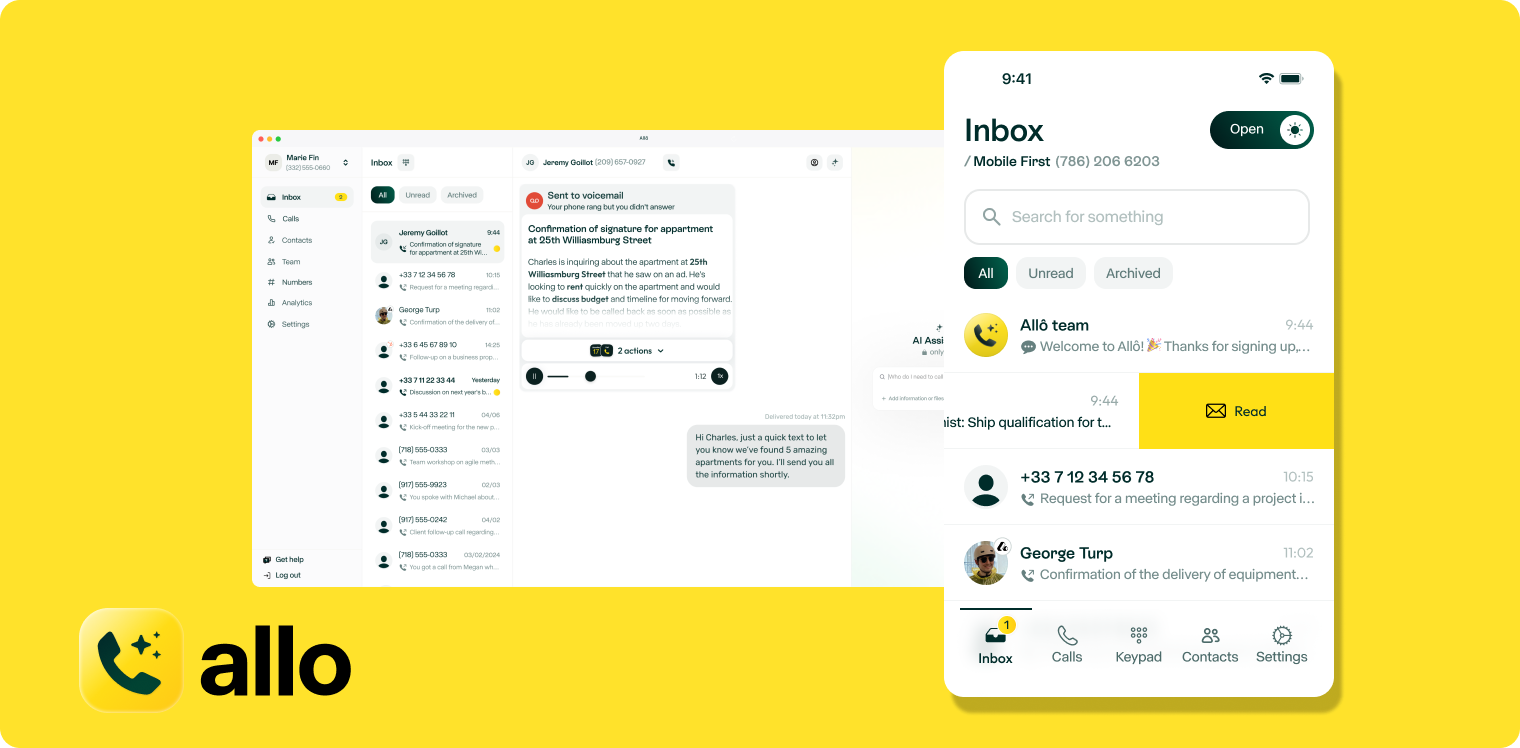
Allo is an AI phone system built specifically for small teams and salespeople who work on the go. Unlike legacy providers that added AI as an afterthought, Allo was designed mobile-first from day one to handle the way modern sales teams actually work.
The platform focuses on eliminating the administrative burden that kills productivity. Every call gets automatically transcribed and synced to your CRM without manual data entry. The AI answering service handles routine inquiries and gathers caller information even when your team is busy closing deals.
With 18 native integrations including HubSpot, Salesforce, Attio, and Apollo, Allo connects directly to the tools sales teams already use daily. The mobile app delivers crystal-clear call quality that rivals traditional desk phones, with live voicemail that lets you listen as messages come in.
Why Allo is a Good Alternative to Mightycall
Allo stands out from Mightycall through transparent, all-inclusive pricing and superior AI capabilities. At $45/user per month, you get unlimited AI answering service, call transcriptions in 36 languages, and automatic CRM syncing—features that would cost hundreds extra with other providers.
The mobile-first design makes a real difference for field sales teams. While Mightycall offers basic mobile apps, Allo's platform was built around mobile from the start. This means better call quality, smoother interface, and features that actually work when you're away from your desk.
Integration depth separates Allo from basic alternatives. The native CRM connections don't just log calls—they create detailed records with transcripts, summaries, and action items automatically. Allo's AI assistant can even draft follow-up emails based on your call conversations.
For small teams, Allo eliminates the complexity and hidden fees common with providers like Mightycall. No minimum seat requirements, no expensive add-ons for basic features, and no surprise charges on your monthly bill.
Allo Pricing
Allo offers straightforward pricing with two plans designed for different team sizes:
• Starter: $25/month - Single user plan with unlimited calls, local phone number, AI call summaries, and IVR system included.
• Business: $45/month per user - Full-featured plan with unlimited AI answering service, native CRM integrations, international calling, and SMS messaging.
Allo Demo
See how Allo's AI-powered features work in practice:
Aircall, Best for Mid-Sized Companies
What is Aircall?
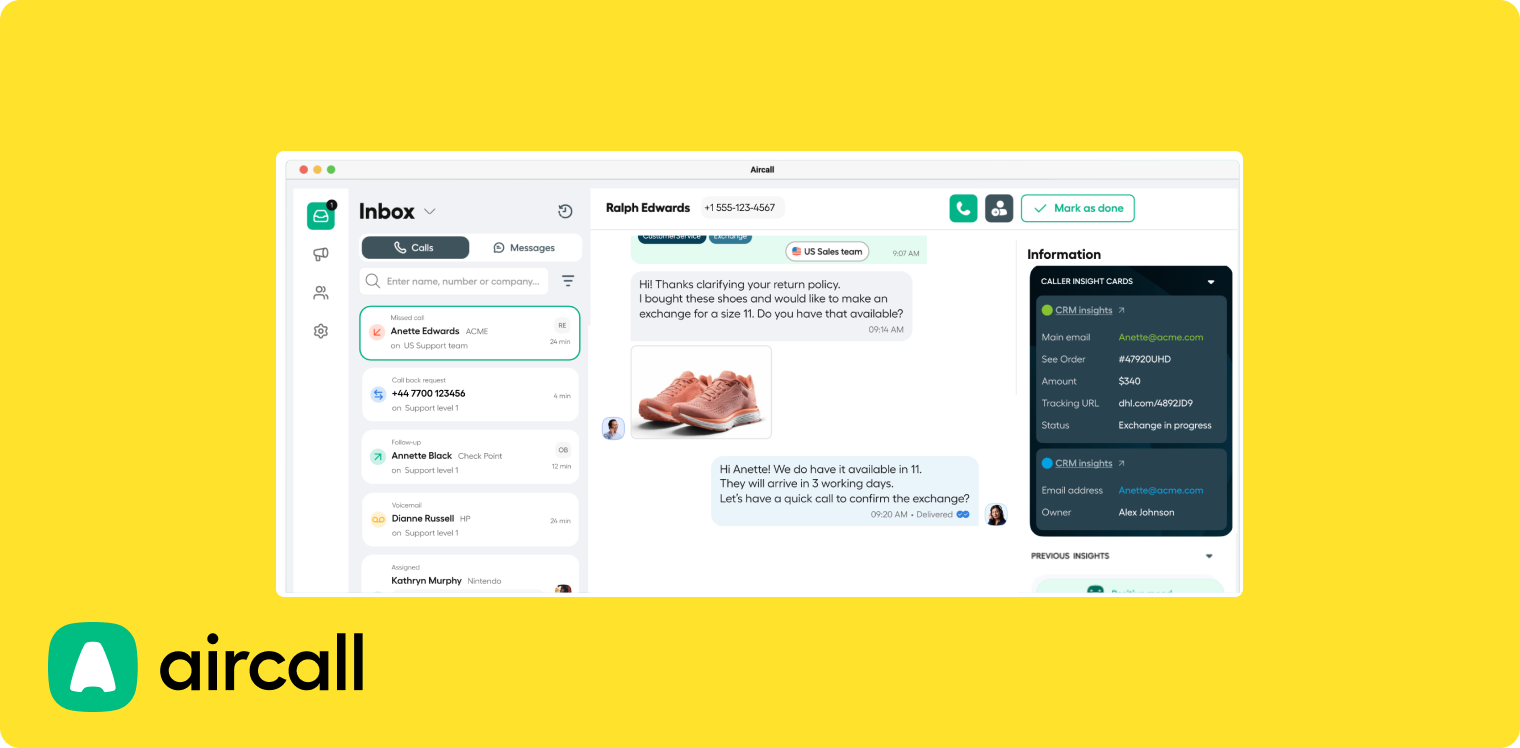
Aircall has built a reputation as a trusted business phone system since its founding. The platform focuses on medium to large companies that need a recognized brand name with solid reliability and extensive third-party integrations.
The system offers unlimited calling within the US and Canada, along with advanced analytics dashboards that help managers understand team performance. Call monitoring features like listen, whisper, and barge let supervisors coach reps in real-time during customer conversations.
What sets Aircall apart is its integration ecosystem. With connections to Salesforce, HubSpot, Zendesk, and dozens of other business tools, Aircall fits into existing tech stacks without forcing teams to change their workflows. The platform includes features like power dialers and voicemail drop for high-volume calling teams.
Why Aircall is a Good Alternative to Mightycall
Aircall delivers enterprise-level reliability that Mightycall lacks. For teams concerned about vendor stability or needing to justify their choice to executives, Aircall's established market presence provides peace of mind.
The integration quality surpasses what Mightycall offers. Aircall's Salesforce and HubSpot connections go deep, syncing not just call logs but detailed analytics, recordings, and custom fields. This matters for teams that need their phone system to become part of their broader sales workflow rather than a standalone tool.
Geographic coverage gives Aircall an advantage for teams with international needs. Supporting 38 countries with local numbers, Aircall handles global operations that would require multiple providers with Mightycall's more limited reach.
However, Aircall comes with trade-offs. The three-license minimum makes it expensive for smaller teams, starting at $120/month before any users make calls. AI features cost extra—Conversation Intelligence adds $60/user per month, and the AI Voice Agent charges $0.49 per minute. For teams on tight budgets, these add-ons quickly increase the total cost beyond Mightycall's simpler pricing.
Aircall Pricing
Aircall structures pricing around team size with a three-license minimum requirement:
• Essentials: $40/license per month - Includes local phone number, unlimited US and Canada calling, IVR system, call recording, and SMS/MMS messaging capabilities.
• Professional: $70/license per month - Adds advanced analytics, sales-focused features including Power Dialer and Voicemail Drop, and unlimited call recording storage.
AI features require additional payments beyond base plans. The AI Voice Agent costs $0.49 per minute of usage. Analytics+ adds $15/user per month. WhatsApp integration charges $10/month per user. Conversation Intelligence with AI summaries and sentiment analysis runs $60/user per month.
All plans require minimum three licenses, so entry price starts at $120 monthly. A 7-day free trial lets teams test the platform before committing.
Aircall Demo
Watch Aircall's platform overview:
Quo, Best for Teams Wanting Built-In CRM
What is Quo?
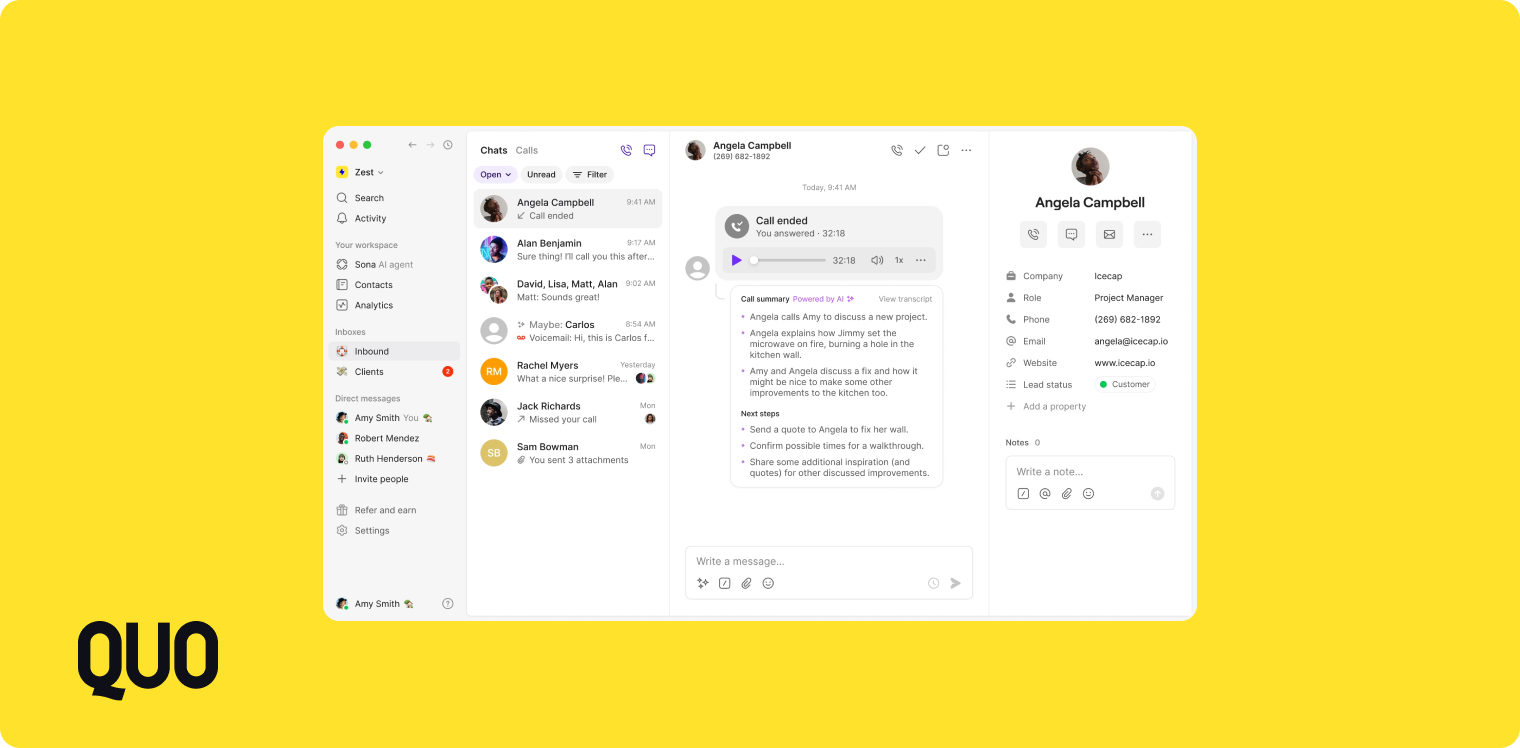
Quo (OpenPhone until 2025) differentiates itself by embedding lightweight CRM functionality directly into its phone system. Rather than requiring external integrations, Quo includes a shared inbox with threading, internal team chat, and contact management as core features of the platform itself.
The company targets small businesses and teams that need collaboration tools built around their phone communications. Group calling, call routing, and a shared inbox create a unified workspace where team members can coordinate responses and track customer interactions without switching between multiple apps.
Founded as an alternative to complex enterprise systems, Quo emphasizes simplicity and ease of use. The clean interface requires minimal training, letting new team members start making calls within minutes rather than hours. The platform optimizes for businesses that handle both calls and text messages as primary communication channels.
Why Quo is a Good Alternative to Mightycall
Quo takes a different approach than Mightycall by integrating collaboration features most teams need to bolt on separately. The shared inbox with threads and tagging means your team can discuss customer issues internally without leaving the phone system interface.
Sona, Quo's AI answering service, handles inbound calls with natural conversation abilities. Every plan includes 10 AI-handled calls monthly, with additional calls at $0.75 each. This gives small teams an affordable way to test AI receptionists before committing to unlimited plans.
For CRM integration, Quo connects natively to HubSpot and Salesforce in the Business plan ($33/user). These integrations sync call data automatically, though the depth isn't as comprehensive as dedicated integration platforms. The trade-off comes in simplicity—Quo requires less configuration than systems like Mightycall that depend entirely on third-party connections.
Support quality gets consistently positive reviews from Quo users. The team responds quickly and actually understands the product, which matters when you're trying to resolve issues during business hours. However, note that Quo prohibits cold calling and may block accounts that violate this policy, making it unsuitable for outbound prospecting teams.
Quo Pricing
Quo offers three pricing tiers with clear feature progression:
• Starter: $19/user per month - Includes local phone number, unlimited US and Canadian calling, voicemail transcription, and 10 monthly calls handled by Sona AI agent.
• Business: $33/user per month - Adds AI call summaries and transcripts supporting 34 languages, group calling, call transfers, analytics and reporting, plus HubSpot and Salesforce integrations.
• Scale: $47/user per month - Provides dedicated onboarding support, priority live chat and email assistance, and inbound phone support access.
The Sona AI agent comes with 10 included calls per month across all plans. Additional AI-handled calls cost $0.75 each, making it predictable to budget for growing call volumes. Call transcriptions and summaries support 34 languages, offering broader language coverage than many competitors.
A 7-day free trial lets you test all features before deciding. No minimum user requirements, making Quo viable for solo entrepreneurs and very small teams.
Quo Demo
Getting started with Quo:
https://share.vidyard.com/watch/vQLdoXfNrLnVG1Yt4kP3ev
Nextiva, Best for Unified Communications
What is Nextiva?
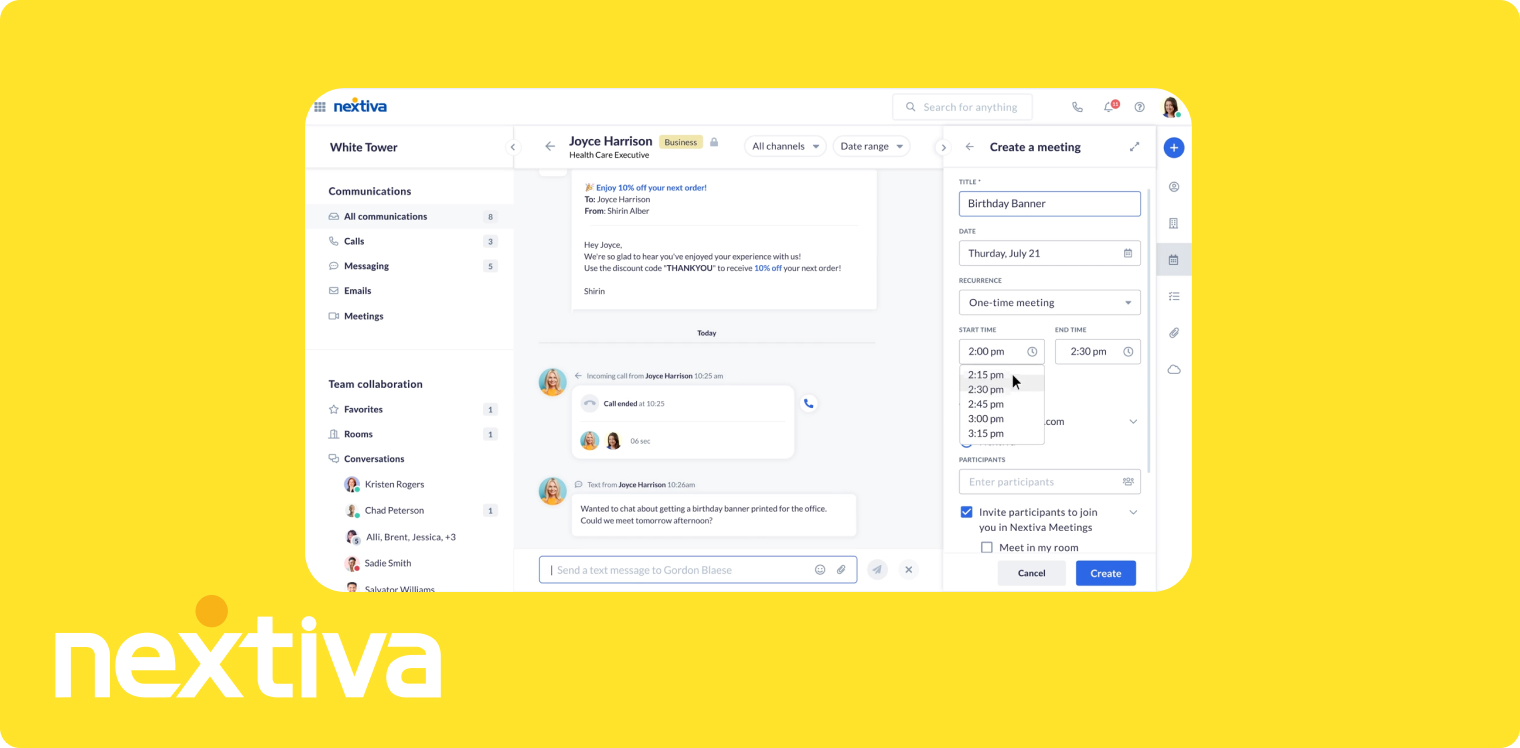
Nextiva positions itself as a complete unified communications platform rather than just a phone system. Launched as a UCaaS provider, the company bundles voice, video meetings, team chat, and SMS into a single platform designed for businesses that want one vendor handling all their communication needs.
The platform serves primarily US-based companies, with particular strength in supporting mid-market businesses that need more than basic calling but aren't ready for complex enterprise solutions. Nextiva includes features you don't typically see in simple phone systems—online faxing, webinar hosting, and even light ticketing tools for support teams.
Physical phone support sets Nextiva apart from cloud-only competitors. Teams can use desk phones, mobile apps, or softphones interchangeably, which matters for hybrid work environments where some employees want traditional handsets while others prefer mobile-first approaches.
Why Nextiva is a Good Alternative to Mightycall
Nextiva brings enterprise-grade stability and comprehensive feature sets that dwarf what Mightycall offers. For teams consolidating multiple communication tools, Nextiva replaces phone systems, video conferencing, and team chat with a single platform and unified billing.
The UCaaS approach means better integration between communication channels. A customer might start with a phone call, continue via team chat, and finish with a video meeting—all tracked in one system without switching contexts. This unified history helps teams serve customers more consistently than fragmented tools.
AI capabilities exist but come with significant cost implications. Basic voicemail transcription appears in all plans, but useful features like live transcription, emotion scoring, and AI IVR require the Power Suite CX plan at $75/user monthly. The AI receptionist (XBert) adds another $99 per 100 interactions, then $0.99 per interaction after.
International teams should look elsewhere—Nextiva focuses exclusively on US operations. The geographic limitation makes it unsuitable for companies with overseas offices or customers, where Mightycall's broader coverage might actually serve better despite other limitations.
Nextiva Pricing
Nextiva structures pricing across three main tiers targeting different business needs:
• Core: $23/user per month - Includes phone number, SMS messaging, video meetings, call routing capabilities, and team chat functionality.
• Engage: $50/user per month - Adds advanced reporting tools, web chat support, toll-free number provision, and enhanced analytics features.
• Power Suite CX: $75/user per month - Provides AI transcription and summarization, intelligent call routing, customer journey tracking (for up to 100 agents maximum).
AI features carry substantial additional costs. Voicemail transcription comes standard, but the AI IVR system requires custom quotes from the sales team with no public pricing. The XBert AI receptionist bills at $99 monthly per 100 interactions, charging $0.99 for each additional interaction beyond that threshold.
Enterprise pricing requires direct sales discussions for teams exceeding 100 agents.
Nextiva Demo
Nextiva gates official demos behind contact forms.
Dialpad, Best for AI-First Features
What is Dialpad?
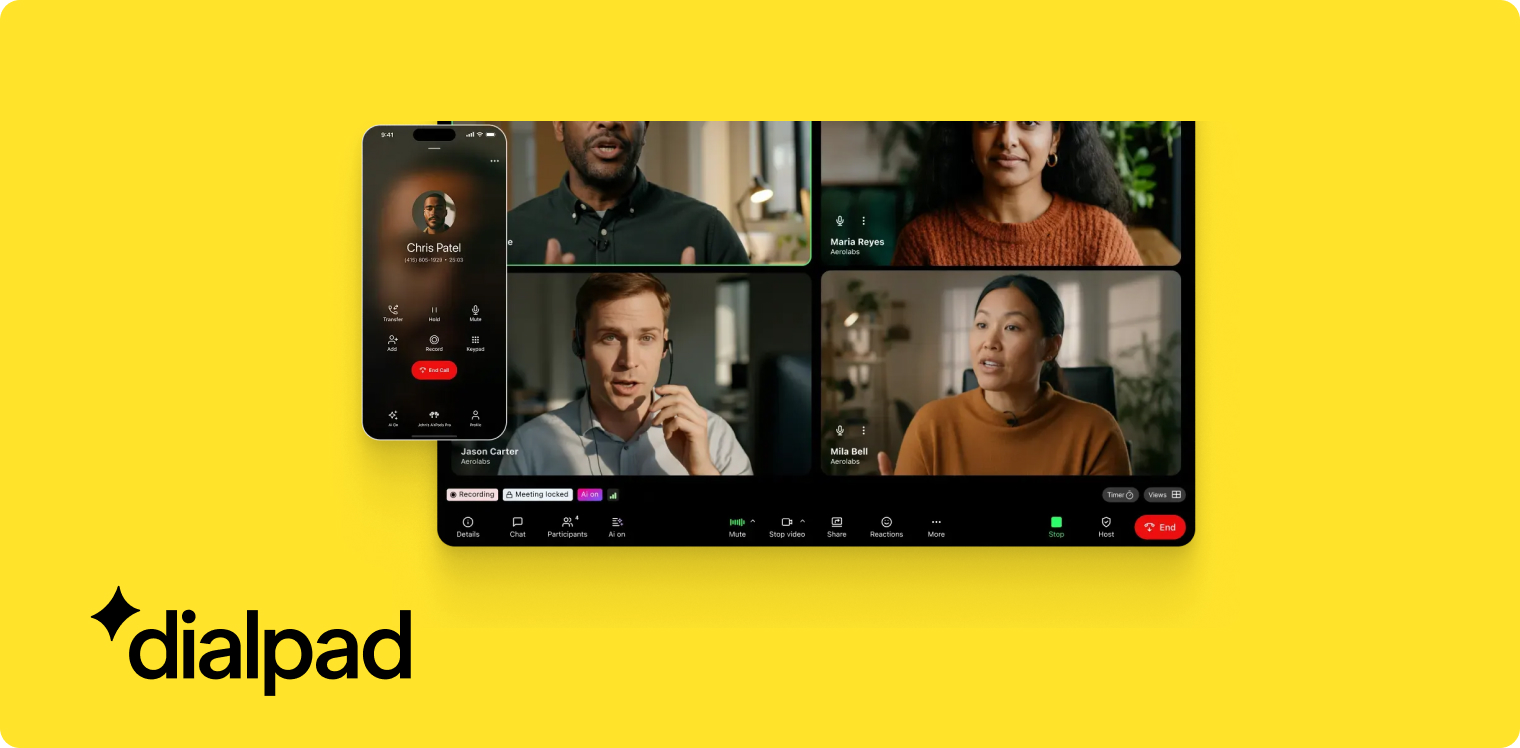
Dialpad built its own AI model starting in 2018, giving it years of development ahead of competitors who bolted AI onto existing systems recently. This early investment shows in features like real-time coaching that analyzes calls as they happen and prompts reps with helpful suggestions.
The company operates three distinct products targeting different use cases. Dialpad Connect handles general business communications, Dialpad Sell focuses on sales teams with power dialers and CRM syncing, and Dialpad Support serves customer service departments with specialized tools. Each product carries separate pricing tailored to specific workflows.
SMBs to mid-market companies (20-1,000 employees) represent Dialpad's core audience. The platform scales from small teams testing VoIP to large departments needing sophisticated call analytics and quality monitoring. Countless native integrations with CRMs like Salesforce and HubSpot, plus Zapier connectivity, let Dialpad fit into existing tech stacks.
Why Dialpad is a Good Alternative to Mightycall
Dialpad's proprietary AI technology delivers capabilities Mightycall can't match. Call summaries, live coaching, and automated call scoring come included in all plans without usage limits or per-minute charges. This differs from competitors who treat AI as an expensive add-on.
The real-time coaching feature actively listens during calls and surfaces relevant information to help reps handle objections or answer questions. For training new salespeople or maintaining consistency across teams, this beats Mightycall's basic recording and manual review process.
However, Dialpad brings notable downsides. Call quality issues appear frequently in user reviews, with complaints about dropped connections and audio problems that shouldn't plague a modern VoIP system. Support wait times stretch long, and representatives sometimes provide unclear answers to technical questions.
The learning curve runs steeper than simpler alternatives. Dialpad's extensive features require investment in training and setup. Teams wanting a phone system that "just works" without configuration may find Dialpad frustratingly complex compared to Mightycall's straightforward approach. The SMS approval process can also create delays, similar to issues users report with other platforms.
Dialpad Pricing
Dialpad keeps pricing relatively straightforward with two main tiers:
• Standard: $27/user per month - Includes unlimited calling within your country plus US and Canada, local phone number, call forwarding, call recording, and up to 3 departments for routing.
• Pro: $35/user per month - Adds single sign-on (SSO) capability, dedicated phone support access, and expanded department routing supporting up to 25 departments.
All AI features come included in both plans at no additional cost.
No minimum user requirements make Dialpad accessible for small teams, though the learning curve may require more setup time than simpler alternatives.
Dialpad Demo
Overview of Dialpad's platform and features:
Cloudtalk, Best for International Coverage
What is Cloudtalk?
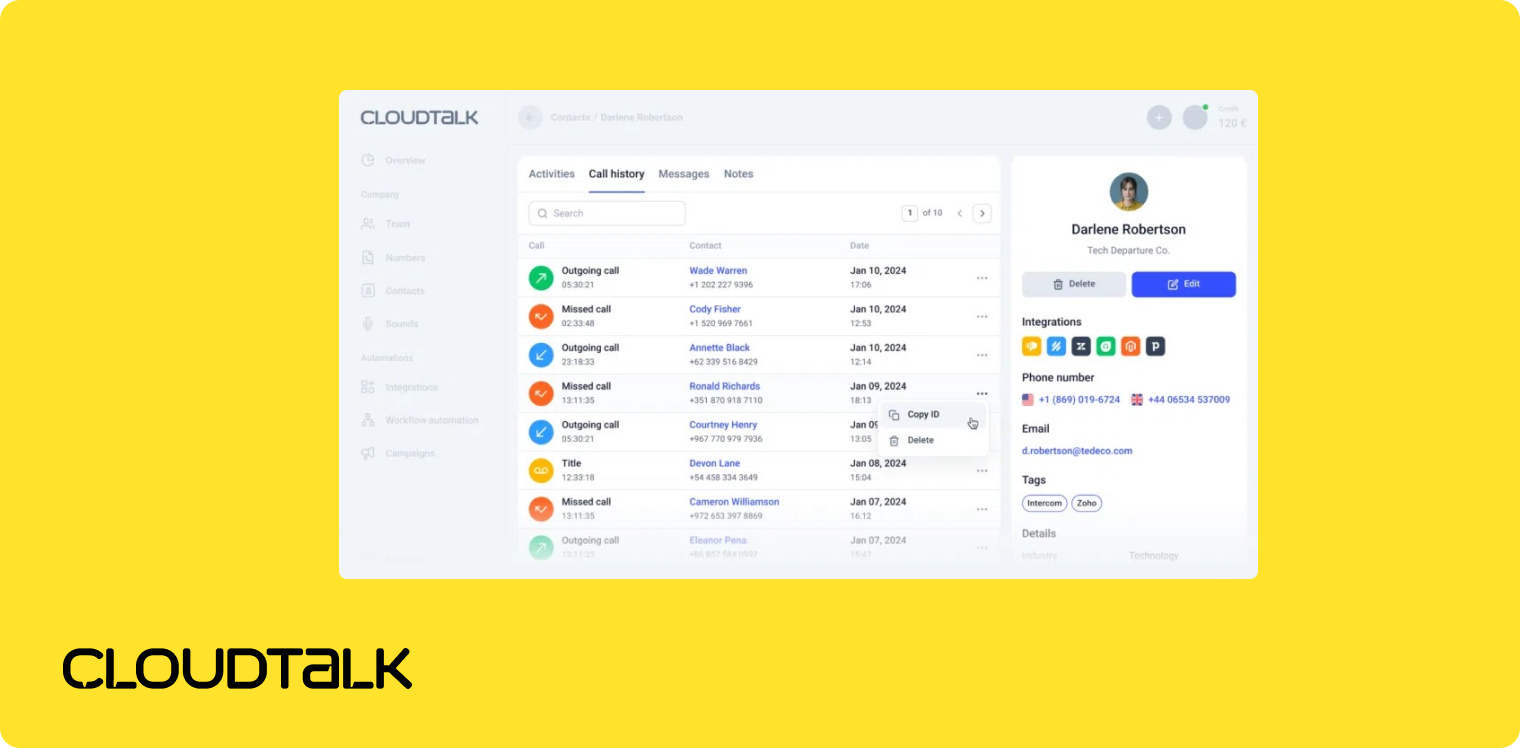
Founded in Slovakia by Martin Malych and Viktor Vanek, Cloudtalk serves 4,000 customers across 100 countries with a truly international focus. The company operates with half its employees working remotely and maintains offices throughout Europe, Canada, and Mexico.
The platform targets sales and support teams, including call centers that need reliable international calling capabilities. Cloudtalk provides local numbers in 160+ countries and automatically switches to local caller ID when dialing internationally—a feature that significantly improves answer rates for global outreach.
What makes Cloudtalk unique is its AI voice agent technology that handles both inbound and outbound calls. While many competitors limit AI to answering services, Cloudtalk's agents can proactively place calls to leads or customers, opening possibilities for automated follow-ups and appointment confirmations.
Why Cloudtalk is a Good Alternative to Mightycall
Cloudtalk excels at international operations where Mightycall struggles. Supporting 160+ countries for local numbers, combined with automatic local caller ID switching, solves a major pain point for teams calling overseas prospects. Answer rates jump when calls appear local rather than foreign.
The 70 native integrations rival any competitor, including deep connections with Salesforce, HubSpot, Pipedrive, Zoho, and noCRM. The HubSpot integration specifically earns 4.3/5 stars on HubSpot's marketplace, indicating real quality beyond basic call logging.
For sales teams, Cloudtalk includes power dialers, smart dialers, and voicemail drop features that speed up outbound campaigns. The AI provides call transcripts, summaries, topic extraction, sentiment analysis, and talk-to-listen ratio calculations—comprehensive analytics that help managers coach reps effectively.
Reliability gets consistent praise from users who report steady uptime and performance. However, call quality issues surface occasionally in reviews, and customer support response times can lag when problems arise. The Lite plan ($27/user) lacks integrations and most features, making the Essential plan ($39/user) the realistic minimum for teams needing CRM connectivity.
Cloudtalk Pricing
Cloudtalk structures pricing across three tiers with clear feature gates:
• Lite: $27/month per user - Provides unlimited domestic calling and local numbers available in 160+ countries. However, excludes integrations and most advanced features.
• Essential: $39/month per user - Adds business hours scheduling, IVR system, ring groups, and native CRM integrations with platforms like HubSpot and Salesforce.
• Expert: $69/month per user - Includes power dialer for outbound, live call monitoring, advanced reporting, WhatsApp support, and priority customer service. Requires minimum 3 licenses.
AI voice agents bill separately from base plans. The agents handle both inbound calls and can make outbound calls autonomously. Pricing for AI agents requires contact with sales for custom quotes based on expected usage.
A 14-day free trial with no credit card required lets teams test the platform fully.
Cloudtalk Demo
See Cloudtalk's interface and key features:
Ringcentral, Best for Integrations
What is Ringcentral?
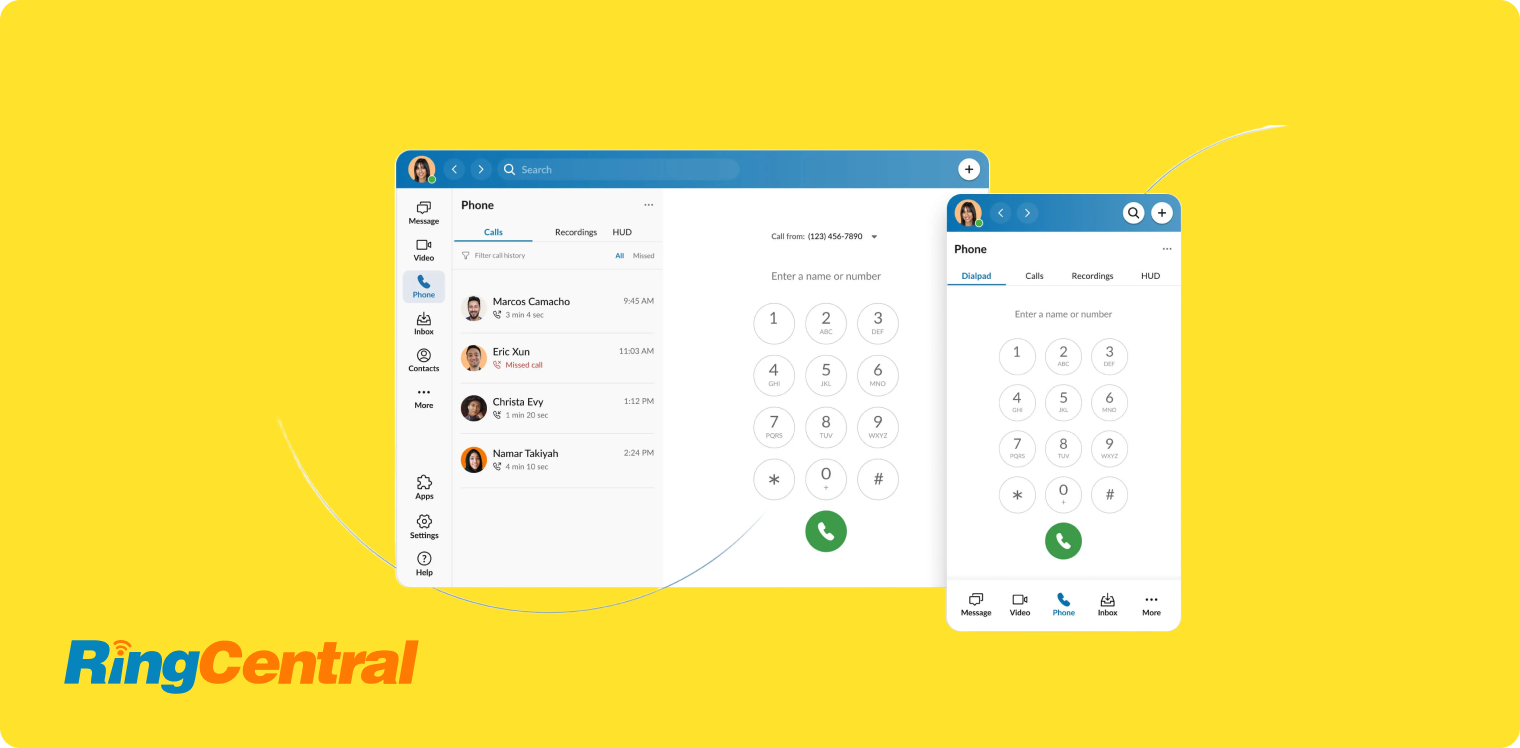
RingCentral has operated since 1999, making it one of the longest-running players in business communications. This longevity brings advantages—the platform includes virtually every integration imaginable, proven reliability, and brand recognition that helps with executive buy-in.
The company recently added AI capabilities to compete with modern alternatives, but the underlying architecture remains legacy software. This shows in the interface complexity and learning curve that overwhelms new users expecting simpler cloud-based tools.
RingCentral offers everything from basic phone systems to advanced contact center solutions. The breadth covers faxing (increasingly rare among competitors), video tools, team messaging, and webinar hosting. For businesses consolidating vendors, RingCentral can replace multiple services with one bill.
Why Ringcentral is a Good Alternative to Mightycall
Brand recognition and integrations give RingCentral clear advantages over smaller providers like Mightycall. With over 500 native integrations spanning CRM, help desk, workplace management, and more, RingCentral fits into virtually any existing tech stack without custom development.
The platform's maturity means fewer surprises. RingCentral handles edge cases and unusual requirements that might break newer systems. Large user communities and extensive documentation help teams resolve issues faster than platforms with smaller customer bases.
However, RingCentral's legacy architecture creates frustrations. The interface feels dated and overwhelming compared to modern alternatives built cloud-first. Support quality varies dramatically—small businesses report minimal assistance when problems arise, with resources focused on enterprise accounts.
Cancellation difficulties plague RingCentral users. The only way to cancel involves calling their support line, where wait times stretch long. Users report aggressive retention tactics and difficulty actually ending service. Some reviewers describe billing practices as predatory, with unexpected charges appearing after cancellation attempts.
Lead generation and affiliate marketing are prohibited, limiting legitimate business use cases.
Ringcentral Pricing
RingCentral prices its Business Phone offering across three tiers:
• Core: $30/user per month - Includes unlimited domestic calling, call recording capabilities, and video meeting functionality.
• Advanced: $35/user per month - Adds CRM integrations with Salesforce and HubSpot, along with enhanced reporting tools.
• Ultra: $45/user per month - Provides unlimited recording storage, webinar hosting, and device analytics tracking.
AI features cost extra beyond base plans. The AI Receptionist starts at $39 monthly for 100 minutes of handling time, with additional usage billed per minute. Conversation Intelligence requires custom pricing discussions with sales teams—no public rates available.
The RingCX contact center product operates separately from business phone plans, starting at $65 per agent monthly when paid annually. This targets call center operations rather than general business communications.
Ringcentral Demo
RingCentral AI receptionist demonstration:
8x8, Best for Large Contact Centers
What is 8x8?
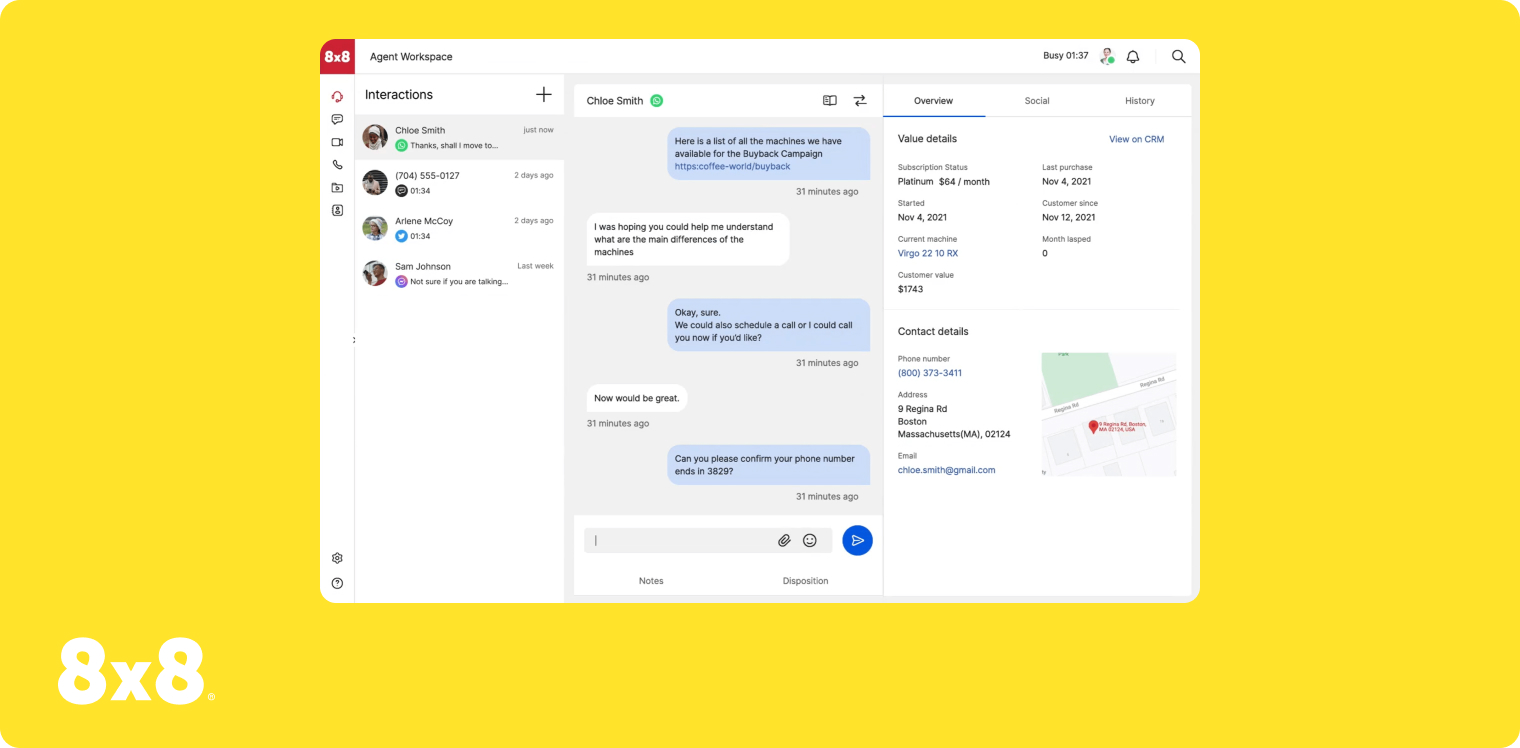
Starting as a processor company in 1987, 8x8 evolved through videoconferencing before relaunching as a VoIP provider in March 2000. This long history in telecommunications brings deep technical expertise but also complexity that suits large teams better than small businesses.
The platform targets contact centers and call centers specifically. Features like bulk engagement campaigns via text-to-speech and SMS, power dialers for cold outbound, and detailed supervisor dashboards serve teams making hundreds of calls daily. Agent supervision tools include dedicated monitoring interfaces, call commenting, and review workflows.
8x8 operates at enterprise scale with infrastructure supporting massive call volumes and agent counts. The analytics dive deeper than basic phone systems, tracking metrics that contact center managers need for workforce optimization and quality assurance programs.
Why 8x8 is a Good Alternative to Mightycall
8x8 handles contact center operations that would overwhelm simpler systems like Mightycall. The bulk campaign tools let teams reach thousands of contacts via voice or SMS simultaneously—essential for high-volume outbound or customer notification needs.
Real-time transcription and live coaching help supervisors support agents during calls without interrupting customer conversations. Call summaries and sentiment analysis give managers quick insights into interaction quality without listening to full recordings.
The platform works reliably across devices according to user reviews, supporting seamless transitions between desktop and mobile. Support for multiple communication channels (voice, text, messaging apps) creates unified customer histories regardless of contact method.
However, 8x8's complexity requires technical expertise to configure and maintain. Users report that setup and ongoing changes demand support assistance, which becomes problematic given complaints about slow response times and support agents lacking product knowledge. Call quality issues appear in reviews despite the platform's telecommunications heritage.
Cancellation difficulties mirror RingCentral's problems—users struggle to end service and report billing continuing after cancellation attempts. The 8x8 HubSpot integration scores just 1.2/5 on HubSpot's marketplace, indicating superficial connections that don't match the deep syncing available from specialized integrations.
8x8 Pricing
8x8 keeps detailed pricing non-public, requiring contact with sales teams for quotes.
Available information indicates:
• Basic tier: Approximately $24/user per month - Core calling and messaging features with limited functionality.
• Professional tier: Approximately $44/user per month - Expands features for business communications and collaboration.
Actual pricing varies based on team size, contract length, and specific feature requirements. 8x8 targets larger organizations where custom pricing makes sense, but this approach frustrates small teams wanting transparent costs.
AI features lack public pricing entirely. Capabilities include AI IVR systems, real-time transcription, live coaching during calls, automated summaries, and sentiment analysis. However, teams must negotiate pricing through sales discussions rather than seeing upfront costs.
Complex configuration and setup processes make 8x8 most suitable for larger teams with dedicated IT resources or willingness to invest in implementation support.
8x8 Demo
Conclusion
Choosing the right Mightycall alternative depends on your team's specific needs and size. Small sales teams (1-20 users) benefit most from Allo's transparent pricing and unlimited AI features without add-ons. Mid-sized companies needing brand recognition should consider Aircall despite higher costs and add-on fees. Teams prioritizing AI capabilities get the best value from Dialpad's included features across all plans.
International operations demand CloudTalk's 160+ country support and automatic local caller ID switching. Companies consolidating communication tools might prefer Nextiva's unified platform approach, though US-only coverage limits global applicability. Large contact centers requiring enterprise scale and advanced supervision tools should evaluate 8x8 or RingCentral despite complexity and support concerns.
Every alternative here improves on Mightycall in different ways—better AI integration, clearer pricing, stronger mobile apps, or deeper CRM connections. The key is matching platform strengths to your team's daily workflow and growth plans rather than chasing features you won't actually use.
Frequently Asked Questions About Mightycall Alternatives
What is better than Mightycall?
For small sales teams, Allo delivers better value than Mightycall with unlimited AI features included at $45/user and transparent pricing. Teams needing established brand recognition should consider Aircall, while businesses prioritizing AI capabilities get more built-in features with Dialpad at lower costs than competitors charging for AI add-ons.
What are Mightycall's main competitors?
Mightycall's primary competitors include Allo (AI-first for small teams), Aircall (mid-market with strong integrations), Dialpad (AI-powered UCaaS), Nextiva (unified communications), CloudTalk (international coverage), RingCentral (established enterprise), and 8x8 (contact center focus). Each competitor targets different team sizes and use cases, from solo entrepreneurs to large call centers.